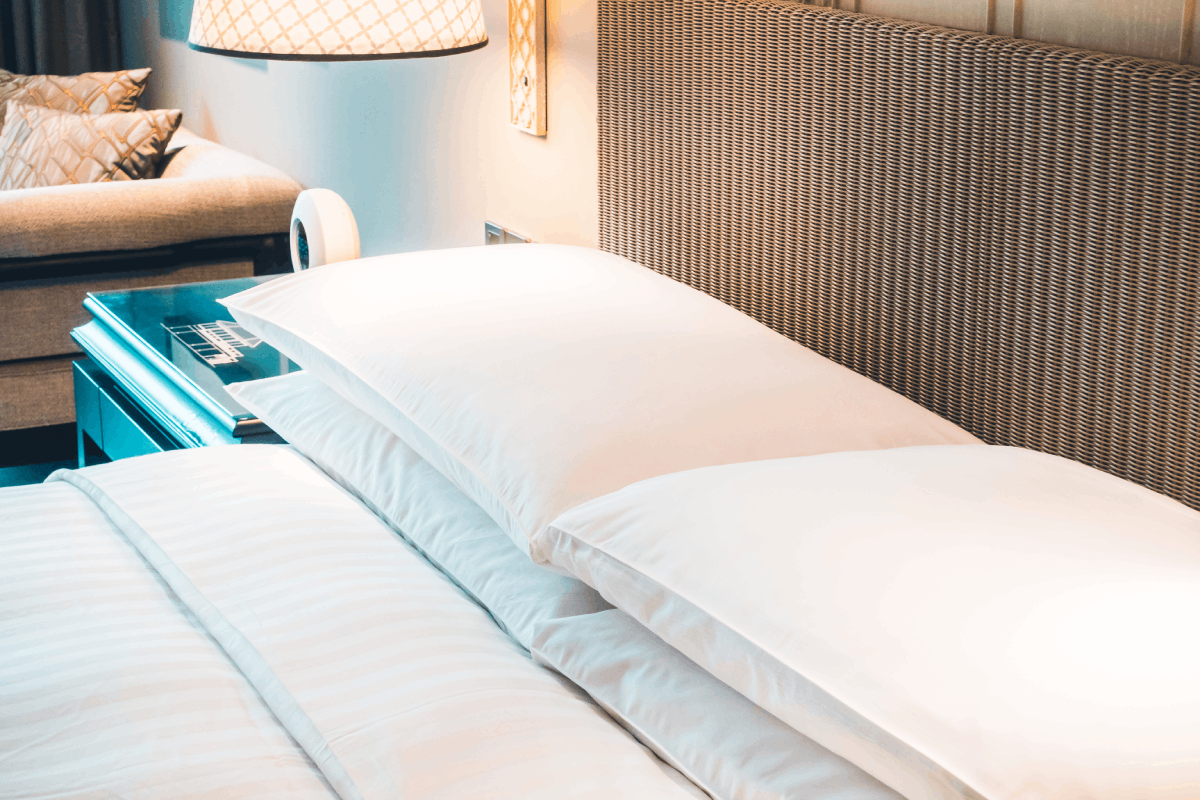
You sink into a hotel bed after a long day of travel, your head touches the pillow, and within minutes you're somewhere between cloud and coma. The next morning you think the same thing every traveller has thought since the dawn of hospitality: why on earth doesn't my pillow at home feel like this?

If you've ever asked yourself why hotel pillows are so comfortable, especially in UK hotels where bedding standards are notoriously high, you're not imagining it. There are real, specific reasons — and most of them have nothing to do with luck or jet lag. After years of working with hospitality teams and looking closely at how UK hotels source, layer, and maintain their bedding, I can tell you the difference comes down to materials, technique, and a handful of housekeeping habits that domestic shoppers almost never replicate.
This guide breaks down exactly what makes hotel pillows feel the way they do, what UK hotels actually use behind the scenes, and how to bring that same comfort home — without spending a fortune.
The Quick Answer
Hotel pillows feel more comfortable because they combine premium fill (usually high fill-power down or microfibre clusters), tightly woven cotton casings with thread counts of 300 or higher, and a layered stack of 2–4 pillows offering both support and softness. UK hotels also replace pillows on a strict cycle, use professional pillow protectors, and maintain a humidity- and temperature-controlled bed setup that home sleepers rarely match.
That's the headline. The detail is where it gets interesting.
Hotel Pillow vs Home Pillow: The Honest Comparison
Feature | Hotel Pillow | Typical Home Pillow |
Fill type | Goose/duck down, microfibre clusters, or premium memory foam | Polyester hollow fibre |
Fill power (down) | 600–800+ | Not measured |
Cover thread count | 300–600 (percale or sateen cotton) | 144–200 (poly-cotton) |
Pillow protector | Always used, washed weekly | Rarely used |
Number per bed | 4 (UK doubles), 6+ (suites) | 1–2 |
Replacement cycle | Every 12–24 months | 3–7 years (often longer) |
Cleaning standard | Professional laundering at high temperature | Domestic wash, sometimes never |
Loft (fluffiness) | Maintained daily by housekeeping | Compressed and uneven |
The gap is wider than most people realise — and it's not just about money. It's about systems.
Why Hotel Pillows Are So Comfortable
1. Premium Materials Most People Never Buy
UK luxury hotels overwhelmingly favour European white goose down with a fill power between 600 and 800. Fill power measures the loft of the down — the higher the number, the more air the down traps, and the more cloud-like the pillow feels while remaining lightweight.
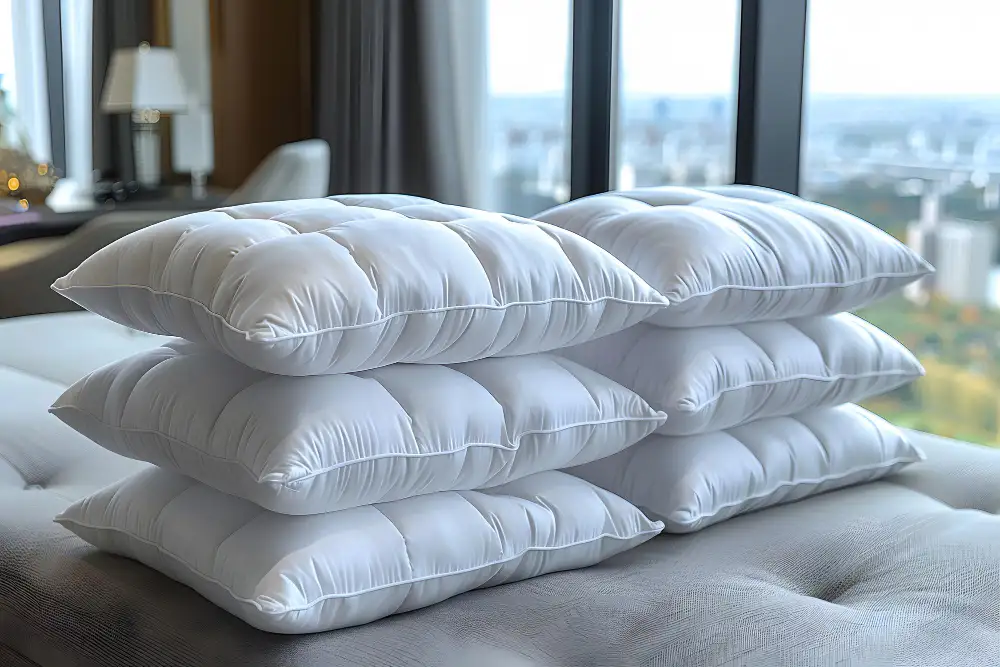
Mid-range and chain hotels (think Premier Inn, Hilton Garden Inn) tend to use microfibre cluster pillows — a synthetic alternative engineered to mimic down. They're hypoallergenic, machine-washable, and surprisingly close to the real thing. The brand many UK hotels stock is from suppliers like Mitre, Vision Linens, or The Fine Bedding Company.
What you'll almost never find in a quality UK hotel is a basic hollow-fibre polyester pillow — the type sold for £6 in supermarkets. The fill collapses too quickly and feels lifeless within months.
2. The Perfect Firmness Balance
Hotels rarely choose a single firmness. They aim for a medium-soft pillow with enough loft to support the cervical spine while still feeling plush. This sweet spot is harder to find at home because most retailers sell pillows as either "soft" or "firm" with little nuance.

Premium hotels often offer a pillow menu — you can request firm, soft, anti-allergy, or memory foam on arrival. The Savoy, Rosewood London and several Mandarin Oriental properties have offered this for years. It's a small touch that lets the guest dial in their personal sleep ergonomics.
3. High-Quality Pillow Covers & Thread Count
The pillowcase matters almost as much as the pillow. UK hotels typically use 300–600 thread count Egyptian or Supima cotton, woven as either percale (crisp, cool) or sateen (smooth, slightly silky). These breathable fabrics regulate temperature, wick away moisture, and don't develop that slightly tacky feel cheaper poly-cotton blends get after a few hours.
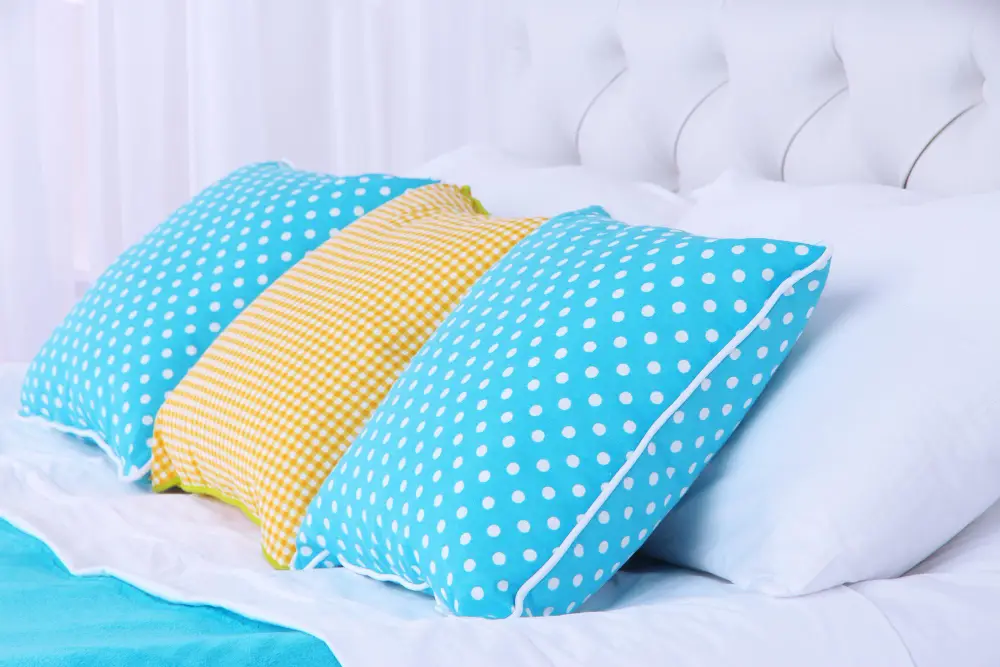
Underneath the pillowcase sits a pillow protector — a quiet hero of hotel hygiene. It blocks oils, sweat, and dust mites, and it's washed weekly. Almost no domestic household does this consistently.
4. The Layered Pillow Strategy
This is the single biggest secret most guides ignore.
UK hotels don't give you one pillow. They give you four, arranged in a deliberate stack:
Base pillows (2): Firmer, providing structure and lift
Top pillows (2): Softer, plusher, designed for face contact
This layering creates a graduated support system — your neck gets the firmness it needs, your face gets softness, and the overall loft stays high even when you're moving in your sleep. Try it tonight with whatever pillows you have, and you'll feel the difference immediately.
5. Frequent Replacement & Hygiene Standards
Hotels operating to AA or VisitBritain quality standards typically replace pillows every 12–24 months. The average British home pillow is reportedly used for over seven years — by which point it has lost most of its loft and accumulated significant dust mite, skin oil, and moisture residue.
A fresh pillow simply feels better. Loft hasn't compressed. The fill hasn't shifted. The cover hasn't yellowed. It's a baseline of newness most homes don't maintain.
6. Professional Bed Styling (Housekeeping Technique)
Watch a hotel housekeeper make a bed and you'll notice something: every pillow is shaken, plumped, and karate-chopped along the centre crease. This isn't just for show. It redistributes the fill evenly, reintroduces air into the down or microfibre clusters, and restores loft.
Most people at home throw their pillow back on the bed. Hotels treat it like a craft.
7. Psychological Comfort: The Environment Effect
There's a real reason hotel sleep feels different even when the pillow itself isn't dramatically better than yours. Hotel rooms are engineered for sleep — blackout curtains, a cool ambient temperature (usually 18–20°C), no clutter, no work reminders, fresh sheets that smell of nothing but clean cotton. Your brain associates the environment with rest, and the pillow becomes part of that sensory cue.
This is why a £40 hotel pillow can feel better than a £200 home pillow in a noisy, warm bedroom with the wrong lighting. Context shapes comfort.
Types of Pillows UK Hotels Use
Down pillows dominate the luxury tier. Five-star UK hotels almost universally use Hungarian or European white goose down, often with a percale cotton cambric casing to prevent feather poke-through.
Feather pillows are heavier, firmer, and cheaper than pure down. Many hotels use a feather-and-down blend — typically 70% feather, 30% down — for a balance of support and softness.
Down-alternative (microfibre cluster) pillows are the standard in UK chain hotels and increasingly in boutique properties. They're hypoallergenic, easier to launder, and surprisingly close to genuine down in feel.
Memory foam appears in premium boutique and wellness-focused hotels, often as part of a pillow menu. It's particularly common in spa hotels and properties marketing themselves around restorative sleep.
How to Recreate Hotel Pillow Comfort at Home
You don't need a hotel budget to get hotel sleep. You need their system.
Buy the right pillow. For most people, a 600+ fill power down pillow or a high-quality microfibre cluster pillow in medium loft is the closest match to a UK hotel feel. Expect to spend £40–£120 per pillow for something that genuinely lasts.
Layer like a hotel. Buy two firmer pillows for the base and two softer ones for the top. Even cheaper pillows feel transformed when stacked correctly.
Use a pillow protector. A simple zipped cotton or terry-cotton protector under the pillowcase extends pillow life by years and keeps the surface fresh.
Upgrade the pillowcase. A 300+ thread count percale cotton pillowcase costs £15–£25 and changes the feel of any pillow underneath it. This is the single highest-impact, lowest-cost upgrade.
Replace your pillow. If yours is older than two years and you can fold it in half and it stays folded, it's done. Bin it.
Mind the bedroom environment. Cool, dark, quiet. The pillow only does part of the work.
Common Mistakes People Make
Using only one pillow — kills the layered support system instantly.
Buying the wrong firmness for your sleep position — side sleepers need firmer/loftier; back and stomach sleepers need softer/lower.
Keeping pillows past their lifespan — no fill recovers after enough years of compression.
Skipping the pillow protector — your pillow is absorbing more than you'd like to know.
Cheap pillowcases — even a £150 pillow feels mediocre under a £4 poly-cotton case.
The Bottom Line
The reason hotel pillows feel so good isn’t magic. It’s a layered system of premium materials, deliberate technique, and rigorous hygiene that most homes simply don’t replicate. The pillow itself matters, but so does the protector under it, the pillowcase over it, the three other pillows beside it, and the room around it.
Once you understand why hotel pillows are so comfortable in the UK, you stop chasing the perfect single pillow and start building a system. A medium‑loft pillow at 600+ fill power, a percale cotton pillowcase, a zipped protector, and a four‑pillow stack will get you 90 % of the way there for under £200. The other 10 % is the bedroom around it. According to the U.S. Centers for Disease Control and Prevention (CDC), having a comfortable mattress and pillow is an important part of creating a sleep‑friendly environment that helps improve overall sleep quality
Sleep well.