Can I Drink Tap Water in London Hotel Rooms: Expert Safety Checklist
Yes. London’s public mains tap water is normally safe to drink without boiling. In a hotel, the safest choice is fresh cold water from a tap...

Forhad Ahmed
Author & Travel Expert
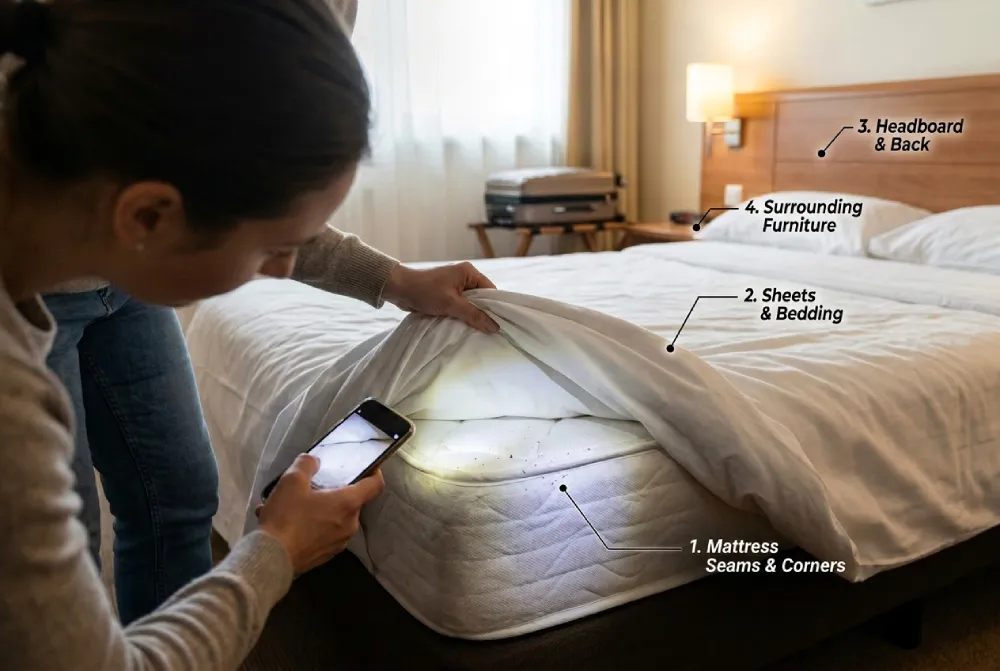
Keep your case zipped and place it on a dry, hard bathroom surface. Pull back the sheets and examine mattress seams, piping and corners with your phone torch. Check headboard edges, bed-frame joints, nearby upholstered furniture and the luggage rack. Look for live insects, tiny dark marks, shed skins or pale eggs. If you find convincing evidence, take photographs, tell reception promptly and request a different room. A quick check can reveal warning signs, but cannot guarantee that a room is free of bed bugs.
At a glance:
1. Keep your suitcase away from beds and soft furnishings.
2. Check mattress seams and piping first.
3. Inspect accessible headboard and bed-frame joints.
4. Look for physical evidence, not just bites.
5. Photograph concerns before moving rooms.
6. Check luggage again when you get home.
The door clicks shut. You set down your bag, switch on a lamp and look towards the neatly made bed. Before you pull back the duvet or open your suitcase, there is one quick job worth doing: learning how to check for bed bugs in a hotel room.
It is easier than you might think. You do not need specialist equipment, and you certainly do not need to pull the room apart. What matters is knowing the small number of places to inspect, the signs that deserve attention and how to protect your luggage while you look.
This guide follows advice from the NHS and the British Pest Control Association (BPCA). It covers the first five minutes in a hotel room, what to do if you find something suspicious and the sensible precautions to take when you return home.
Area | Priority | What to Look For |
|---|---|---|
Mattress seams and corners | First | Live insects, dark spots, shed skins, small eggs |
Headboard and bed frame joints | First | Clusters of spotting, insects in cracks |
Bedside furniture | Next | Marks or insects along edges and joints |
Sofa, chair or sofa bed | Next | Activity in stitching, folds and cushion seams |
Luggage rack | Before use | Insects or marks around straps and frame joints |
Curtains and skirting near bed | If concerned | Signs in accessible folds and gaps |
Yes. Bed bugs are travellers too, though not by choice. They can be carried in luggage, bags and other belongings and settle in small gaps around sleeping areas. Cleanliness is not a dependable way to judge whether a room has them. The BPCA advises checking mattress edges and the headboard and keeping luggage away from beds and furniture.
That does not mean every hotel stay should become an anxious investigation. Most importantly, do not treat a hotel’s price, number of stars or neat bed linen as a substitute for a look around. A modest guesthouse and a high-end hotel both deserve the same calm check.
Bed bugs do not fly or jump. They crawl and can hide in narrow seams. This is why you are better off inspecting the bed and its immediate surroundings than searching randomly across the room.
The biggest avoidable mistake happens in the first few seconds: putting your case on the bed while you look around. Keep it closed and away from the mattress, carpet and upholstered furniture.
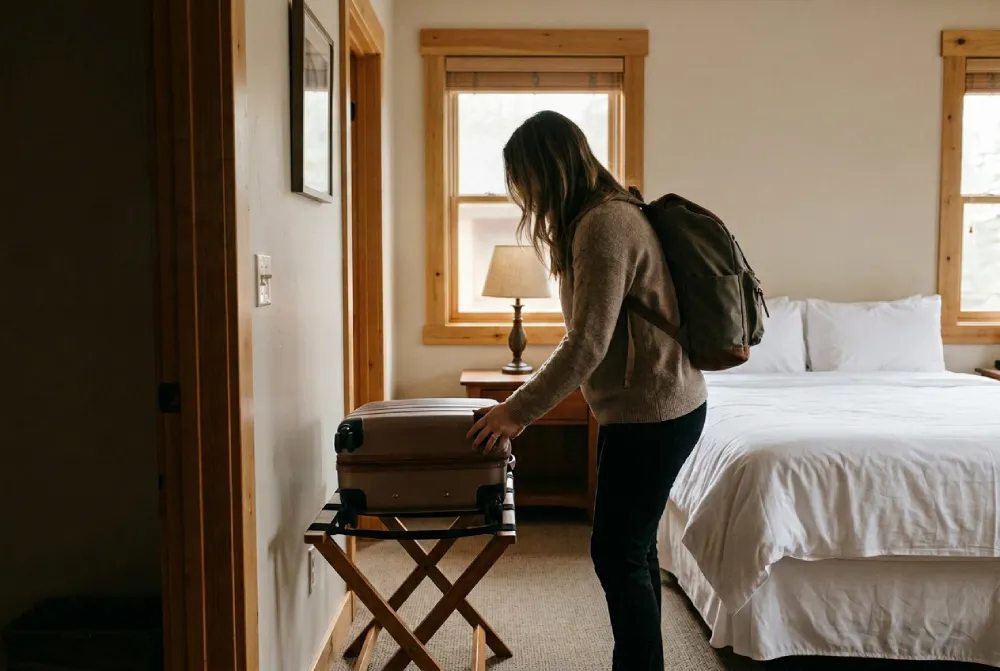
If it is clean and completely dry, a bath or shower tray is a useful temporary spot. A bathroom counter or another suitable hard surface can also work. Do not put a case into standing water, and never block a doorway or create a trip hazard.
You can use a luggage rack after you have examined it. Check the fabric straps, stitching and the points where they join the frame, then position the rack away from the bed and wall if possible. For a short stay, keeping clothes in zipped packing cubes or your case may be simpler than filling drawers.
Start where a sleeping person is closest: the bed. Pull back the duvet and top sheet without throwing them onto the floor. Focus on the seams and the raised piping that runs along the mattress edge, particularly near the pillow end.
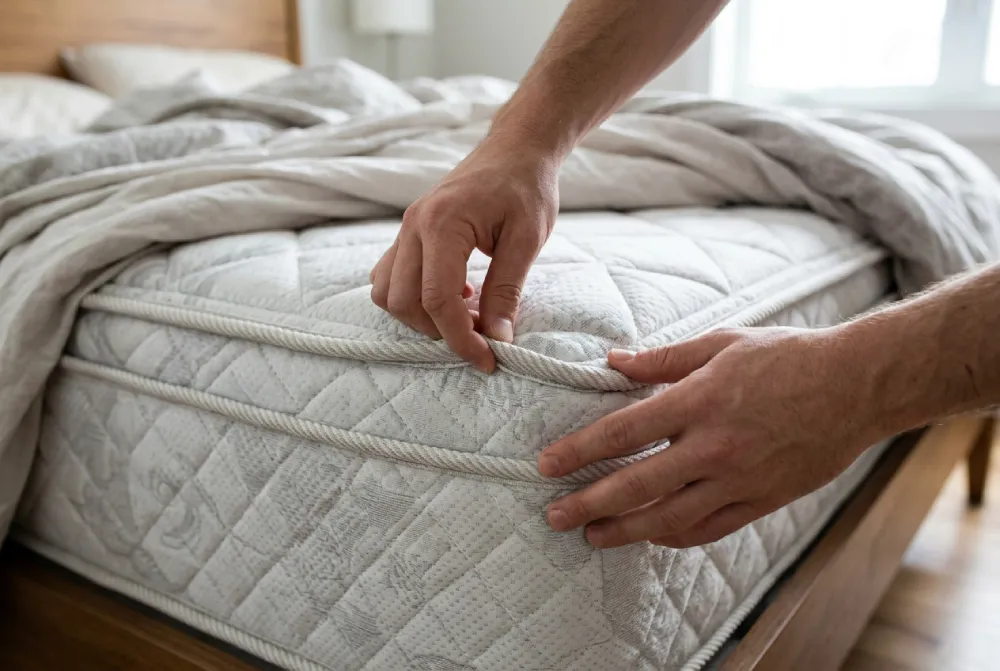
Use your phone torch at an angle so the folds cast small shadows. Look around labels, tufts, corners and accessible mattress edges. You are searching for a combination of clues: a live insect, dark dot-like marks, shed skins or tiny pale eggs. A reddish mark on a sheet may have other causes, so it should not be treated as a diagnosis on its own.
Do not dismantle the bed, force open mattress covers or use sprays. Your job is to check visible areas and report anything that looks suspicious. The hotel or a qualified pest specialist should investigate further.
According to the NHS, adult bed bugs are roughly 5 mm long and can be dark yellow, red or brown. They have flat, oval bodies; recently fed insects may look fuller. Younger bed bugs are smaller and harder to see. Eggs are pale and very small.
Pictures help, but identification can still be difficult. A tiny brown insect might be something else. If you find a specimen, photograph it sharply, ideally with an ordinary object for scale, and ask hotel staff to arrange identification. Avoid handling or crushing it with bare fingers.
The headboard matters just as much as the mattress. Shine your torch along accessible edges, joints and places where the bed frame meets the headboard or wall. Upholstered headboards need special attention along seams, buttons and fabric folds.
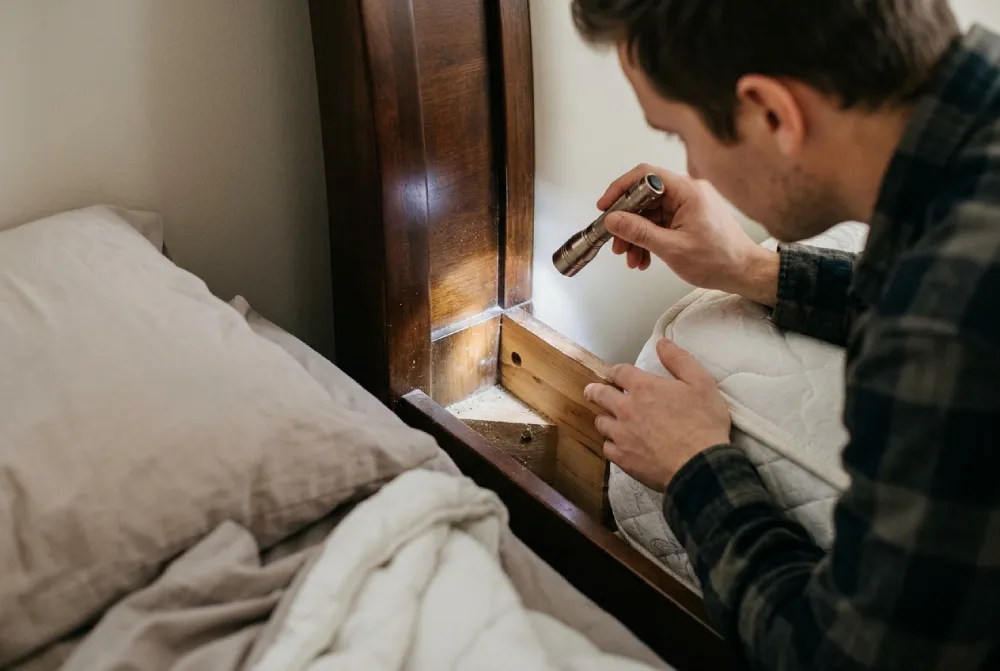
If the headboard is fixed to the wall, leave it there. Do not pull it free, lift heavy furniture or remove electrical fittings. You can still inspect visible junctions, grooves and nearby skirting without damaging the room.
Look for concentrated dark spotting, shed skins or live insects in cracks. If you find something, stop the inspection and contact reception rather than carrying on touching furniture.
A bed bug does not necessarily stay on the bed. Check the accessible edges of bedside tables and the seams of chairs close to the sleeping area. If there is a sofa bed, inspect its mattress and folded fabric with the same care as the main bed.

For families, the travel cot or child’s sleeping space deserves its own check. Look at the fabric edges and seams before putting in a blanket, teddy or pillow. Keep children’s soft toys in a closed bag until you have finished.
There is no need to inspect every piece of furniture. Concentrate on places where someone sleeps or sits for long periods, then the immediate surroundings.
A useful inspection is specific. These are the signs worth recording:
Live insects: the strongest clue, especially when photographed clearly.
Dark spots: possible faecal marks on a mattress seam, bed frame or furniture. Other stains can look similar.
Cast skins: light, shell-like remains left as young bed bugs grow.
Pale eggs: extremely small and hard to identify without help.
Rust-coloured or blood spots: a warning sign, but not proof on their own.
An unusual odour can be mentioned to staff, but it is not a reliable standalone test. Nor are itchy bites: other insects and skin reactions can look similar. Your aim is to report what you can see, not to diagnose an infestation from an isolated mark.
First, keep your luggage closed. Take a few clear photographs or a short video showing where the evidence was found. Note the time, room number and exact location, such as “right-hand mattress seam near the headboard”. If you have found a live insect, photograph it without scattering items around the room.
Contact reception or the accommodation host promptly. Describe the facts, show the images and request an inspection. Ask for a replacement room that is not directly beside, above or below the suspect room where possible. This is a sensible precaution, not proof that neighbouring rooms are affected.
Before moving, inspect your bag and keep belongings contained. Once you reach another room, repeat the arrival check. If the hotel cannot offer a suitable solution, ask how it proposes to resolve the booking. Keep all messages, receipts and photos in case you need to raise the matter later.
“I noticed a small insect and some dark marks around the mattress seam. I have photographs and have kept my luggage closed. Could someone inspect the room and arrange another room away from this one, please? Can you confirm the next steps in writing?”
If you found only spots, say that. Do not claim a confirmed infestation unless it has been identified. A clear, factual report is more useful than an argument about what the marks must mean.
You can ask, but a refund is not automatic. The outcome depends on the evidence, the hotel’s response, the terms of your booking and the law applicable to the stay. Ask for the proposed remedy in writing. If you booked through a travel company or as part of a package, check the provider’s complaints process too.
Avoid promising yourself a particular payout before the facts are established. Save booking confirmation, screenshots of the room listing, your photographs and the hotel’s replies. Those records make a reasonable complaint much easier to assess.
If you need to compare alternative accommodation, start with the hotel location, room type and cancellation terms rather than the advertised discount alone.
• Compare available hotel options at VervTrip and check the full booking conditions.
• Up to 15% cashback may apply to selected eligible hotel bookings. It is not a guaranteed percentage; the applicable cashback is credited after a completed qualifying stay, subject to the offer terms.
• Free airport transfers may be available with eligible stays of seven nights or more at participating four- or five-star partner hotels. Conditions apply and not every hotel qualifies.
• If you are travelling abroad and need mobile data to contact your accommodation or send evidence, VervTrip offers travel eSIMs at eSIM Travel Guide; compatibility and destination availability should be checked before purchase.
These services are booking options, not evidence that any particular property is free of pests. No unrelated tours or experiences are promoted here.
Once you have completed the check, keep bags off the bed and avoid leaving loose clothes scattered across upholstered furniture. Close your case when you are not using it, and keep dirty clothes together in a separate bag.
If something suspicious appears on a later night, do not wait until checkout to mention it. Photograph what you find and contact the hotel. Early reporting gives staff a chance to investigate while you are still there.
If you are staying in a shared hostel dormitory, focus on your own bed, nearby lockers and the immediate bag-storage area. In a serviced apartment, check the sofa bed as well as the main bedroom. In an accessible room, avoid lifting or moving anything that puts you at risk: request help from staff if an area needs specialist inspection.
Your room check is only half the routine. The other half happens when you arrive home, especially if you had reason to suspect exposure.
Do not put your case straight onto your own bed. A hard floor in a well-lit area is easier to inspect. Check the outside of the suitcase, wheel housings, zips, lining, seams, handles and pockets. Empty clothes carefully and keep potentially exposed items apart from clean laundry.
The NHS advises washing affected clothing and bedding on a hot 60°C wash and tumble drying on a hot setting for at least 30 minutes. Follow care labels: heat can damage some fabrics. For items that cannot be treated safely this way, keep them contained and seek advice from a qualified pest controller rather than improvising chemical treatments.
If you vacuum a suitcase, empty the vacuum securely after use. Store your case away from sleeping areas where practical. Finding one suspect mark on holiday does not prove you have brought insects home, but a contained, sensible unpacking routine can reduce the chance of spreading an actual problem.
First, resist the temptation to assume the room definitely has bed bugs. The NHS says bites can be itchy and raised, sometimes grouped together, but that appearance is not enough to identify the cause.
Inspect the bedding and surrounding furniture for physical evidence. If you find none, photograph the marks if useful and monitor how you feel. A cool, clean damp cloth may soothe the itch. Avoid scratching broken skin. A pharmacist can advise about suitable relief, particularly if itching disrupts sleep.
Seek medical advice if the discomfort persists, swelling spreads or the skin looks infected. A severe allergic reaction needs urgent medical attention. These recommendations are about symptoms, not a substitute for getting the room checked.
Putting a suitcase on the bed before looking: this brings your belongings into direct contact with an uninspected surface.
Judging by star rating: any accommodation can be exposed to travelling pests.
Checking only the top sheet: seams, piping, headboards and furniture joints are more informative.
Treating bites as proof: skin marks alone cannot identify a bed bug.
Moving straight into the room next door: ask for a room further away if available, and inspect it again.
Using aerosol insecticides yourself: hotel pest treatment is for trained professionals, not guests improvising with sprays.
Taking luggage straight into your bedroom at home: isolate and inspect it first when exposure is suspected.
Your phone already supplies the most useful tool: a torch. Clear packing cubes and two or three sealable bags make it easier to separate belongings if there is a problem. Keep your booking confirmation accessible on your phone, along with the hotel’s direct contact number.
You do not need to buy a portable detector or carry pesticide. A five-minute look at the right places, a photograph if needed and a calm conversation with reception are far more useful to an ordinary traveller.
Most hotel arrivals should end with a shower, a cup of tea or a look out of the window, not a long inspection. Give the bed and its immediate surroundings a few deliberate minutes before you unpack. Know which marks are worth photographing, and ask staff to investigate rather than guessing.
That is the real value of knowing how to check for bed bugs in a hotel room: it gives you a sensible routine if something looks wrong, without turning every trip into a worry. If plans change and you need another place to stay, compare your options and booking conditions on VervTrip.
You can make an initial check in around five minutes if you focus on mattress piping, headboard edges, bed-frame joints and the luggage rack. It is a quick screening check, not a professional survey. A negative result cannot guarantee there are no insects hidden elsewhere.
Keep it closed on a clean, dry, hard surface, such as a suitable bathroom counter or dry bath, while you inspect. Avoid placing it on the bed or upholstered chairs. Check any luggage rack carefully before using it and keep the rack away from the bed.
Yes. Bed bugs can be introduced through luggage and belongings, regardless of the price or star rating of the accommodation. Good housekeeping is helpful but cannot guarantee every room is free of pests. Inspect the sleeping area before unpacking, even in luxury properties.
Look for live insects, dark faecal spotting, cast skins and tiny pale eggs along mattress seams and piping. Reddish marks can be another clue, but a stain by itself is not confirmation. Photograph suspicious evidence and ask hotel staff to arrange further assessment.
No. Many bites and skin reactions look similar, and some people show little or no visible reaction. If you suspect bed bugs, check the mattress and nearby furniture for physical signs. Speak to a pharmacist or clinician if your skin symptoms become troublesome.
If possible, request a room away from the one under investigation. Nearby rooms may also need inspecting, although that does not mean they are infested. Keep luggage closed during any move and repeat your check in the replacement room before unpacking.
Yes. Seams, zips, pockets and fabric folds can provide hiding places. If exposure is suspected, inspect the case on a hard surface before taking it into your bedroom, separate belongings and follow suitable laundering guidance. Ask a professional for help if you find live insects.
The NHS advises a 60°C wash for affected washable items and a hot tumble-dry for at least 30 minutes. Check the care labels first, because not everything tolerates heat. Keep delicate or non-washable belongings isolated while seeking appropriate pest-control advice.
You can raise the complaint and ask for a remedy, but the result depends on the evidence, contract, the hotel’s actions and applicable law. Photograph your concerns, report them promptly, retain written correspondence and ask the accommodation provider to explain its proposed solution.
Hotel price is not a reliable test. Bed bugs can be introduced wherever people and their luggage move between rooms and properties. The practical decision is to inspect your own sleeping area rather than assume that an expensive or inexpensive booking tells you whether insects are present.
Please login to leave a comment.
Yes. London’s public mains tap water is normally safe to drink without boiling. In a hotel, the safest choice is fresh cold water from a tap...

A continental breakfast means bread, pastries, fruit, cereal, yoghurt, cold meats and cheese...

If you're wondering what to do in Llandudno, Wales, the honest answer is: more than its gentle, old-fashioned postcards let on.
We value your privacy
We use cookies to enhance your browsing experience and analyze our traffic. By clicking "Accept All", you consent to our use of cookies. Learn more.

Be the first to know about Halloween experiences, exclusive offers and travel inspiration.
Up to 20% OFF
on halloween attractions and experiences.
Your Discount Code
Copy this code and use it at checkout