How to Check for Bed Bugs in a Hotel Room (2026 UK Guide)
Keep your case zipped and place it on a dry, hard bathroom surface. Pull back the sheets and examine mattress seams...

Forhad Ahmed
Author & Travel Expert
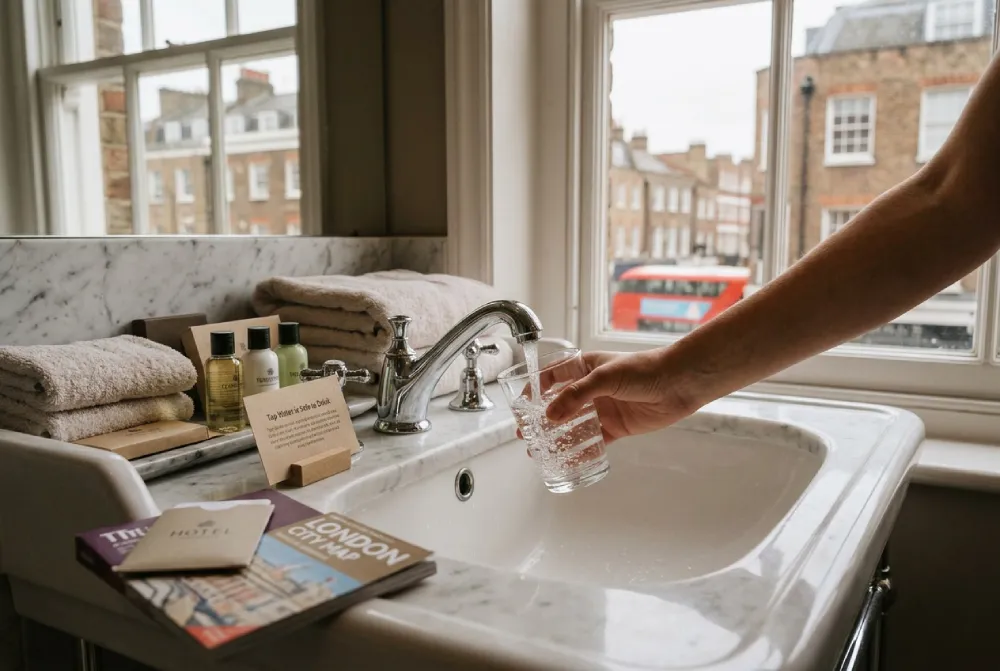
Yes. London’s public mains tap water is normally safe to drink without boiling. In a hotel, the safest choice is fresh cold water from a tap confirmed as suitable for drinking. A bathroom tap may be mains fed or supplied from a storage tank; a properly managed potable tank can also provide safe water. If the hotel cannot confirm its bathroom supply, ask for drinking water from an approved outlet. Do not drink from a tap marked “not drinking water”.
At a glance:
• Choose a confirmed cold drinking-water tap.
• Ask about mains supply or a maintained potable tank if unsure.
• Avoid the hot tap for drinking and kettle filling.
• Hard water and limescale do not automatically indicate contamination.
• Follow any water quality warning from the hotel or supplier.
• Carry a refillable bottle for free water stations around London.
You finally close the door of your London hotel room. The suitcase is on the floor, the kettle is on the desk, and after a long journey all you want is a glass of cold water. So, can I drink tap water in London hotel rooms?
The short answer is usually yes, as long as the tap is intended for drinking water. London’s public mains supply is treated and monitored. But some buildings, particularly older ones, use internal storage tanks to feed certain bathroom taps. You cannot confirm the plumbing just by looking at the sink.
This guide explains which cold tap to use, what to ask reception and why London water sometimes tastes different from water at home. It also covers public refills, baby formula and the situations when you should request another supply instead of drinking from the room tap.
Source | Action | Reason |
|---|---|---|
Cold tap confirmed mains fed | Normally drinkable | Treated public drinking-water supply |
Cold tap from a confirmed potable storage system | May be drinkable | Depends on proper tank design and maintenance |
Bathroom cold tap with unknown source | Ask reception first | Supply and maintenance are uncertain |
Hot tap | Do not use as drinking-water source | May involve hot-water storage or separate pipework |
Tap labelled “not drinking water” | Do not drink | Clear warning from property |
Hotel refill station or supplied carafe | Use if confirmed as drinking water | Check whether included in room rate |
Public fountain labelled for drinking | Refill bottle | Follow posted instructions |
London’s public drinking water is collected, treated and tested to meet the required standards. The city’s official visitor guide confirms that London tap water is safe to drink. That means visitors coming from abroad generally do not need to buy bottled water for every drink or avoid ordinary public mains drinking-water taps.
What matters inside a hotel is the final part of the journey from the network to your glass. The building may contain its own pipework, storage tanks, pumps and heating arrangements. Public supply quality does not establish the condition of every individual bathroom outlet.
It is worth separating those two statements. “London tap water is safe” is a useful general fact. “This specific hotel sink is definitely mains fed and drinkable” is a property claim that should come from the hotel.

Often, yes. Some modern hotels supply their cold bathroom taps directly from the mains. Others use a central water system that has been designed to deliver potable water. Some older buildings may feed bathroom cold taps from a tank in the roof space. The crucial question is not simply whether a tank exists, but whether that supply is correctly maintained and designated for drinking.
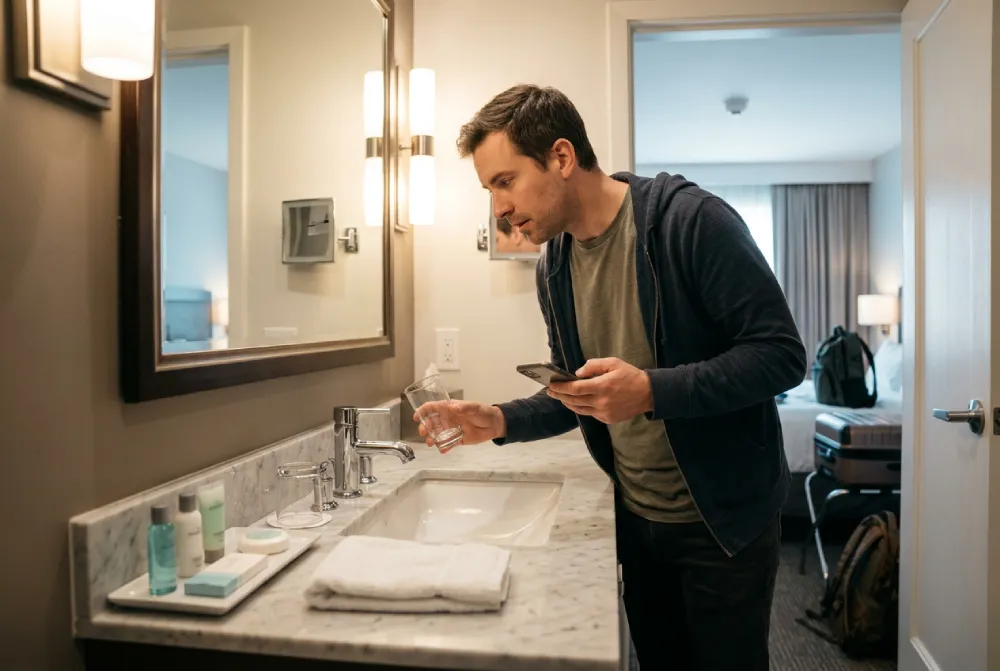
The Drinking Water Inspectorate advises using a mains-connected tap for drinking, preparing food or cleaning teeth where possible. Its guidance also explains that water from a tank can be safe when the tank has been properly designed, installed and maintained. So there is no basis for declaring every hotel bathroom tap unsafe.
If you do not know which system your room uses, ask reception before filling a glass. It is a normal question, particularly in a historic building. The staff should be able to identify the intended drinking-water tap or direct you to a restaurant, lobby dispenser or other suitable source.
“Could you confirm whether the cold bathroom tap in my room is intended for drinking? Is it mains fed or supplied by a properly maintained drinking-water tank? If it is not suitable, where can I fill my bottle?”
You do not need to test the water pressure yourself, inspect the tank or take apart the plumbing. It is the accommodation provider’s responsibility to know which outlets are meant for drinking. If reception is unsure, ask for an alternative supply.
You might notice a flavour that feels unfamiliar if you live in an area with soft water. London’s water is generally hard, meaning it contains dissolved minerals such as calcium and magnesium. Those minerals can affect taste and leave white deposits around taps and kettles.
Limescale is not, by itself, proof that the water is dirty or unsafe. The chalky ring left behind after a kettle has boiled is a familiar feature of hard water. It may be inconvenient for appliances, but you should not confuse it with a water quality emergency.
Some people also notice a faint chlorine taste or smell. A small amount of disinfectant may remain in treated supply water to protect it through the distribution system. If that flavour bothers you, chilling a jug of confirmed drinking water may make it more pleasant.
The important distinction is between an established mineral or treatment taste and a sudden unexplained change. Persistent brown water, unusual particles or a strong chemical smell deserves investigation. Do not dismiss those signs just because London water is normally safe.
For properly supplied public mains drinking water, boiling before drinking is normally unnecessary. Water filters are often bought for taste, not because London water needs routine extra treatment.
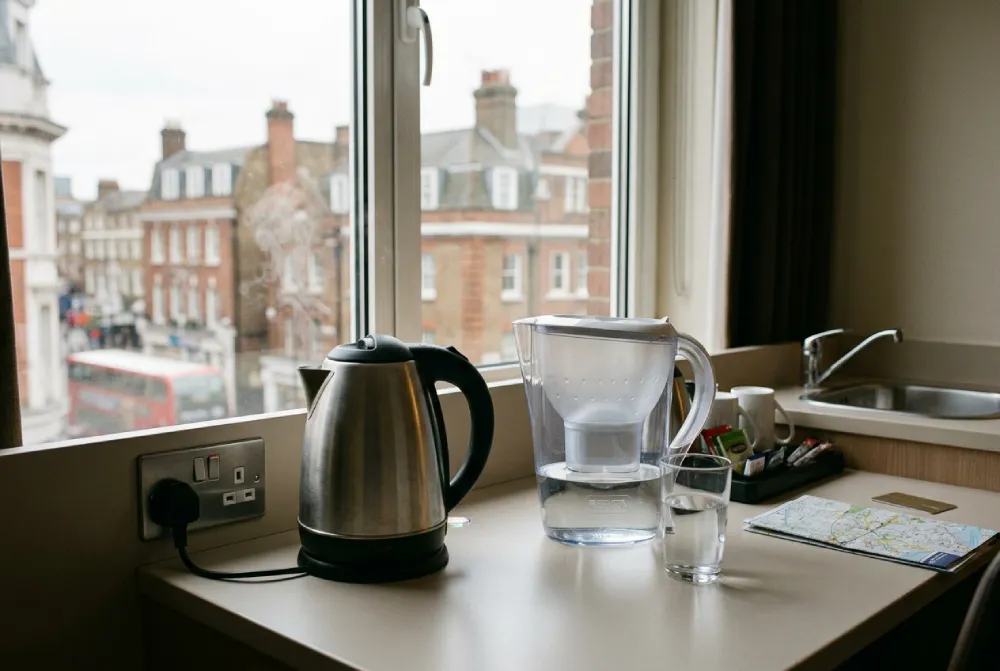
If you prefer a filtered bottle, clean it and replace its cartridge as recommended; a neglected filter is not a sensible safety strategy.
Do not use water from a hot tap to fill a glass or kettle. Draw fresh cold water from an approved drinking-water outlet and then boil it if you want tea. Boiling an uncertain bathroom supply is not a substitute for confirming that the source is potable. Boiling will not fix every possible issue involving plumbing or chemicals.
If an official boil-water notice is issued, follow the specific notice from the supplier and hotel. A boil-water warning, a do-not-drink warning and a do-not-use warning are different. You should not invent a single home fix for all three.
Do not drink from the suspect tap while you investigate. Contact reception and explain which outlet is affected, when you noticed the change and whether the water remains discoloured or has an unusual smell.
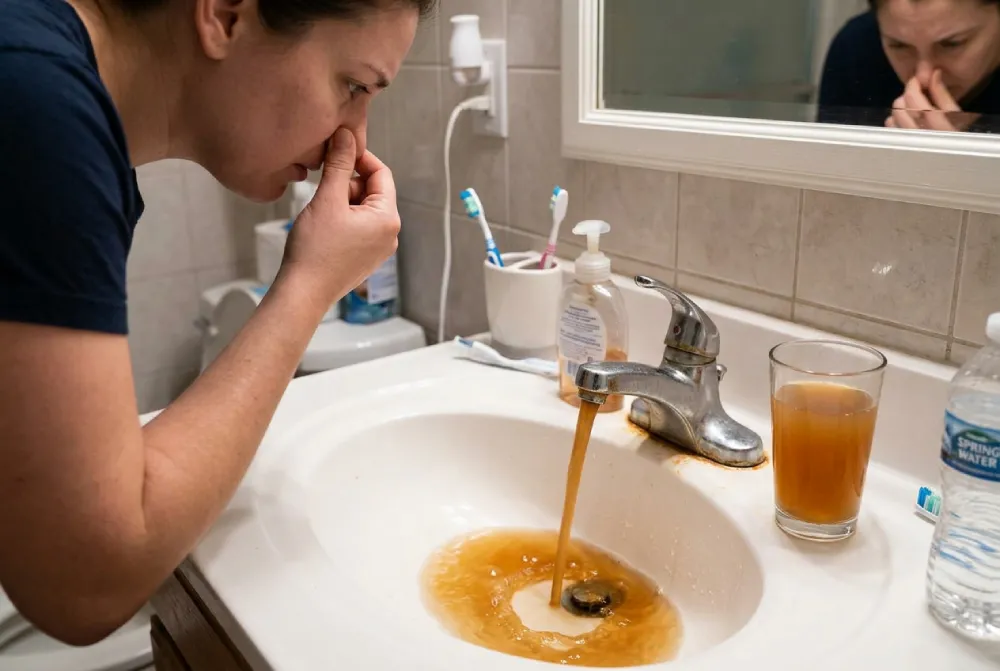
Photographs help show what you saw, especially if the appearance changes by the time staff arrive.
Ask for drinking water from a different approved source and for maintenance to check the problem. Sometimes harmless air bubbles make water briefly cloudy. Sometimes discolouration is related to disturbances in the mains or to the building’s own plumbing. A guest should not have to diagnose the cause.
If the hotel or water company has issued an advisory, follow it exactly. Do not ignore a warning because a generic London travel article says water is normally drinkable. Those statements can both be true: the city usually has safe mains water, while a specific incident still needs care.
Children can usually drink water from a confirmed safe cold drinking-water outlet in London. The main thing is to avoid assuming that every bathroom or public washroom tap has the same supply. When travelling with children, identify the correct outlet at check-in and fill their bottles from it.
Powdered infant formula is different from ordinary drinking water. The NHS advises using freshly drawn cold tap water, boiling it and preparing formula with water that remains at least 70°C, following its full instructions. The NHS does not normally recommend bottled water for preparing feeds because it is not sterile and can contain too much sodium or sulphate.
If you are staying in a hotel with a baby, confirm that you have suitable drinking water and a clean place to prepare feeds. Follow current NHS guidance rather than making a guess about the kettle or using a bottle straight from the shop. If the hotel cannot provide suitable facilities, ask what alternative it can arrange.
London is a good city for a reusable water bottle. The official visitor site lists a network of drinking fountains and participating refill businesses. Public fountains should have clear signage, and hotels may have a lobby dispenser, restaurant tap or refill station that is easier to use than the room bathroom.
Do not fill a bottle from a decorative fountain, unmarked public toilet tap or any outlet labelled unsuitable for drinking. If you are unsure, ask a staff member. A clean, authorised refill point is worth far more than a guess.
Licensed premises that sell alcohol must make free potable drinking water available under applicable licensing conditions where reasonably available. That is different from a promise that every minibar bottle or sealed glass bottle in a hotel is free. The room rate and service terms still matter.
If you are planning a low-cost day around the city, see VervTrip’s things to do in London for free guide.
Usually it is a preference rather than a necessity when you have access to a confirmed drinking-water tap.
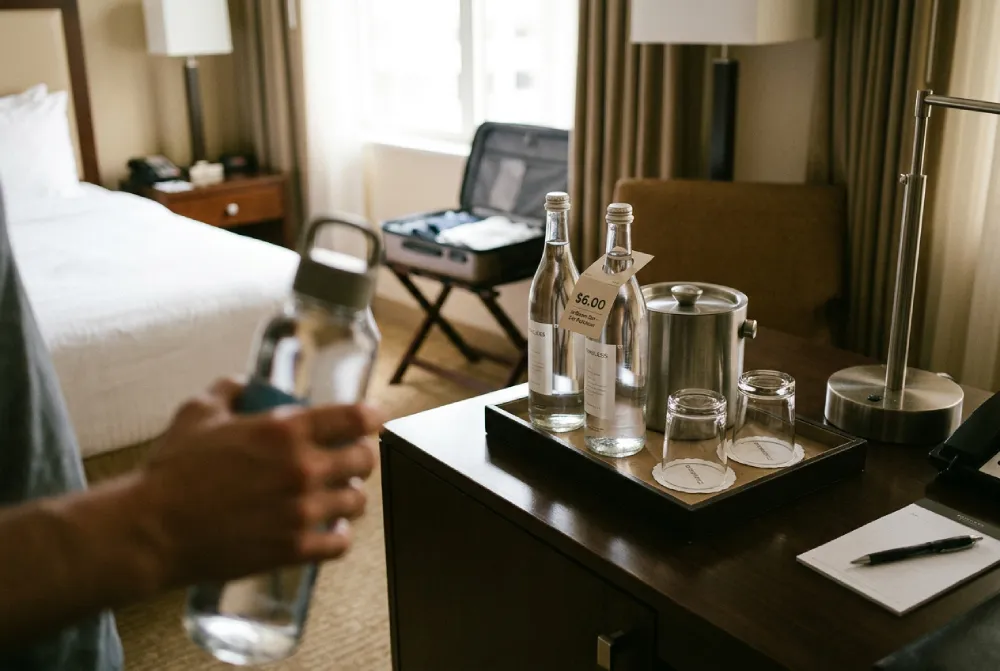
Bottled water might be convenient when you arrive late, do not have a clean refill point nearby or dislike the mineral taste of the local supply. It can also be a sensible short-term alternative while the property investigates an uncertain tap.
Before opening a bottle from the minibar, check the price. Some hotels supply complimentary water; others charge for it. A sealed bottle is not automatically included in your booking, and the price should not come as a surprise if you check the room information first.
The better question is not “Which is always safer, bottled or tap?” It is “Where is the confirmed drinking-water supply in this property?” Once you have that answer, you can choose the option that works for your comfort and budget.
Solo city break: Ask the water question once at check-in. Fill your own bottle before heading out; it is easier than looking for bottled water between Tube stations.
Couples: One of you may enjoy London's mineral water while the other dislikes it. Chilling verified drinking water can help with taste, without turning an ordinary preference into a safety scare.
Families: Identify the approved cold drinking-water tap for children's bottles. Handle powdered infant formula separately according to NHS preparation advice.
Budget travellers: Use proper free refill points and avoid assuming that hotel minibar water is included. A reusable bottle is practical across the city.
Luxury travellers: A five-star rating does not tell you whether the bathroom tap is mains fed. Ask the same clear question you would in any other property.
Long stays and serviced apartments: You may have a kitchen cold tap as well as bathroom sinks. Confirm the intended drinking-water outlet, especially in an older building.
Assuming every tap in a hotel building has the same supply. The cold bathroom tap may differ from a kitchen tap or designated drinking-water outlet.
Treating limescale as proof of unsafe water. Minerals change taste and leave deposits, but they do not automatically make mains water unfit to drink.
Filling the kettle from the hot tap. Use fresh cold drinking water instead.
Buying bottled water without checking whether a safe refill station is available. The hotel may offer a simpler option.
Lgnoring a warning sign or unusual water quality because London water is generally safe. Local incidents and specific property plumbing still matter.
Treating boiling as a universal fix. Always follow the specific notice or the advice of the hotel and water supplier.
London’s public mains drinking water is ordinarily safe, and you do not need to pack your trip around buying bottled water. Ask which cold hotel tap is meant for drinking, use a confirmed supply and take any unusual colour, smell or written advisory seriously.
If the original question is still on your mind, can i drink tap water in london hotel rooms? the answer is yes when that room tap is confirmed as a potable source. A 20-second question at reception can settle the uncertainty. Then you can get back to enjoying the city.
if you are planning the trip, compare London hotels and booking terms on VervTrip.
Yes, if the bathroom cold tap is confirmed as a drinking-water outlet. It may be mains fed or supplied by a properly maintained potable-water system. In an unfamiliar hotel, ask reception rather than guessing. Do not drink from any tap marked as unsuitable for drinking.
London’s treated mains drinking water is normally safe for visitors as well as residents. There is no separate requirement for tourists to buy bottled water. In a hotel, however, the public network and the individual room tap are distinct questions. Confirm which outlet is intended for drinking.
Normally not, provided you use a confirmed potable cold tap and no water quality notice is in force. If your supply is uncertain, ask for appropriate drinking water instead of relying on boiling. Follow the exact directions of any official boil-water or do-not-drink notice.
Much of London’s water contains naturally dissolved minerals such as calcium and magnesium. These contribute to hardness and leave limescale in kettles. A mineral taste is not automatically a health concern, though sudden unusual smells or persistent discolouration should be reported to the hotel.
Use a confirmed cold drinking-water tap instead. Hot-water systems can have different storage and plumbing arrangements, making them a poor choice for drinking or cooking. Once you have fresh cold drinking water, use the kettle to heat it for tea or other hot drinks.
Stop drinking from that outlet, take a photo if useful and report the issue to reception. Ask for a safe alternative and an investigation. Do not assume the colour is harmless or that simply boiling it will fix the underlying problem. Follow any official supply advisory.
Use a tap confirmed as suitable for drinking whenever possible. The Drinking Water Inspectorate recommends water from a mains-fed outlet for teeth cleaning, food preparation and drinking where available. If the hotel cannot confirm the bathroom source, ask for a verified drinking-water outlet.
Only use a suitable drinking-water supply and follow the NHS formula preparation method. NHS guidance calls for freshly drawn cold tap water, boiling and preparing formula while the water is at least 70°C. Bottled water is not routinely recommended because it is not sterile.
Some hotels offer complimentary dispensers or carafes, while others may charge for bottled water. Ask reception what is included. London also has public drinking fountains and participating refill businesses. Do not assume that a minibar bottle is free because ordinary tap water is generally available.
No star rating tells you the supply arrangement of an individual tap. A high-end hotel may have direct mains connections or a properly managed storage system. The way to know is to ask which room outlet is intended for drinking and follow the hotel’s signage or instructions.
Please login to leave a comment.
Keep your case zipped and place it on a dry, hard bathroom surface. Pull back the sheets and examine mattress seams...
A continental breakfast means bread, pastries, fruit, cereal, yoghurt, cold meats and cheese...
If you've ever booked a hotel and noticed a little "cashback" badge next to the price, you've probably wondered...
We value your privacy
We use cookies to enhance your browsing experience and analyze our traffic. By clicking "Accept All", you consent to our use of cookies. Learn more.

Be the first to know about Halloween experiences, exclusive offers and travel inspiration.
Up to 20% OFF
on halloween attractions and experiences.
Your Discount Code
Copy this code and use it at checkout