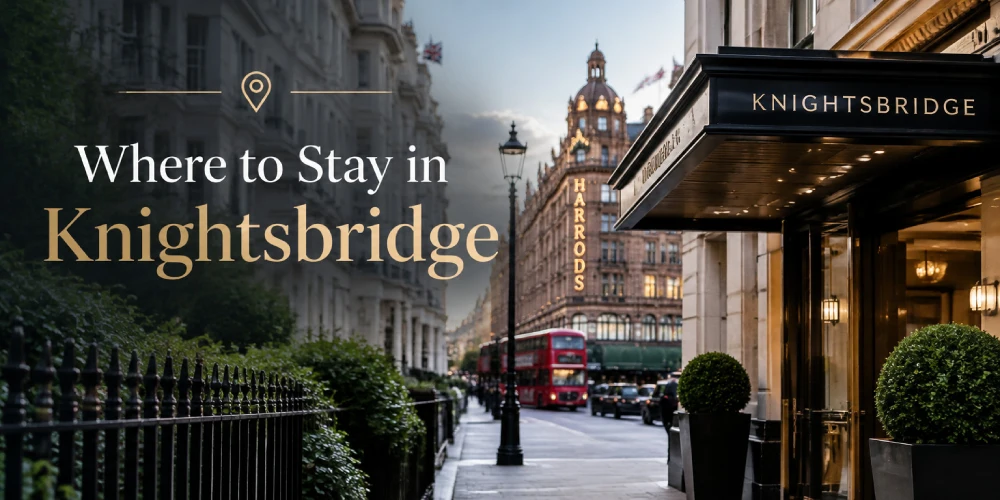
Where to Stay in Knightsbridge: 12 Hotels Ranked for Every Budget
Hotels Knightsbridge UK: 12 handpicked stays near Harrods and Hyde Park, from boutique townhouses to five-star icons, ranked by budget and area for 2026.

Forhad Ahmed
Author & Travel Expert
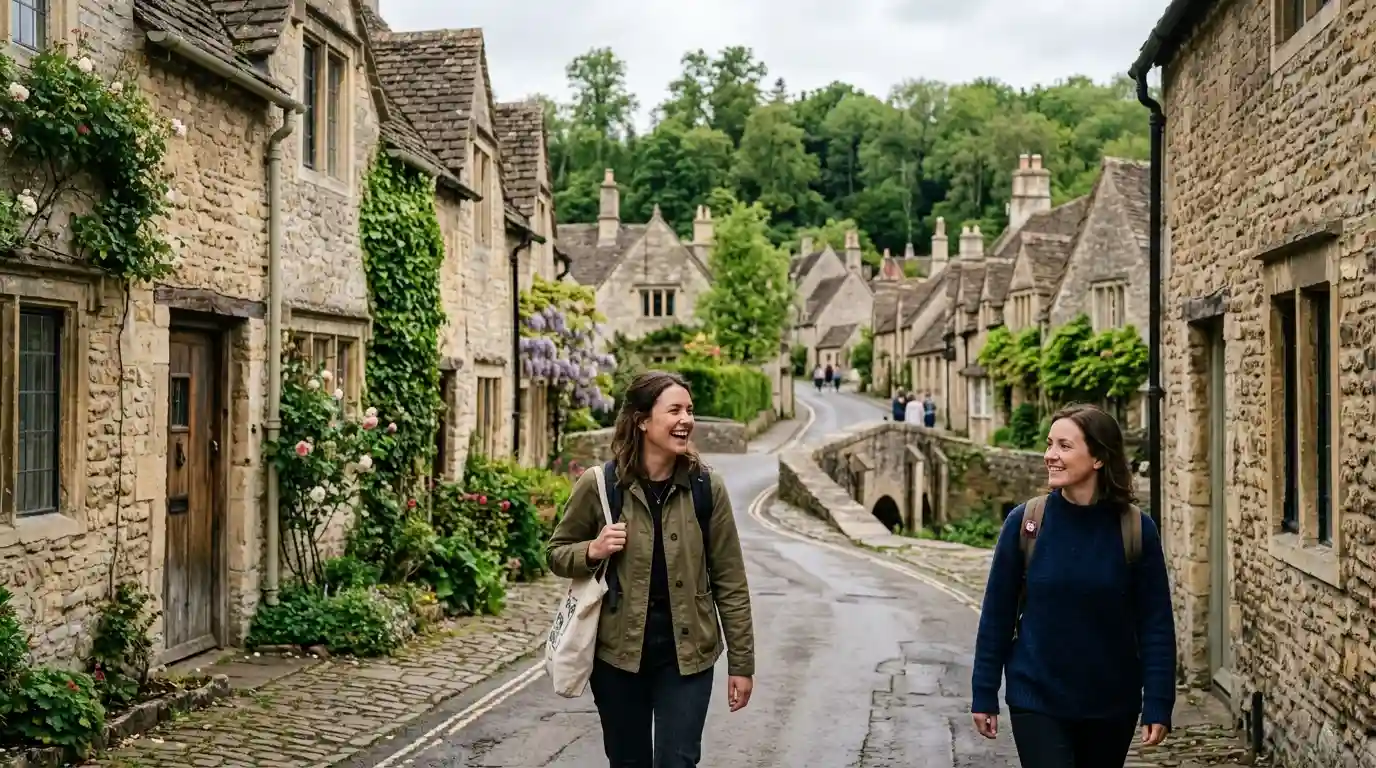
The Cotswolds cover nearly 800 square miles across six counties, which is about the size you'd need to fit every tourist photograph you've ever seen of honey-coloured stone, dry stone walls and rolling green hills into one place. The problem isn't finding beautiful things to look at. The problem is deciding which beautiful things to look at first, because the region doesn't do ugly and it doesn't do obvious priorities.
Here's what nobody tells you clearly enough: you almost certainly need a car. The Cotswolds have one train station that matters (Moreton-in-Marsh, on the GWR line from LondonPaddington, about an hour and a half). Everything else is lanes and villages connected by infrequent buses or nothing at all. Organised tours from London, Bath or Oxford exist and are fine, but they choose the itinerary, not you. If you want to see what you want, when you want, hire a car.
What follows is what to see in the Cotswolds in 2026: 15 villages and attractions, organised by area, with honest notes on crowd level, transport and who each place suits. The comparison table below gives a 30-second overview. The full guide goes deeper.
Bourton-on-the-Water for the classic Cotswolds village (River Windrush flowing through the centre, stone bridges, tea rooms), Bibury for Arlington Row (the most photographed cottages in England, and they really are that good in the right light), and Broadway Tower for the best single view in the Cotswolds from a folly on the escarpment edge. If you have a fourth day, add Blenheim Palace near Woodstock — it's on the edge of the Cotswolds and it's extraordinary.
• Prettiest village — Bibury (Arlington Row) or Castle Combe
• Best for families — Bourton-on-the-Water (model village, Birdland, river paddling)
• Best view — Broadway Tower
• Best grand house — Blenheim Palace
• Quietest — Snowshill, Guiting Power, the Slaughters
• Most accessible by train — Moreton-in-Marsh (GWR from London, ~1h 30m)
Place | Area | Crowd Level | Train Access? | Best For |
Bourton-on-the-Water | Central | High (very busy summer weekends) | No — car or tour | Classic village, families, tea rooms |
Bibury | Central | High | No — car | Arlington Row, photography |
Castle Combe | South | Moderate–High | No — car | Prettiest village, film locations |
Broadway | North | Moderate | No — car (Moreton 6 miles) | Gallery, shops, Tower nearby |
Broadway Tower | North | Low–Moderate | No — car | Best view in the Cotswolds |
Chipping Campden | North | Low–Moderate | No — car (Moreton 8 miles) | Cotswold Way start, Arts & Crafts |
Stow-on-the-Wold | Central | Moderate | No — car (Moreton 4 miles) | Market square, antiques |
Moreton-in-Marsh | Central | Moderate | YES — GWR from London (~1h 30m) | Tuesday market, train-accessible base |
Burford | Central/East | Moderate | No — car | High street, antiques, gateway town |
Cirencester | South | Low–Moderate | No — car (Kemble station 4 miles) | Roman history, independent shops |
The Slaughters | Central | Low | No — car | Quiet, pastoral, off the main circuit |
Snowshill | North | Low | No — car | Manor (NTS), lavender fields nearby |
Blenheim Palace | East (near Woodstock) | Moderate–High | Hanborough station + taxi | Grand house, Capability Brown grounds |
Sudeley Castle | Central (Winchcombe) | Moderate | No — car | Tudor castle, gardens, Katherine Parr tomb |
Cotswold Wildlife Park | South (Burford) | Moderate | No — car | Families, giraffes, 160 acres |
Crowd levels are for summer weekends — the busiest period. Midweek visits and shoulder-season dates (April, May, September, October) are materially quieter.
The single most important thing to know about visiting the Cotswolds: most of it is not accessible by public transport. The villages that make the Cotswolds famous are connected by narrow lanes, and the bus services between them are infrequent or non-existent. One train station — Moreton-in-Marsh — has a direct GWR service from London Paddington (about 1 hour 30 minutes, roughly hourly). Kemble station (near Cirencester) is on the same line but requires a taxi into town. That's it for trains.
Hire a car from London, Oxford or Bath. The Cotswolds are about 90 minutes from London by the M40 to Burford, or 30 minutes from Bath via the A46. A car gives you complete freedom and is the only way to reach the quieter villages (Snowshill, the Slaughters, Guiting Power) without a tour.
GWR from London Paddington to Moreton-in-Marsh, about 1 hour 30 minutes. From Moreton you can walk to some attractions, but a car or taxi is needed for most. Stow-on-the-Wold is 4 miles from Moreton; Broadway is 6 miles. The Cotswold on Demand bus service operates in some areas.
Tours from London, Oxford and Bath run daily. Typically £40–80 per person for a full day covering 3–4 villages. Useful if you don't drive, but the itinerary is fixed and the stops are usually the busiest villages. GoCotswolds and Rabbie's are well-reviewed operators.
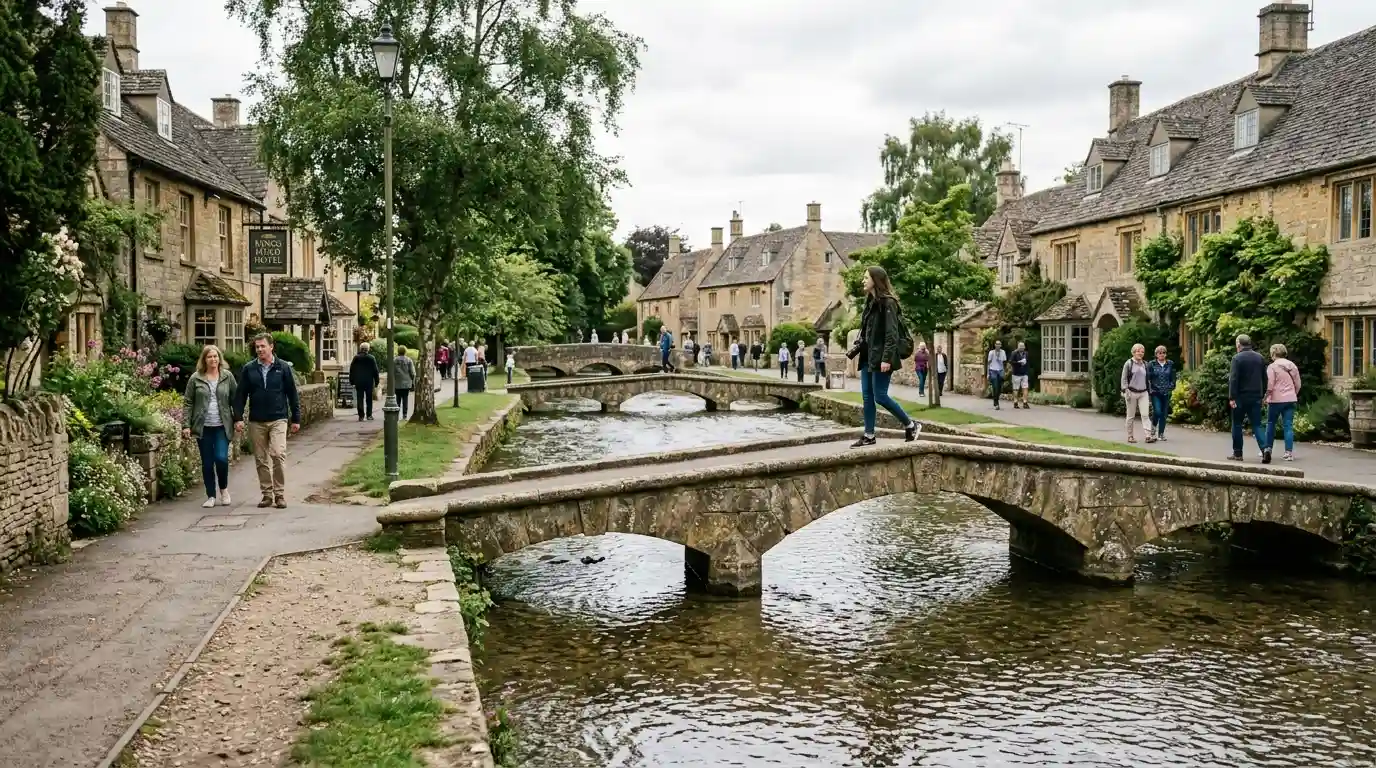
Bourton is the most visited village in the Cotswolds, and it's easy to see why. The River Windrush flows through the centre under a series of low stone bridges, lined by tea rooms and shops. It's the most classically 'Cotswolds' scene in the region. The Model Village (a one-ninth scale replica of Bourton itself, built in the 1930s) is oddly charming, and Birdland Park (penguins, flamingos, hornbills) works well for children.
The downside: Bourton is extremely busy on summer weekends and bank holidays. The car parks fill by 10am. The High Street is packed. Visit midweek or before 10am on a weekend for a different experience.
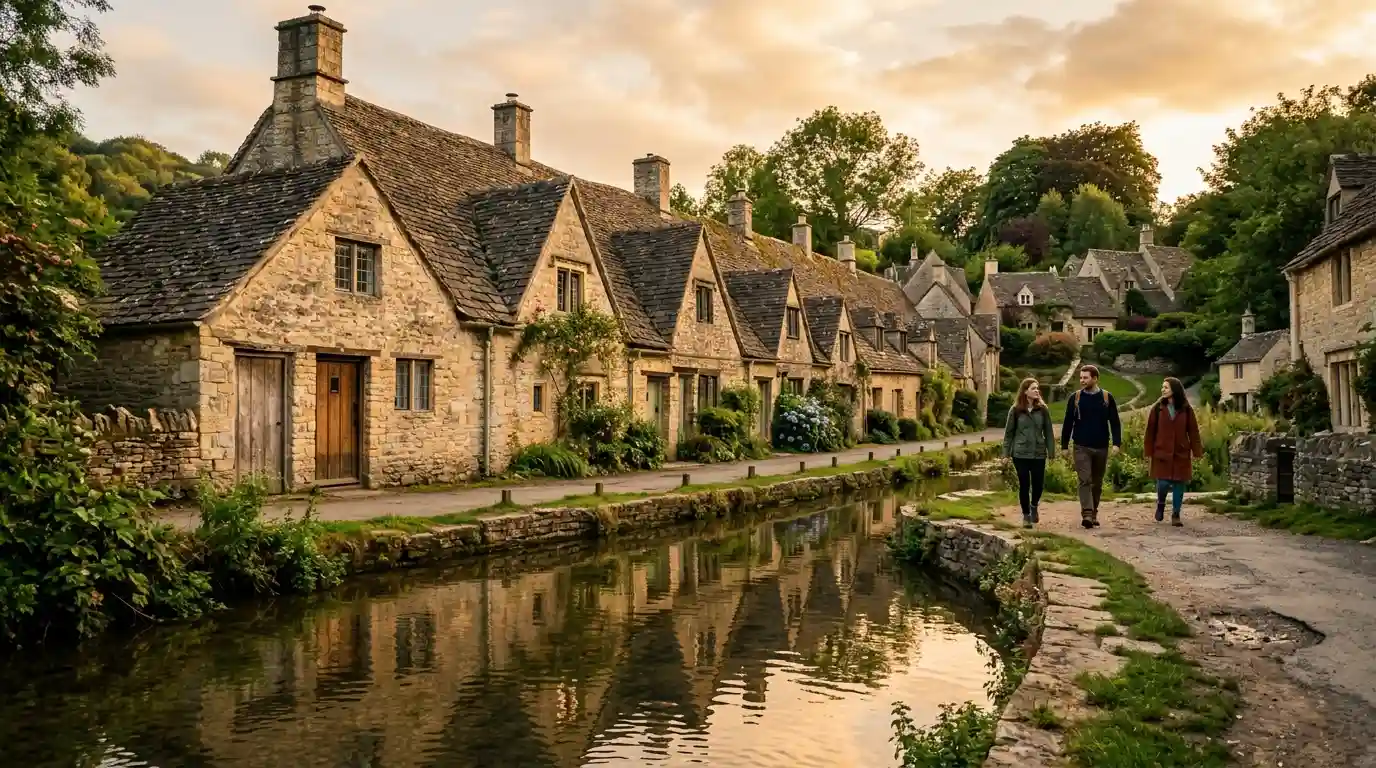
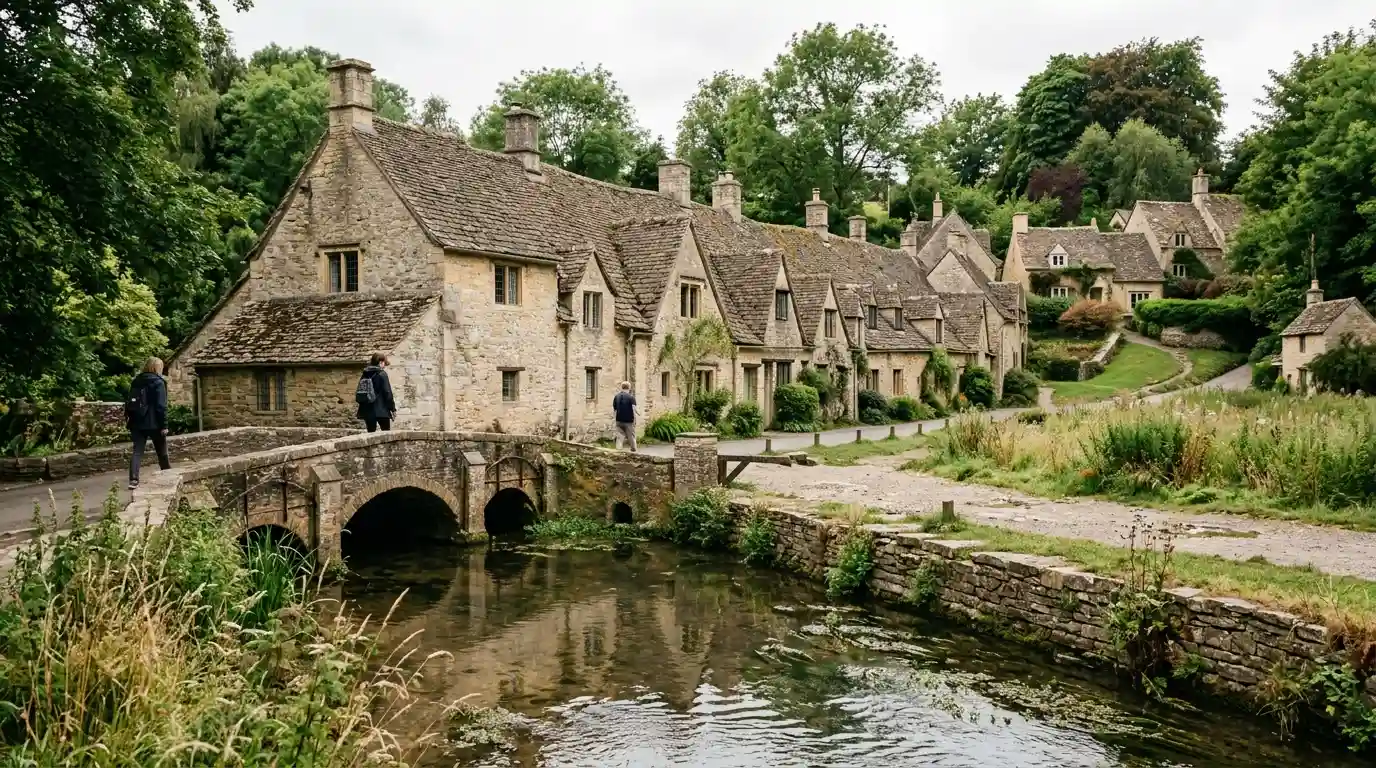
William Morris called Bibury 'the most beautiful village in England', and Arlington Row — the terrace of medieval weavers' cottages by the River Coln — is probably the most photographed row of houses in the country. The cottages are 14th-century, the river runs alongside, and in the right light the stone turns from honey to amber. The trout farm adjacent to Arlington Row is old-fashioned and worth 20 minutes.
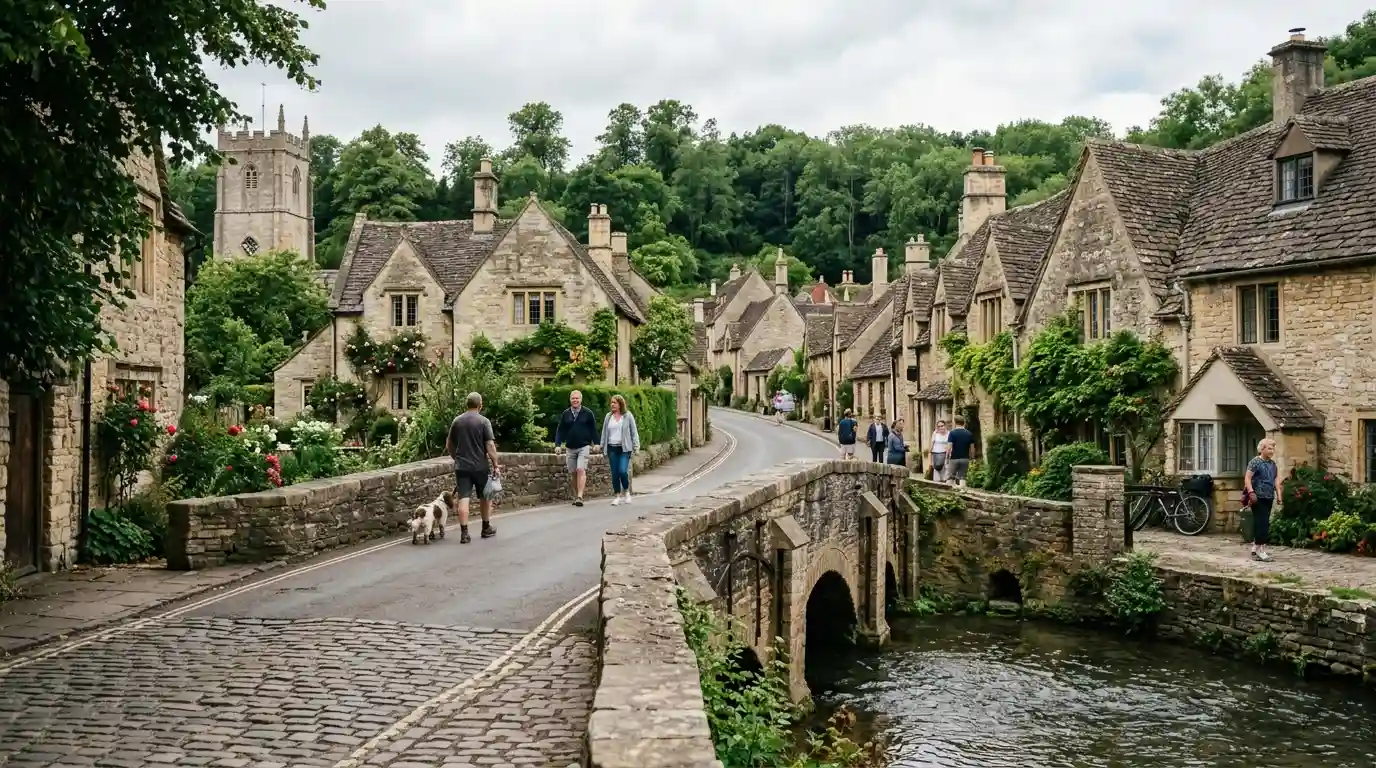
Castle Combe is the Cotswolds at its most film-set. The village sits in a valley, there's one street running downhill to a stone bridge, and the medieval market cross and Perpendicular Gothic church complete the scene. It was used as a filming location for War Horse, Stardust and The Wolf Man. No through traffic — which helps the atmosphere. Car park is above the village, short walk down. South Cotswolds, about 30 minutes from Bath.
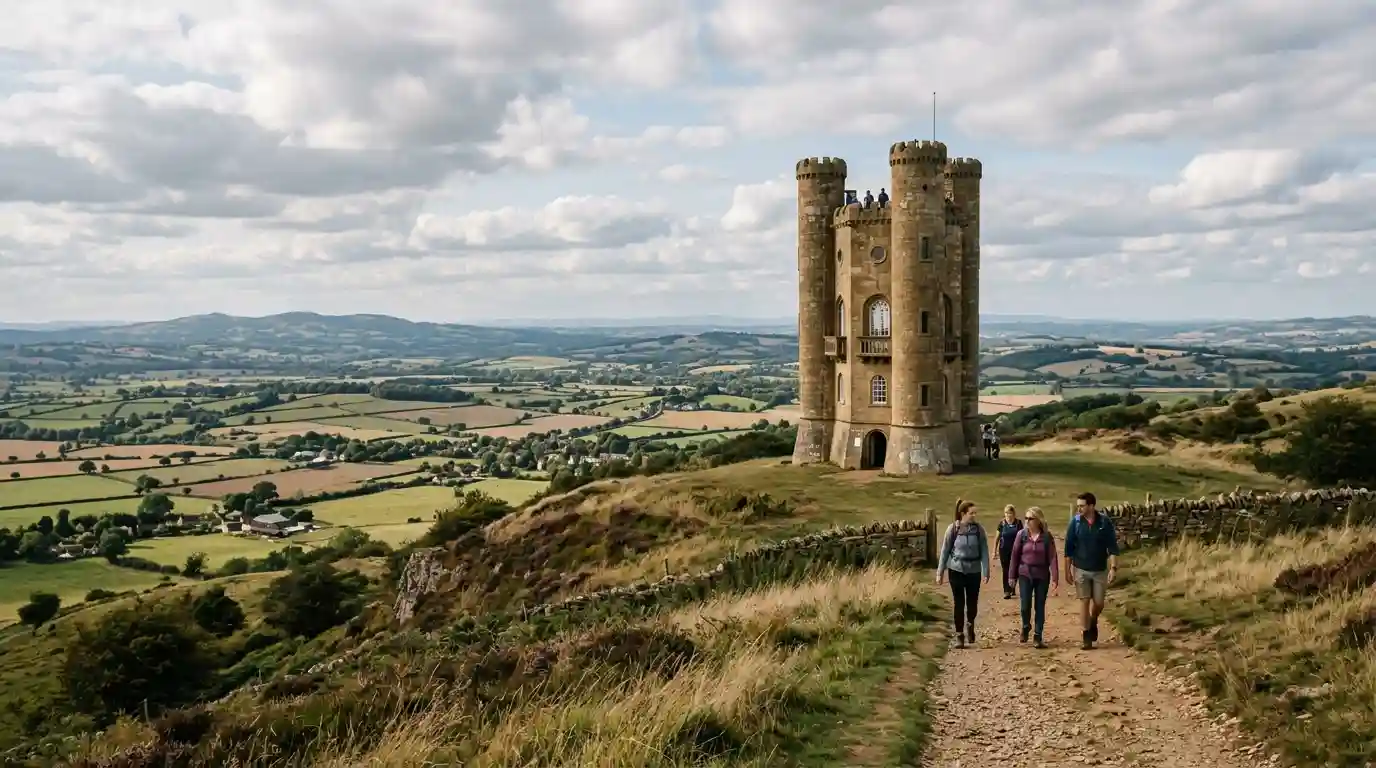
Broadway is an elegant North Cotswolds village with a broad High Street lined with galleries, antiques shops and the Lygon Arms hotel (16th-century coaching inn, now boutique). Broadway Tower, about a mile south on the escarpment edge, is a folly built in 1798 by Capability Brown. On a clear day you can see 16 counties from the top. It's the best single view in the Cotswolds. Entry about £8 adult.
The starting point of the Cotswold Way (a 102-mile National Trail to Bath) and home of the Arts and Crafts movement. The High Street is one of the most architecturally complete in the Cotswolds, with the 15th-century Market Hall and the Perpendicular wool church. Less crowded than Bourton or Broadway. The Cotswold Olimpick Games (Robert Dover's Games, dating from 1612) take place on Dover's Hill above the town — shin-kicking is still a competitive event.
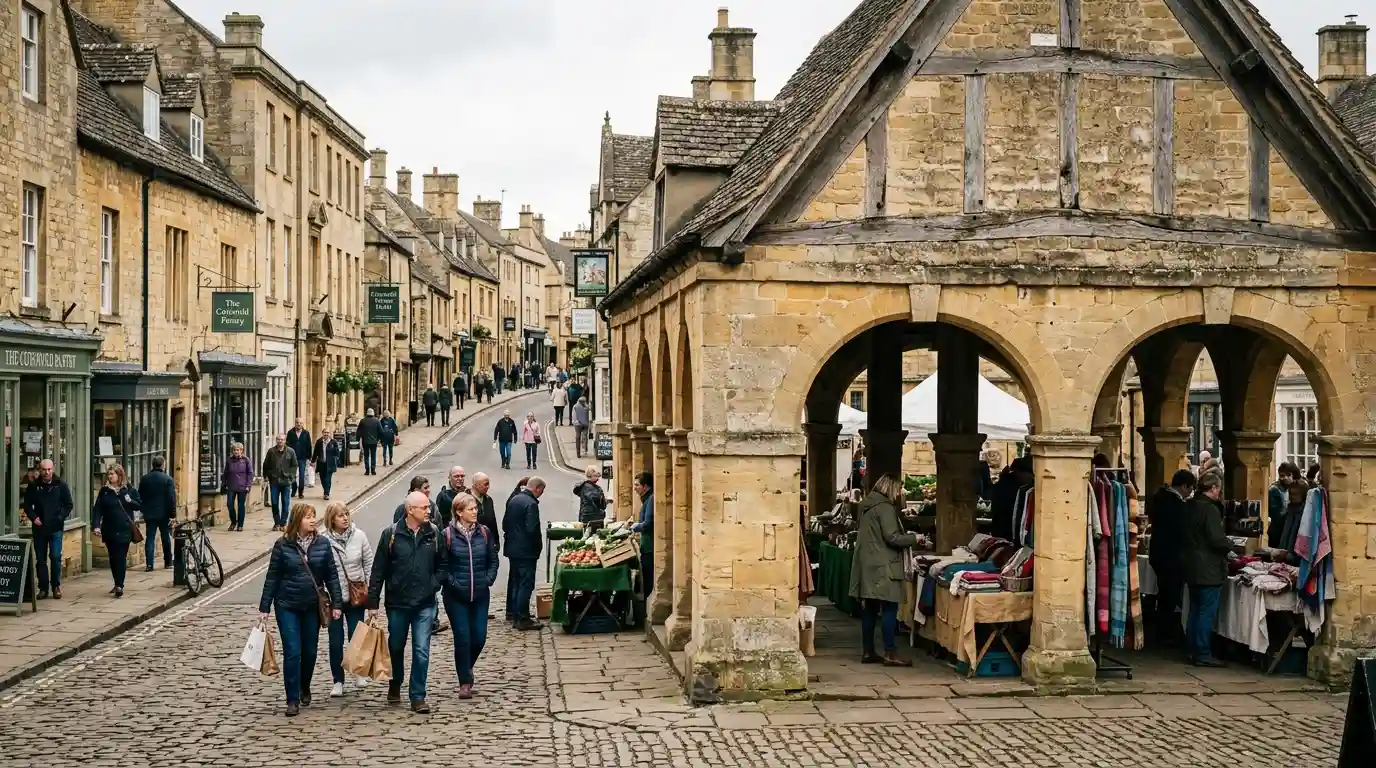
Stow sits at the top of a hill at a crossroads of ancient routes. The market square is the centre of the village, ringed by antiques shops, pubs and tea rooms. It's the Cotswolds' antiques capital and the Thursday market is worth timing a visit around. Less picture-postcard than Bourton or Bibury but more practically interesting. Four miles from Moreton-in-Marsh, making it one of the most accessible villages from the train.
Moreton matters because it has a train station — the only village in the central Cotswolds directly connected to London by rail (GWR from Paddington, ~1h 30m). The Tuesday market is one of the largest street markets in the Cotswolds and has been running since 1228. The town is a practical base for visiting the surrounding villages by car or taxi.
Burford is the gateway to the Cotswolds from Oxford and London. The High Street descends steeply to a medieval bridge over the River Windrush. Antiques shops, a medieval church with a Norman tower, and Huffkins (a Cotswolds bakery and tea room institution). Less photogenic than Bibury but more practical as a stop — good parking, good lunch options, easy access from the A40.
The Cotswolds' largest town and its unofficial capital. Roman history (the Corinium Museum has a strong Roman collection — Cirencester was Corinium, the second-largest Roman town in Britain), independent shops in hidden courtyards, and the Church of St John the Baptist with a golden goblet made for Anne Boleyn. Less touristy than the smaller villages because it's a working town, not a tourist village. Kemble station is 4 miles south (taxi or bus into town).
Two small villages linked by a footpath along the River Eye. Lower Slaughter has the Old Mill (a watermill with a tea room and small museum) and Upper Slaughter has a Norman church. They're quieter than Bourton (which is 2 miles away) and the walk between them through meadows is one of the gentlest, prettiest walks in the Cotswolds. About 20 minutes on foot between the two.
Snowshill Manor (NTS) is the eccentric former home of Charles Wade, who filled every room with collections of Japanese armour, musical instruments, bicycles, clocks and spinning wheels. The garden is excellent. Snowshill village is tiny and quiet. Cotswold Lavender is nearby — the fields are open June to early August and the purple rows against the honey stone are one of the Cotswolds' strongest visual combinations.
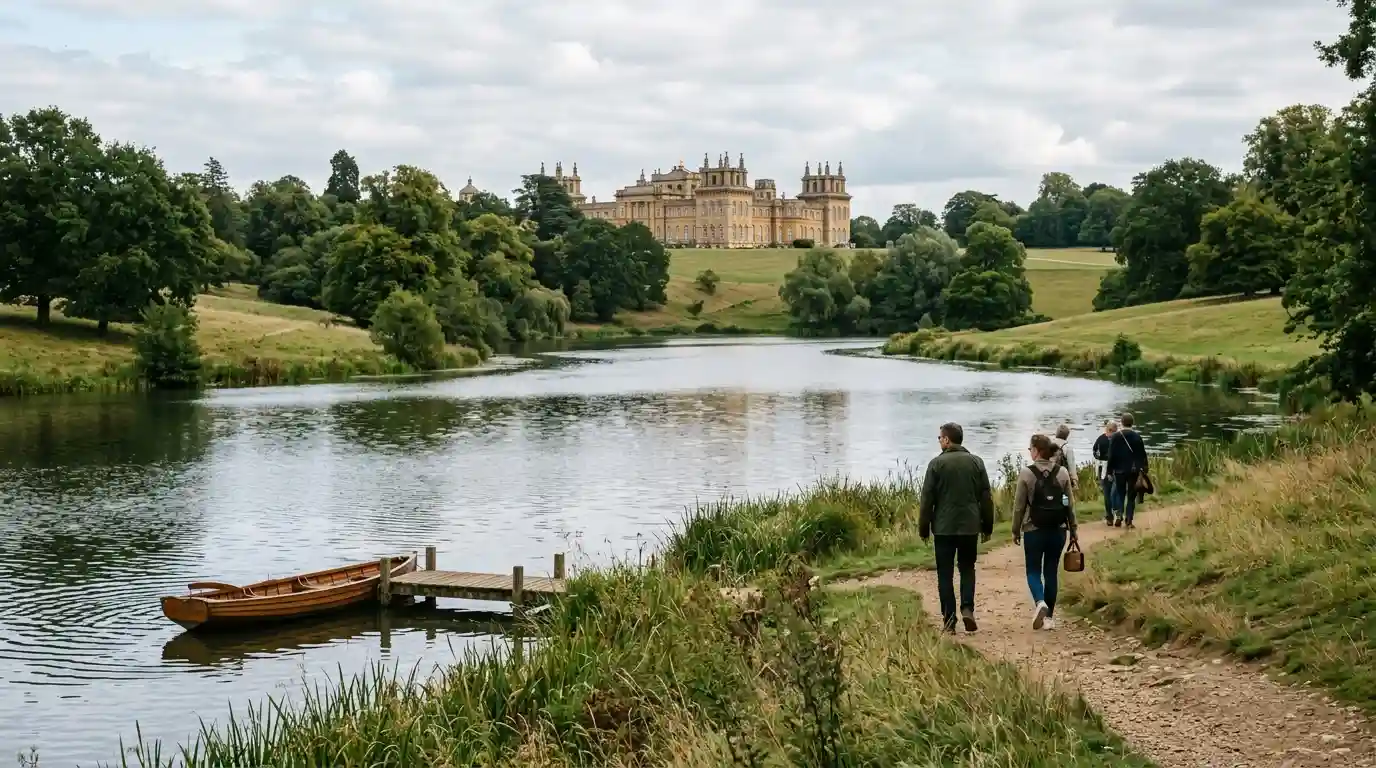
On the eastern edge of the Cotswolds near Woodstock. The birthplace of Winston Churchill, designed by Vanbrugh and set in 2,000 acres of Capability Brown parkland. One of England's greatest houses. The Christmas trail (mid-November to early January) is one of the best illuminated events in the country. Entry approximately £38 adult (2026). Hanborough station is the nearest (GWR, ~1h 15m from Paddington) followed by a short taxi.
Tudor castle near the town of Winchcombe, famous as the burial place of Katherine Parr (Henry VIII's last wife). The gardens are award-winning and the castle itself is still privately lived in. Winchcombe is a pleasant small town at the foot of the escarpment with Belas Knap (a Neolithic long barrow) accessible by a steep walk above the town.
160 acres of parkland near Burford with over 260 animal species including giraffes, rhinos, penguins and red pandas. The strongest family attraction in the Cotswolds. Entry approximately £20 adult, £14 child. The grounds include a walled garden and a Victorian manor house. Good for a full day with children.
A Neolithic and Bronze Age stone circle on the Oxfordshire –Warwickshire border. Smaller and quieter than Stonehenge or Avebury, accessible any time (small honesty box contribution), and atmospheric in a way that the bigger circles, with their fences and entry fees, sometimes aren't. Worth a stop if you're driving through the North Cotswolds.
Broadway, Chipping Campden, Moreton-in-Marsh, Snowshill, the Rollright Stones. The most varied area — from Broadway's elegance to the remoteness of Snowshill. Best reached from Moreton-in-Marsh station.
Bourton-on-the-Water, Stow-on-the-Wold, the Slaughters, Bibury, Burford, Sudeley Castle, Winchcombe. The most visited area and the one most people picture when they think of the Cotswolds. Car essential.
Castle Combe, Cirencester, Tetbury, Malmesbury. Closer to Bath. Less visited than the central area, which is part of the appeal. Castle Combe is the standout.
Blenheim Palace, Woodstock, Burford (also central). Oxford is on the doorstep. The most accessible from London without a car — Hanborough and Moreton-in-Marsh are both on the GWR line.
Bibury (Arlington Row at golden hour), Castle Combe (quieter, more atmospheric), Chipping Campden (Arts and Crafts heritage, excellent pub dining). The Cotswolds' appeal for couples is the absence of effort — beautiful things are close together, the pace is slow, and a pub with a fire is never far away.
Cotswold Wildlife Park (giraffes, penguins, 160 acres), Bourton-on-the-Water (model village, Birdland, river paddling), Blenheim Palace (grounds for running, butterfly house, adventure play). The Cotswolds' gentleness suits families with younger children.
Train to Moreton-in-Marsh, then taxi to Stow-on-the-Wold (4 miles), Broadway (6 miles) or Bourton-on-the-Water (8 miles). Or book an organised tour from London, Oxford or Bath. Honest assessment: the Cotswolds without a car is possible but limiting.
Wildflowers, lambs, bluebells. Less crowded than summer. The best all-round season.
Longest days, lavender at Snowshill (mid-June to early August), outdoor events. But also the busiest. Bourton and Bibury are crowded. Go early or midweek.
Golden light on golden stone. The best light for photography. Blenheim Palace grounds in autumn colour. Quieter than summer.
Atmospheric, quiet, cold. Blenheim and Sudeley Castle have Christmas events. Castle Combe in frost is extraordinary. But some attractions have reduced hours.
Hire a car. I keep saying it because it's the most important piece of advice for this region. The lanes are narrow — don't hire anything bigger than you need.
Park early at Bourton-on-the-Water and Bibury on summer weekends. By 10am the car parks fill. Arriving at 9am changes the whole experience.
The Cotswold Way (102 miles, Chipping Campden to Bath) is a National Trail with excellent waymarking. Even a half-day section — Chipping Campden to Broadway, about 6 miles — gives you the escarpment views and the upland landscape that most visitors miss because they stay in the valleys.
Combine the Cotswolds with Bath or Oxford. Bath is 30 minutes from Castle Combe. Oxford is 30 minutes from Burford. Both make natural start or end points.
For accommodation, the Cotswolds are expensive in summer. Budget: £100–£150/night for a pub or B&B. Mid-range: £150–£280. Luxury (Lygon Arms Broadway, Lords of the Manor Upper Slaughter, Manor House Castle Combe): £280–£600+.
Assuming buses connect the villages. They don't, or they do once every two hours, or they don't run on Sundays. Check before relying on them.
Visiting Bourton-on-the-Water on a sunny Saturday in July. It's not a village experience — it's a crowd experience. Go Tuesday morning instead.
Driving a large vehicle down Cotswolds lanes. The hedgerows are close and the lanes are single-track in places. Compact car, not an SUV.
Skipping the walking. The Cotswolds from the road is pretty. The Cotswolds from the footpaths — through meadows, along dry stone walls, over the escarpment — is something else. Even a 2-mile walk between the Slaughters gives you a version of the Cotswolds the car parks don't.

The Cotswolds don't disappoint, even when you arrive expecting picture-postcard England and find exactly that. What to see in the Cotswolds comes down to what kind of Cotswolds you want: the busy, classic-village version (Bourton, Bibury), the quieter version (the Slaughters, Snowshill, Chipping Campden), or the grand-house version (Blenheim Palace, Sudeley Castle). All of it works. Hire a car, arrive early, walk at least one footpath, and combine it with Bath or Oxford if you have the time.
Compare verified Cotswolds hotel rates on VervTrip.
Bibury (Arlington Row) and Castle Combe are the two most photographed. Bibury has the medieval weavers' cottages by the River Coln. Castle Combe has a valley setting with a single descending street and stone bridge. Both are beautiful. Castle Combe is slightly quieter.
It's possible but limiting. Moreton-in-Marsh has a direct train from London Paddington (about 1h 30m). From there, taxis reach Stow, Broadway and Bourton. Organised tours from London, Oxford and Bath cover the highlights. But a car gives you freedom the alternatives don't.
Two to three days covers the highlights comfortably. One day is possible if you focus on 2–3 villages. A week would let you walk sections of the Cotswold Way, visit Blenheim Palace and reach the quieter corners.
The North Cotswolds (Broadway, Chipping Campden, Moreton-in-Marsh) gives the best base for the widest range of attractions. The Central Cotswolds (Bourton, Stow, Bibury) puts you nearest the most photographed villages. The South (Castle Combe, Cirencester) is closest to Bath.
Yes. Train to Moreton-in-Marsh (about 1h 30m from Paddington), then taxi or hire car. Organised day tours from London are also widely available (£40–80 per person). You'll cover 3–4 villages in a day. Two days is better.
Yes. The combination of honey-stone architecture, gentle countryside, pub culture and English village atmosphere is distinct and not replicated anywhere else in the UK at this scale. It's touristy in parts — Bourton in July is busy — but the quieter villages remain peaceful.
A 102-mile National Trail from Chipping Campden to Bath, following the Cotswolds escarpment. Outstanding views, well waymarked. Even a half-day section (Chipping Campden to Broadway, about 6 miles) gives you the upland landscape most visitors miss.
Spring (April–May) for wildflowers and quiet. Summer for the longest days and lavender but the most crowds. Autumn (September–October) for golden light and quieter roads. Winter for atmospheric village scenes and Christmas events at Blenheim Palace.
Broadway and Chipping Campden for the North Cotswolds. Stow-on-the-Wold or Moreton-in-Marsh for the Central area (Moreton has the train station). Castle Combe or Cirencester for the South. Pub B&Bs and small hotels are the Cotswolds' strength — chains are rare.
Please login to leave a comment.
Hotels Knightsbridge UK: 12 handpicked stays near Harrods and Hyde Park, from boutique townhouses to five-star icons, ranked by budget and area for 2026.
Hotels in Milton Keynes for 2026: 9 handpicked stays near the station, Xscape and Bletchley Park, ranked by budget, area and who they suit best.

The best days out in Birmingham fall into four groups: the big ticketed attractions in and around the city centre...
We value your privacy
We use cookies to enhance your browsing experience and analyze our traffic. By clicking "Accept All", you consent to our use of cookies. Learn more.
Join our travel community
on your first booking when you subscribe
Your Discount Code
Copy this code and use it at checkout