Day Trips from Edinburgh: 14 Best for 2026 (Train Times & Driving Guide)
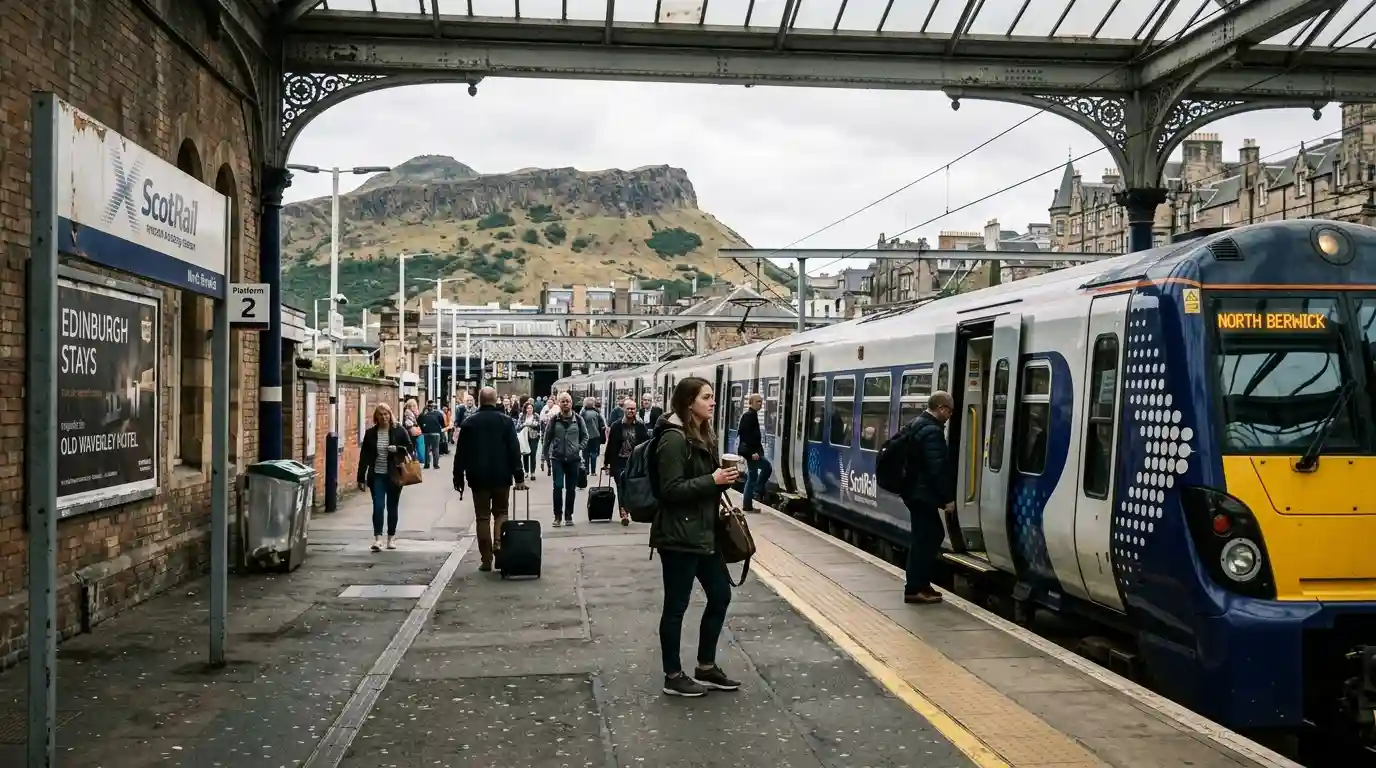
Most people who visit Edinburgh don't leave it. That's understandable — the city's good enough to fill a week. But it also means they miss the fact that some of the best things in Scotland are 30 to 40 minutes away by train. North Berwick has a white-sand beach and 150,000 gannets on a rock you can see from the shore. Stirling Castle is 41 minutes from Waverley and arguably more important to Scottish history than Edinburgh Castle. St Andrews is an hour and a bit, and the Old Course is walkable on Sundays when nobody's playing.
What follows is 14 day trips from Edinburgh, split into the ones you can do by train (more than you'd think) and the ones where you need a car or a tour bus. Every train time comes from ScotRail's current timetable. Every driving time is realistic, not optimistic. And every entry is honest about whether the public transport actually works or whether you'll spend half your day at bus stops.
If You Only Have Time for Three
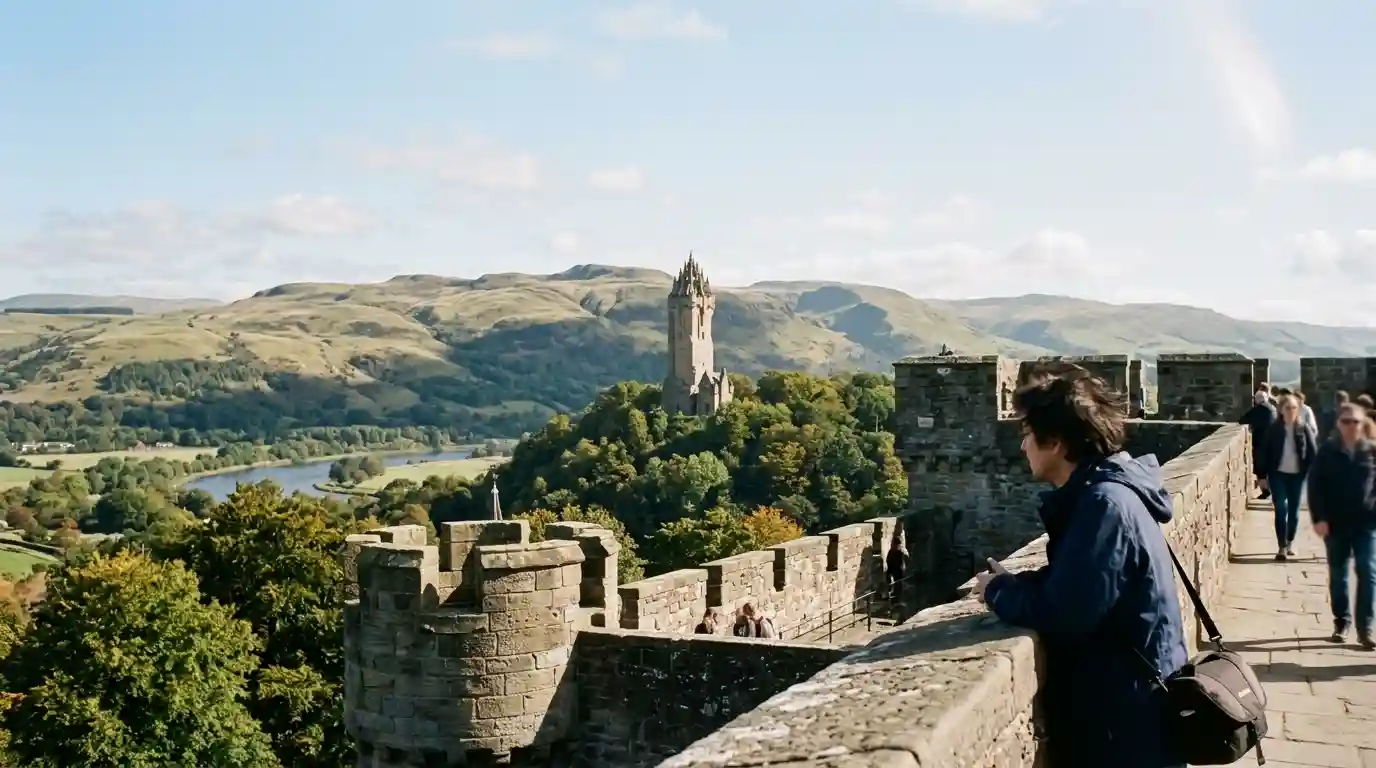
Stirling, North Berwick and St Andrews. All doable by train, no car needed, and between them they cover castles, a beach, golf, medieval ruins and genuinely excellent scenery. Stirling is 41 minutes, North Berwick is 32, St Andrews is about an hour and a quarter including the bus from Leuchars. If you only do one, make it Stirling — the castle is extraordinary and the whole day comes together without any planning.
At a glance
• Easiest by train — Stirling (41 min), North Berwick (32 min), Glasgow (50 min)
• History — Stirling Castle, Linlithgow Palace, Rosslyn Chapel
• Coast — North Berwick, St Abbs, the East Neuk fishing villages
• Proper scenery (you'll need a car) — Loch Lomond, Glencoe, Perthshire
• Families — North Berwick (beach, seabirds, ice cream), Stirling (castle, Bannockburn)
• Outlander — Linlithgow Palace, Culross, Doune Castle
Day Trips from Edinburgh: Comparison Table
Destination | Train Time | Drive Time | Public Transport? | Best For |
Stirling | ~41 min (ScotRail direct) | ~50 min | Yes — excellent | History, castles, Wallace Monument |
North Berwick | ~32 min (ScotRail direct) | ~40 min | Yes — excellent | Beach, Bass Rock, families, coast |
St Andrews | ~1h to Leuchars + 10-min bus | ~1h 30 min | Yes — good | Golf, university, cathedral ruins |
Glasgow | ~50 min (ScotRail direct) | ~1h 10 min | Yes — excellent | Art, music, food, Kelvingrove |
Linlithgow | ~20 min (ScotRail direct) | ~30 min | Yes — excellent | Linlithgow Palace, Outlander |
South Queensferry | ~30 min by bus | ~20 min | Yes — bus | Forth Bridge views, harbour walk |
Rosslyn Chapel (Roslin) | ~45 min by bus (No. 37) | ~25 min | Yes — bus | Da Vinci Code, medieval carvings |
Scottish Borders (Melrose) | ~1h Borders Railway to Tweedbank | ~1h | Partial — train to Tweedbank | Abbeys, walks, quiet countryside |
Culross | ~1h 15 min (train + bus) | ~50 min | Possible — train to Dunfermline then bus | Outlander village, painted houses |
Perthshire (Pitlochry, Dunkeld) | ~1h 30 min to Pitlochry | ~1h 20 min | Yes — train to Pitlochry | Woodland walks, whisky, Loch Tummel |
East Neuk of Fife (Anstruther, Crail) | Not practical by train | ~1h 15 min | Bus possible but slow | Fishing villages, fish and chips |
Loch Lomond | Not practical direct | ~1h 30 min | No — car or organised tour | Loch scenery, walking, Trossachs |
St Abbs | Not practical by train | ~1h | Bus possible (slow) | Coastal walk, nature reserve, diving |
Glencoe / Highlands | Not practical by train | ~2h 30 min | No — car or organised tour | Mountain scenery, walking, drama |
Train times are from ScotRail's current timetable. Sunday services are reduced on several of these routes — always check before you go, especially for North Berwick and the Borders Railway.
The 14 Trips — What They're Actually Like
1. Stirling
Stirling is the day trip I'd recommend to anyone who asks. The train is 41 minutes from Waverley, there's one roughly every half hour, and the castle — perched on a volcanic plug above the town — is legitimately one of the best things in Scotland. Not 'one of the best castles'. One of the best things. The Great Hall, the views across the Forth Valley to the Highland line, the Renaissance-painted ceilings in the Royal Palace — it's all there, and it's all walkable from the station.
From the castle you can see the Wallace Monument across the valley. It's about a 30-minute walk to get there, and there are 246 steps inside to reach the top. The views from the crown are worth the climb. Bannockburn Visitor Centre is a short bus ride south — the NTS has done a good job with the interactive battle experience.
Getting there
ScotRail from Waverley, 41 minutes, from £6.30 one-way. The walk from Stirling station to the castle is uphill and takes about 20 minutes. You'll feel it if you've got heavy bags.
Worth knowing
If you're planning other Historic Scotland visits (Linlithgow Palace, Edinburgh Castle), buy the Explorer Pass. It's £35 for a 3-day pass and pays for itself after two castles. Also: Linlithgow is on the same train line, 20 minutes closer to Edinburgh. You can do both in a day — Linlithgow Palace in the morning, train on to Stirling for the afternoon. That's one of the best history days in Scotland.
2. North Berwick
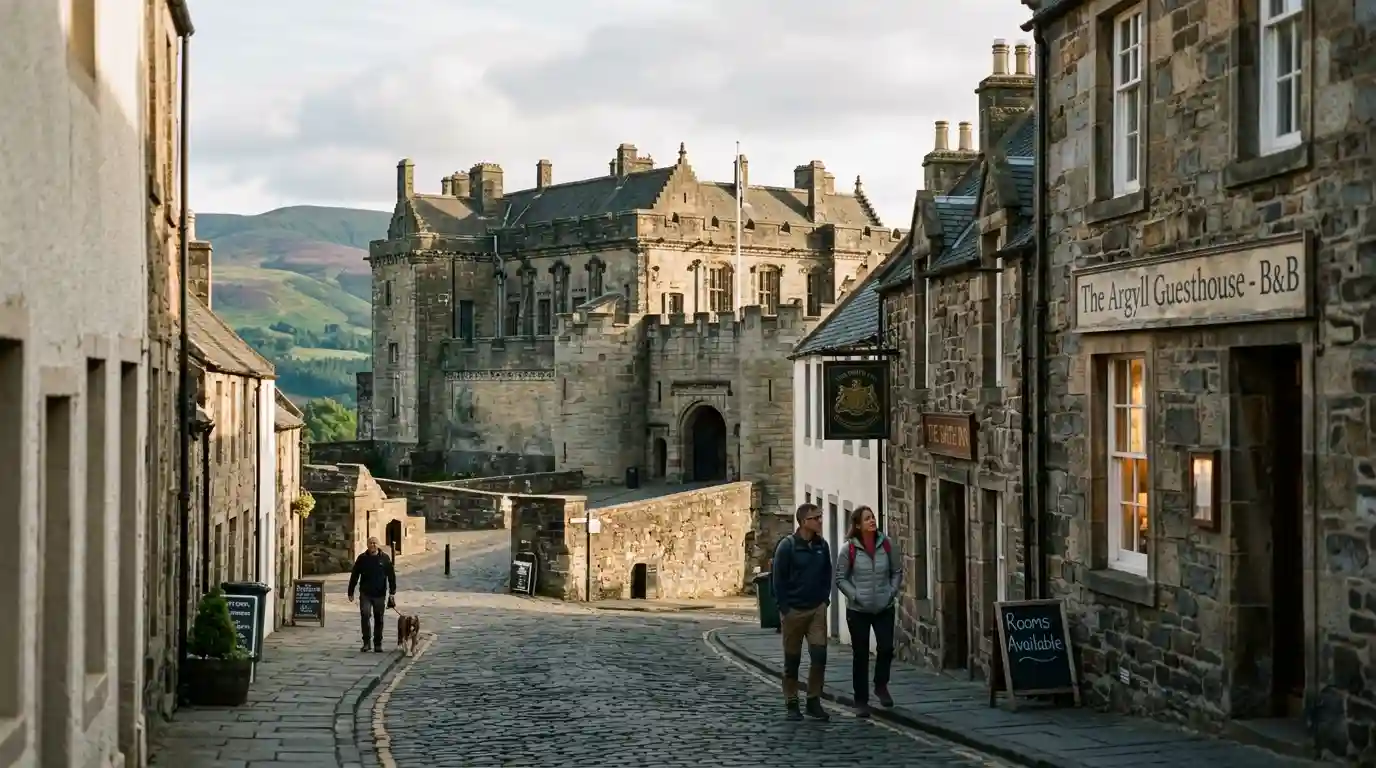
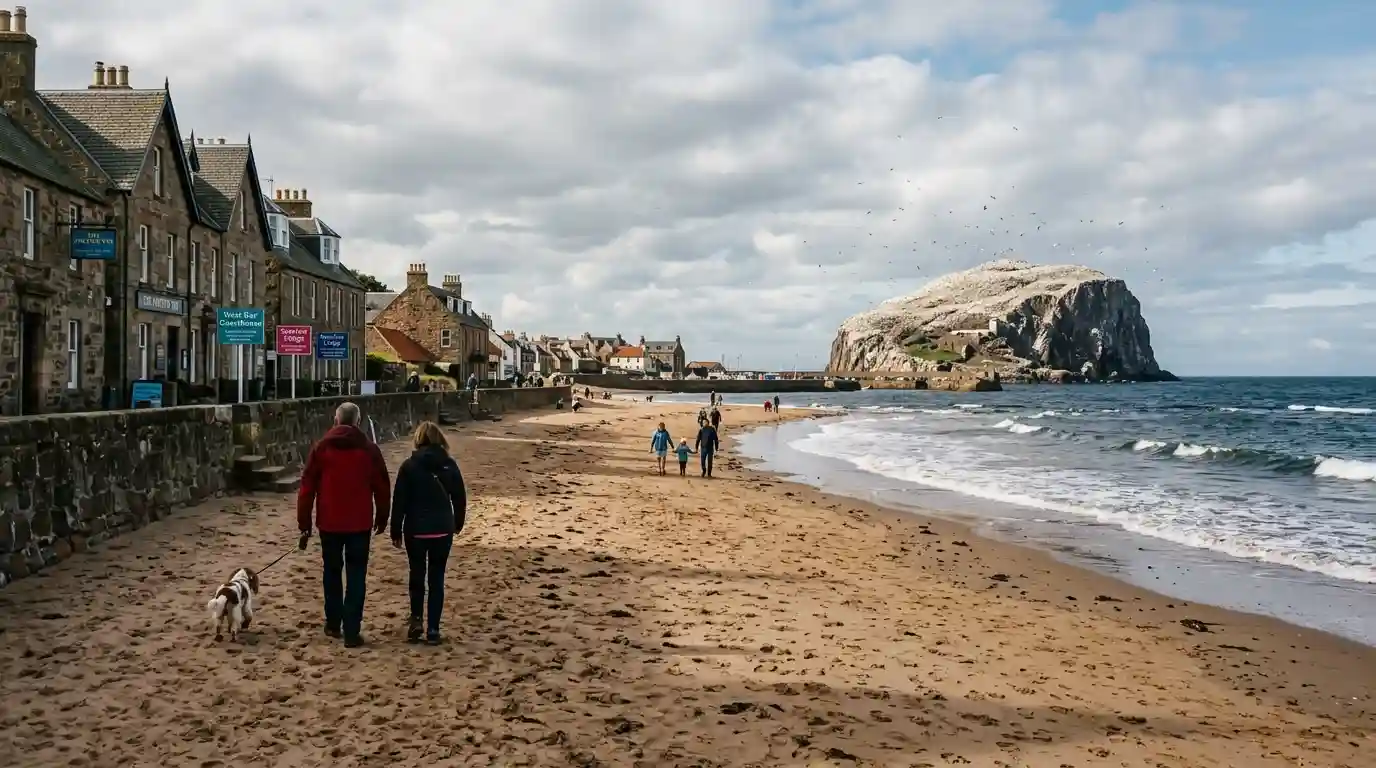
This is the one that surprises people. Thirty-two minutes on the train from Edinburgh and you're in a small seaside town with an actual sandy beach, a volcanic hill you can climb in twenty minutes, and views of Bass Rock — a guano-white lump offshore that's home to the world's largest gannet colony. About 150,000 birds at peak season. The Scottish Seabird Centre on the harbour has live cameras on the rock, and in summer you can take a boat trip around it.
The town itself is pleasant — independent shops, a couple of good cafés, and fish and chips that people argue about (the Rocketeer, the Lobster Shack, the chip shop on the High Street). Three miles east along the coast there's Tantallon Castle, a ruined clifftop fortress that photographs extremely well.

Getting there
ScotRail from Waverley, 32–35 minutes. The branch line runs roughly hourly — check the timetable, because missing a train means an hour's wait. Sunday services are worse. Sometimes only every two hours. Don't arrive on a Sunday without checking.
Worth knowing
The boat trip to Bass Rock is worth doing if you're there May to August and the weather's decent. The scale of the gannet colony is genuinely hard to believe until you see it. Book in advance — the boats are small and popular.
3. St Andrews
St Andrews doesn't have a train station. This confuses people. The train goes to Leuchars, which is about an hour and seven minutes from Waverley, and from there it's a 10-minute bus or a short taxi into St Andrews itself. It works fine, but you need to know about the connection or you'll be standing on a platform in Leuchars wondering where the town is.
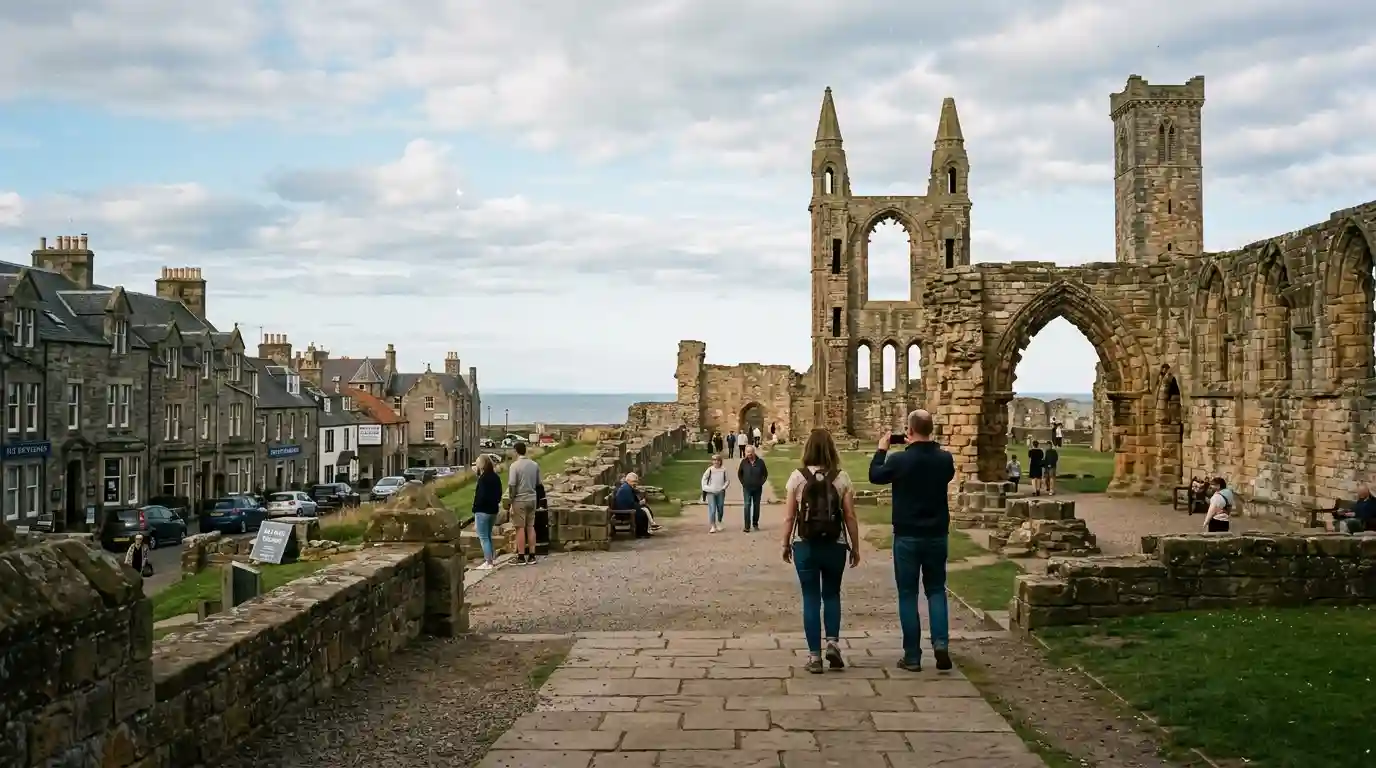
Once you're there, the place is lovely. The ruined cathedral was once the biggest in Scotland. The Old Course is walkable on Sundays and some evenings when there's no play — the Swilcan Bridge on the 18th is the photo everyone takes, and yes, it's worth it. The university (founded 1413, Scotland's oldest) gives the town a younger energy than you'd expect. Lunch at Forgans or the Seafood Ristorante.

Getting there
ScotRail to Leuchars (~1h 7m), then Stagecoach bus 99 (10 min, frequent) or taxi (~£8–10). By car about 1h 30m via the Forth Road Bridge. Budget about 1h 20m door to door each way.
Worth knowing
Sunday is the best day to visit if you want to walk the Old Course — it's closed to play. The cathedral ruins are free to walk around the exterior (museum entry about £8). And check whether the Swilcan Bridge is accessible before you go — it depends on the day's play schedule.
4. Glasgow
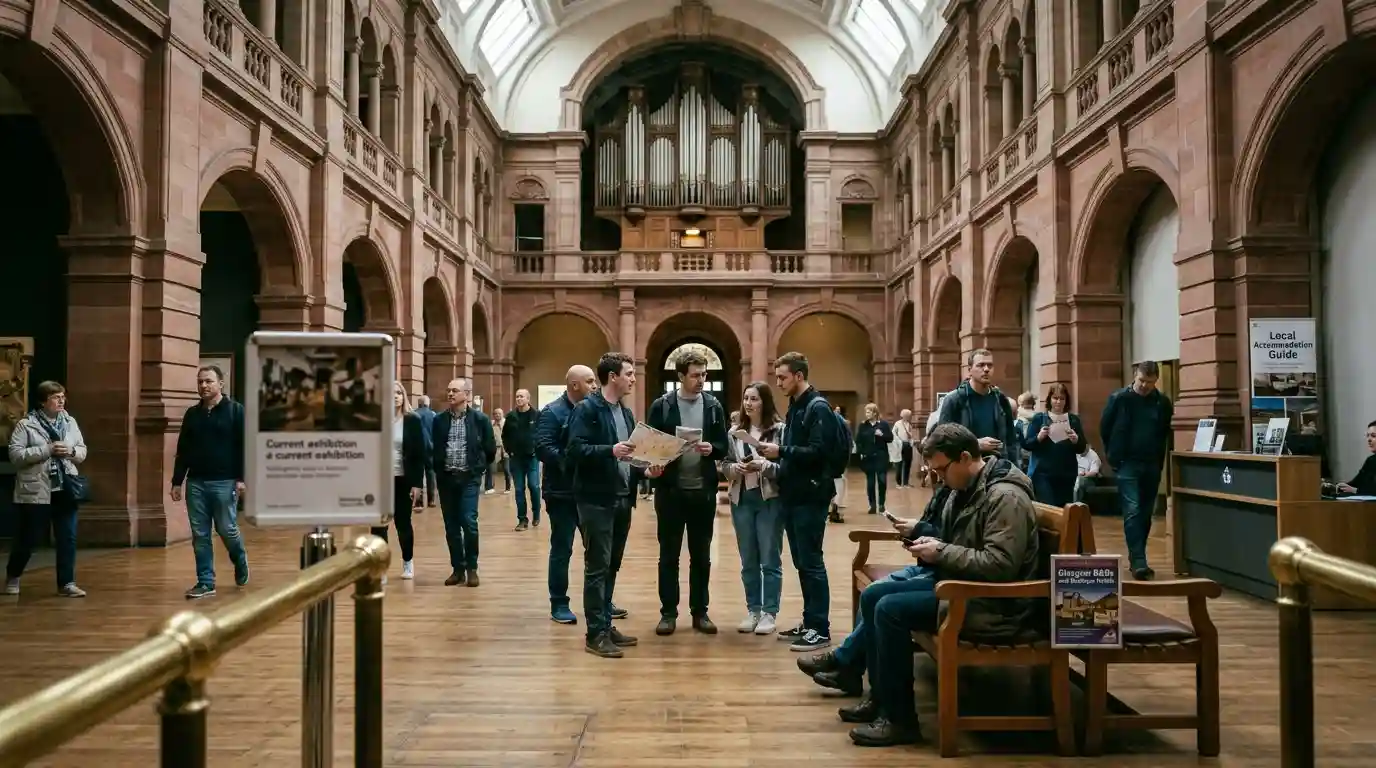
Edinburgh people and Glasgow people will argue about which city is better until the heat death of the universe. What's not in dispute is that Glasgow is 50 minutes away on one of Scotland's most frequent train routes, and Kelvingrove Art Gallery is free, extraordinary, and worth the trip on its own. There's a Dali, there are Mackintosh pieces, there's a Spitfire suspended from the ceiling of the main hall, and they play the organ at 1pm daily.
Beyond Kelvingrove: the Cathedral and Necropolis (the Victorian cemetery on the hill behind it, which is eerie and brilliant), the West End around Byres Road and Ashton Lane (independent restaurants and pubs), and the Riverside Museum (free, designed by Zaha Hadid). Glasgow's restaurant scene is arguably better than Edinburgh's for everyday eating — less tourist-facing, more locally driven.
Getting there
ScotRail from Waverley to Glasgow Queen Street, about 50 minutes, every 15 minutes at peak times. It's one of the easiest day trips in Scotland.
Worth knowing
Kelvingrove alone justifies the trip. If you only have three hours in Glasgow, spend them there. The organ recital at 1pm is one of those things that sounds like it shouldn't be that good, and then it is.
5. Linlithgow
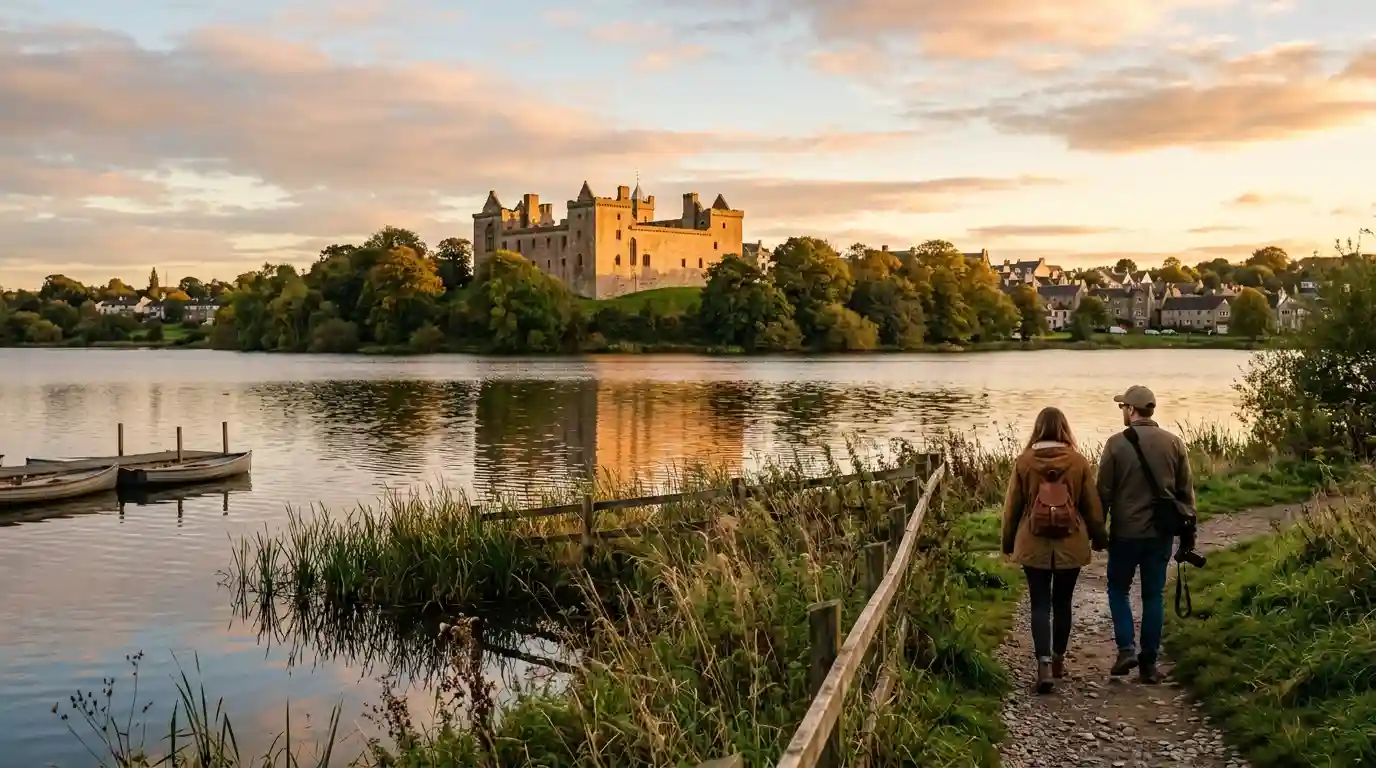
Twenty minutes on the train from Waverley. That's it. Mary Queen of Scots was born here, the palace sits on a loch, and Outlander fans will recognise it as Wentworth Prison. The ruin is open-roofed and atmospheric — you can walk the great hall, climb to the upper floors, and the views across the loch are excellent. Combine it with the walk around Linlithgow Loch (about 4 miles, flat, an hour and a half) and you've got a half-day. Pair it with Stirling in the afternoon for a full day.
Getting there
ScotRail, 20 minutes from Waverley. The palace is 10 minutes' walk from the station through the town. Entry about £8.
6. South Queensferry
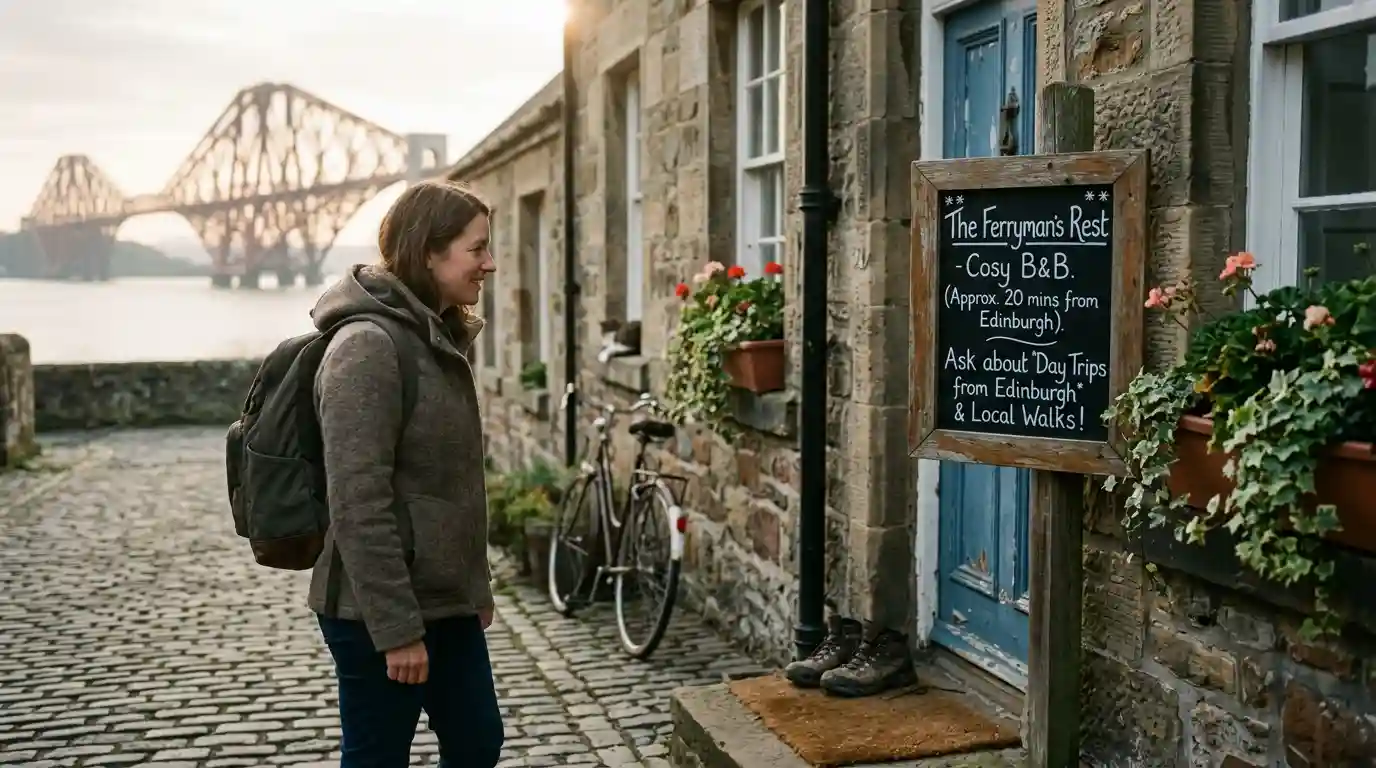
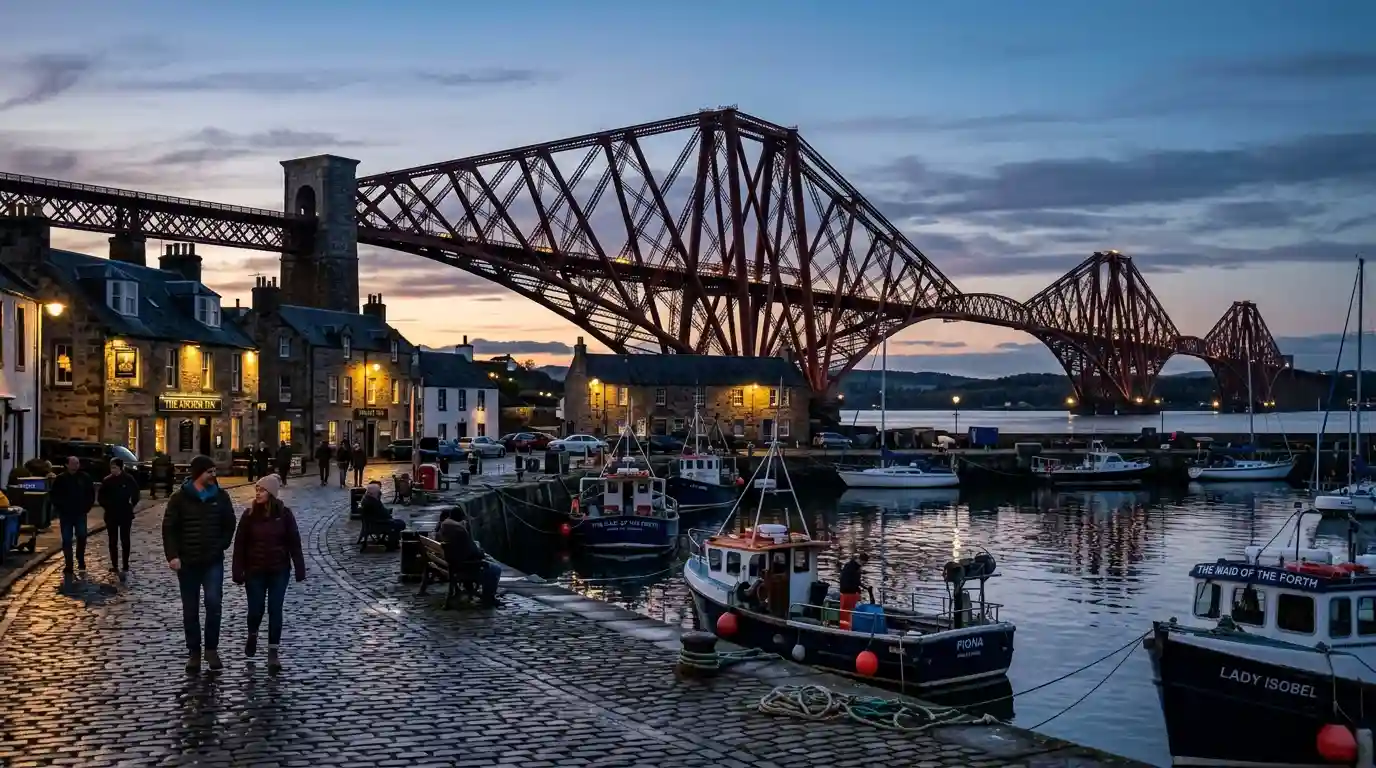
The Forth Bridge is one of those things that looks impressive in photos and then turns out to be more impressive in person. Three bridges cross the Firth of Forth at Queensferry — the 1890 railway bridge (the famous red one), the 1964 road bridge and the 2017 Queensferry Crossing. Seeing all three from the harbourside at the same time is a specific pleasure.
The Forth Bridge Experience — walking across the Victorian railway bridge — is remarkable if you can get a slot. Book in advance. Sunset crossings sell out fast. There's also a seasonal boat trip to Inchcolm Island (a ruined abbey on an island in the Firth), which is worth the fare if the weather's good.
Getting there
Lothian Buses from central Edinburgh, about 30 minutes. By car about 20 minutes. Dalmeny station (ScotRail, 15 minutes from Waverley) is also close.
7. Rosslyn Chapel
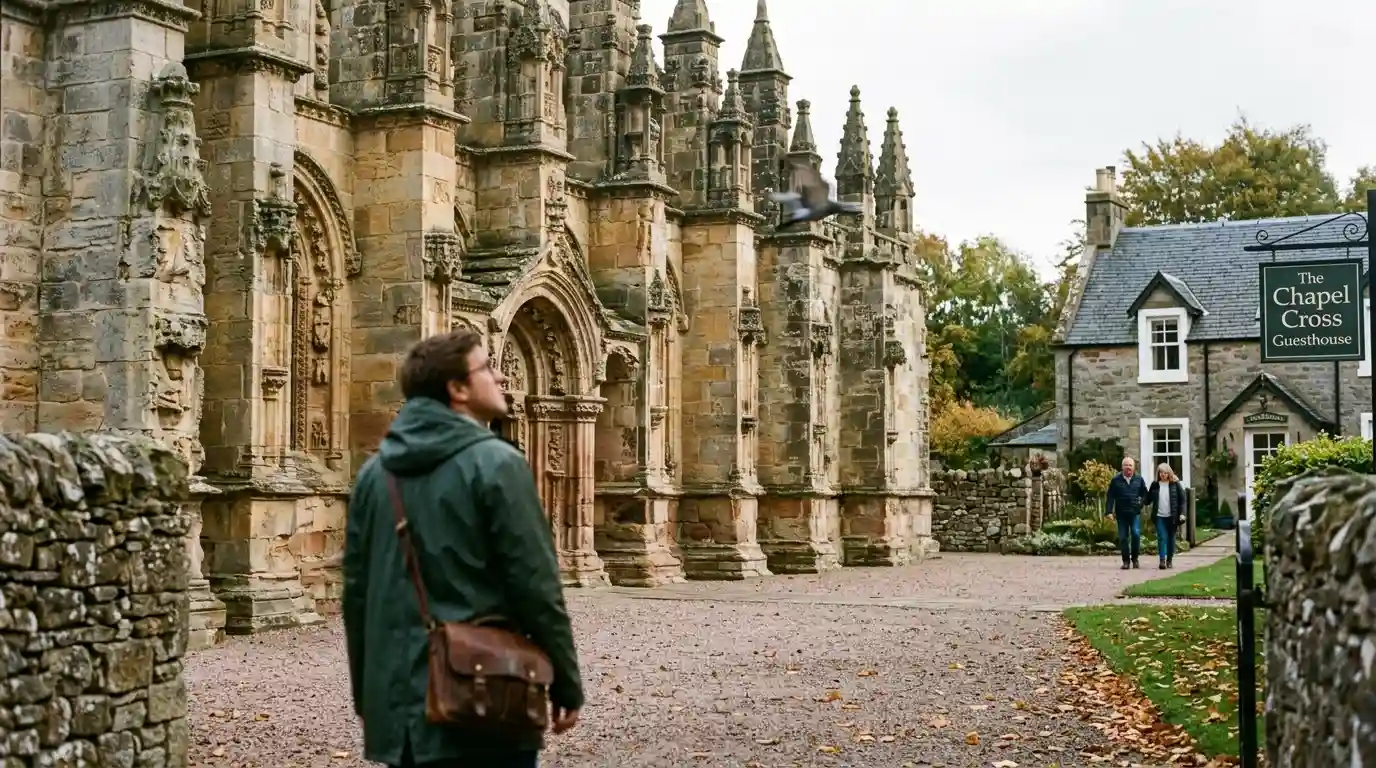
Rosslyn Chapel is small. You can see the whole interior in half an hour. But the stone carvings — the Apprentice Pillar, the Green Man faces, the botanical ceiling — are genuinely extraordinary, and the detail rewards close looking in a way that most medieval buildings don't. The Da Vinci Code made it famous, but the carvings were always remarkable.
The hidden second act is Roslin Glen — a wooded gorge directly below the chapel with about 3 miles of paths along the River North Esk and a ruined castle. Most visitors see the chapel and leave. The glen is a 90-minute walk that very few tourists find. It's beautiful, especially in spring when the bluebells are out.
Getting there
Lothian Buses No. 37 from Edinburgh, about 45 minutes. By car about 25 minutes south. Entry to the chapel about £9.50, includes a guided talk.
8. Scottish Borders (Melrose)
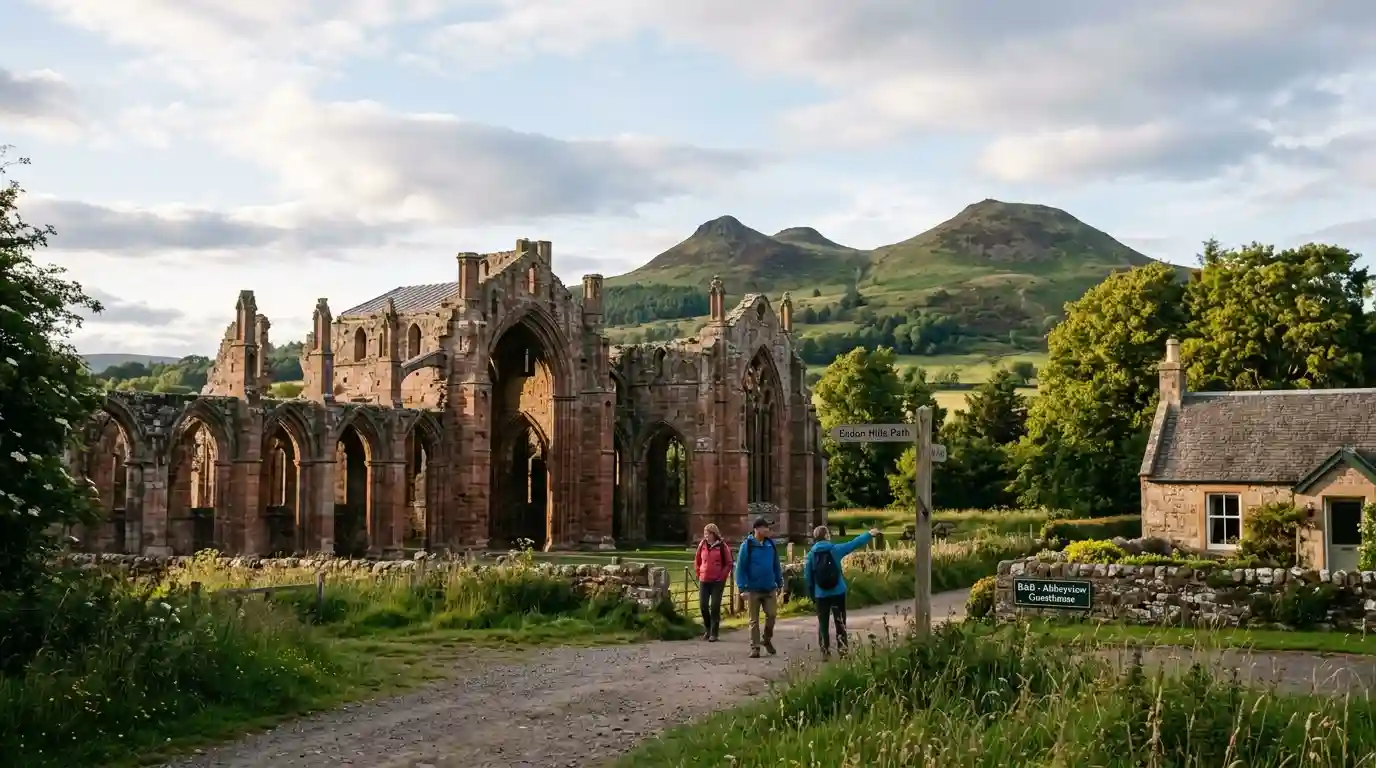
The Borders Railway opened in 2015 and runs from Waverley to Tweedbank in about an hour. From Tweedbank it's a short walk or taxi to Melrose — a market town with a ruined abbey, the Eildon Hills behind it, and a quiet, un-touristy atmosphere that's a genuine contrast to Edinburgh's Old Town.
Melrose Abbey is where Robert the Bruce's heart is supposedly buried. The Eildon Hills walk (about 3 hours return for the main summit) gives you panoramic views of the Borders that explain why people write poems about this landscape. If you're driving, extend south to Jedburgh — another abbey, another market town, another hour of beautiful countryside.
Getting there
Borders Railway from Waverley to Tweedbank, about 55 minutes to 1 hour. By car about an hour via the A68. The Borders are best May to October — autumn colour here is outstanding.
9. Culross
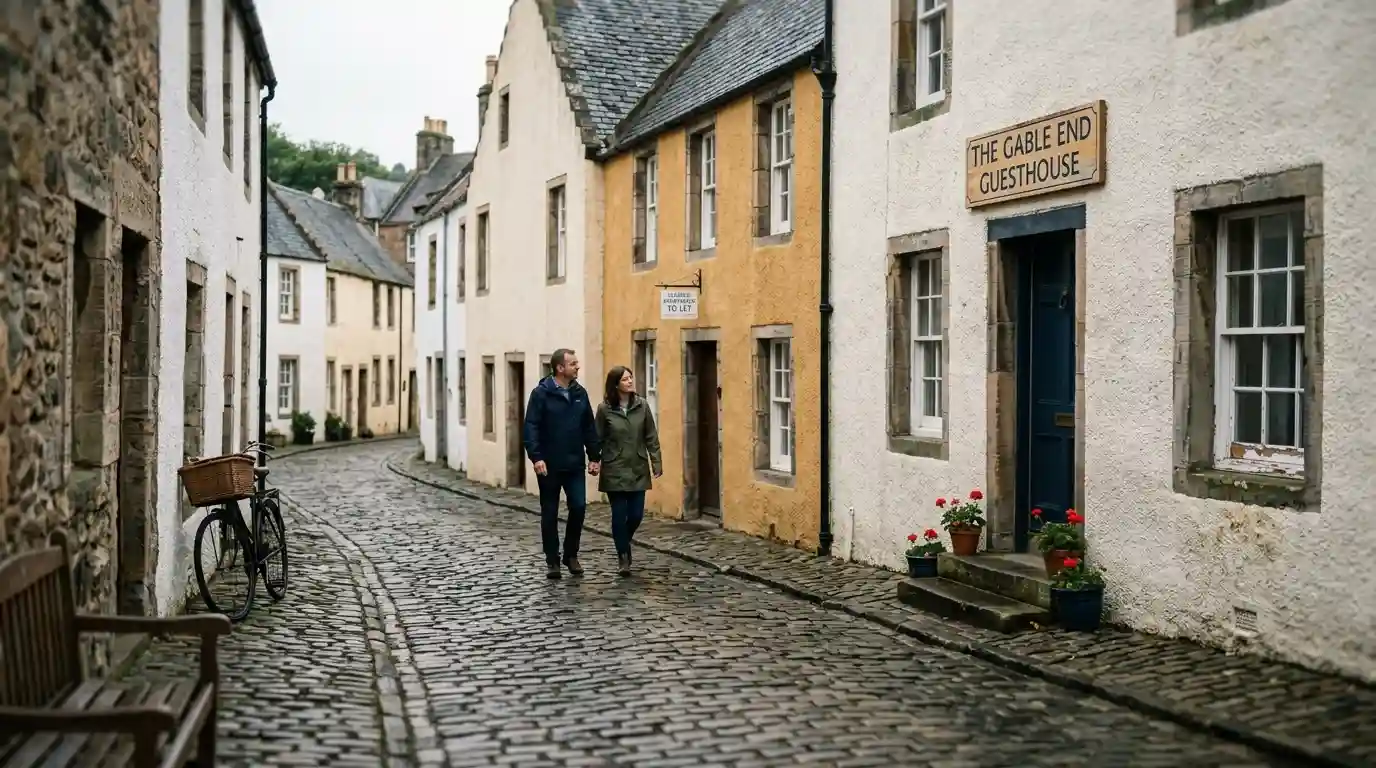
Culross — pronounced 'Coo-ross' — is a tiny 17th-century village on the north shore of the Firth of Forth that looks like it was preserved in amber. Painted houses, cobbled causeways, a small NTS palace, and views across the water. Outlander fans know it as Cranesmuir. It's genuinely atmospheric and very quiet, which is most of the point.
It's a half-day trip, not a full one. Combine it with Dunfermline (the abbey and palace are worth 90 minutes) or Linlithgow on the way back. By car it's about 50 minutes from Edinburgh. By public transport it's doable — train to Dunfermline, bus from there — but a car is easier.
10. Perthshire (Pitlochry, Dunkeld)
Perthshire is where the Lowlands start becoming the Highlands, and the train from Edinburgh to Pitlochry takes about an hour and a half through some of Scotland's best-looking countryside. Pitlochry itself has the Festival Theatre, a dam with a salmon ladder, Blair Castle up the road, and a main street with enough independent shops and cafés to keep you occupied between walks.
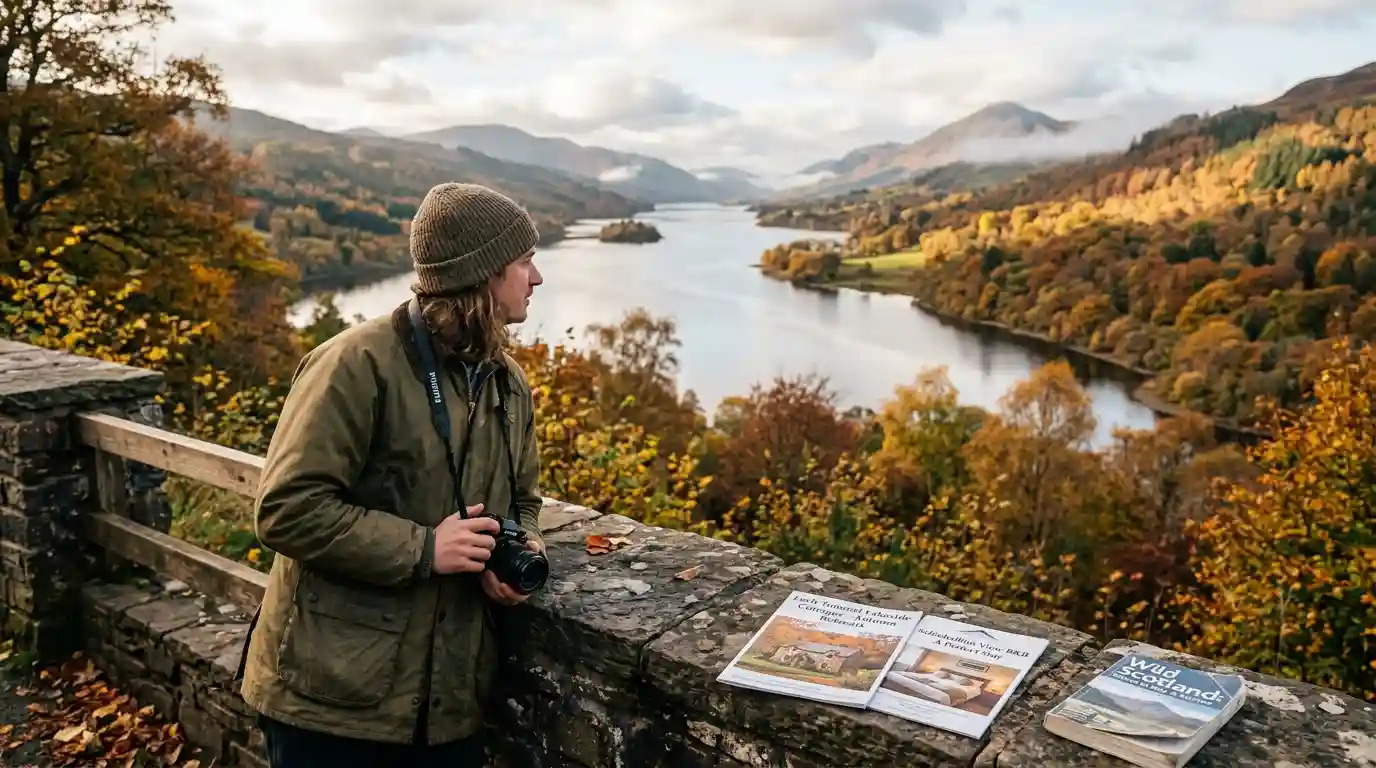
Dunkeld, 30 minutes south of Pitlochry, has a ruined cathedral on the River Tay and the Hermitage — a woodland walk through towering Douglas firs to a waterfall with a Victorian folly perched over it. If you're doing one walk from this list, the Hermitage is in the running. The Edinburgh-to-Pitlochry train in October, when the trees are turning, is one of the great autumn rail journeys in the UK.
Getting there
ScotRail from Waverley to Pitlochry, about 1h 30m. To Dunkeld and Birnam, about 1h 20m. By car about 1h 20m.
11. East Neuk of Fife
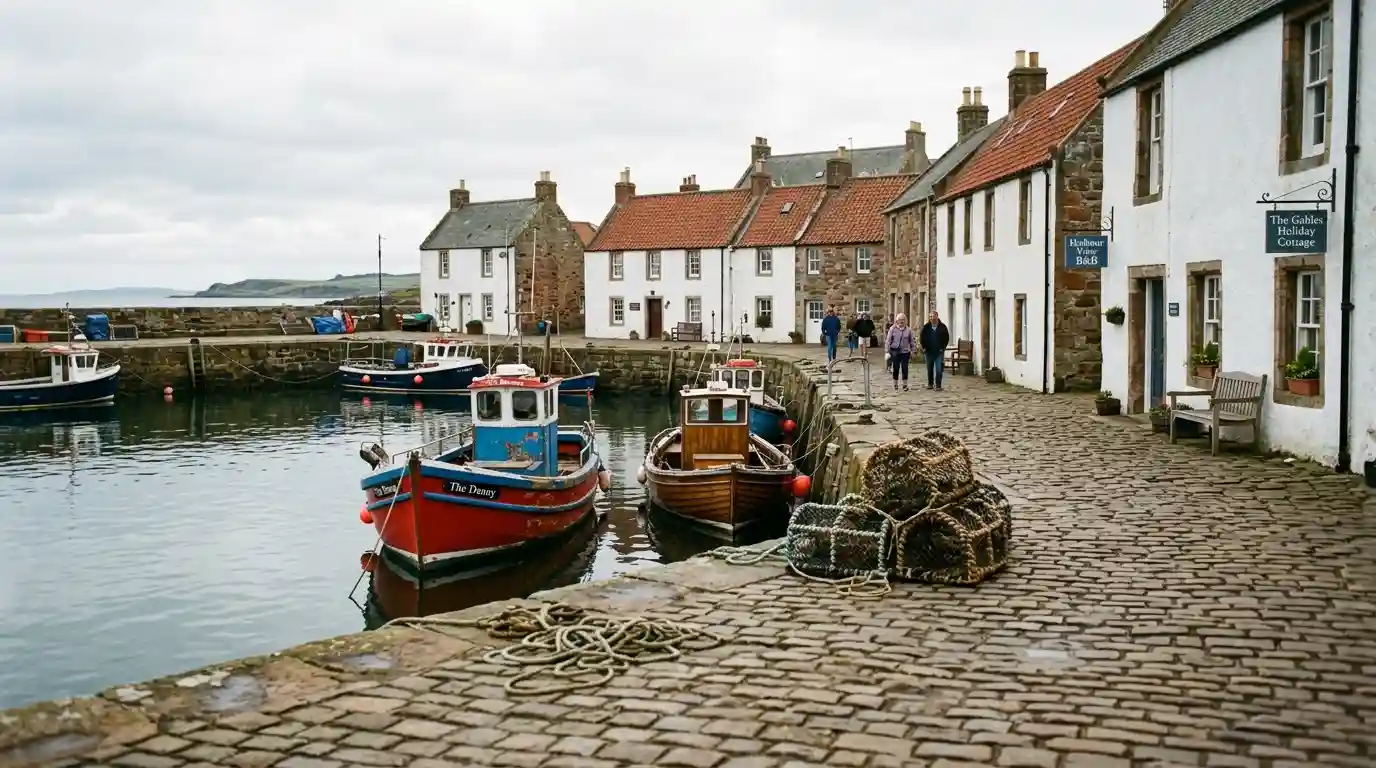
A string of fishing villages along the Fife coast — Elie, St Monans, Pittenweem, Anstruther, Crail — each with its own harbour and stone cottages and a quality of light off the North Sea that makes photographers unreasonably happy. Anstruther has the Anstruther Fish Bar, which is consistently cited as one of the best fish and chip shops in Britain. It's not hype. The queue is long because the fish is good.
You need a car for this one. The train doesn't get you there practically, and the bus is slow. Drive the coast road, stop at each village, walk the Fife Coastal Path between Anstruther and Crail (about 3 miles, easy), and taxi back. That section is the best short coastal walk in Fife.
Getting there
By car, about 1h 15m via the Forth Road Bridge. Best May to September.
12. Loch Lomond
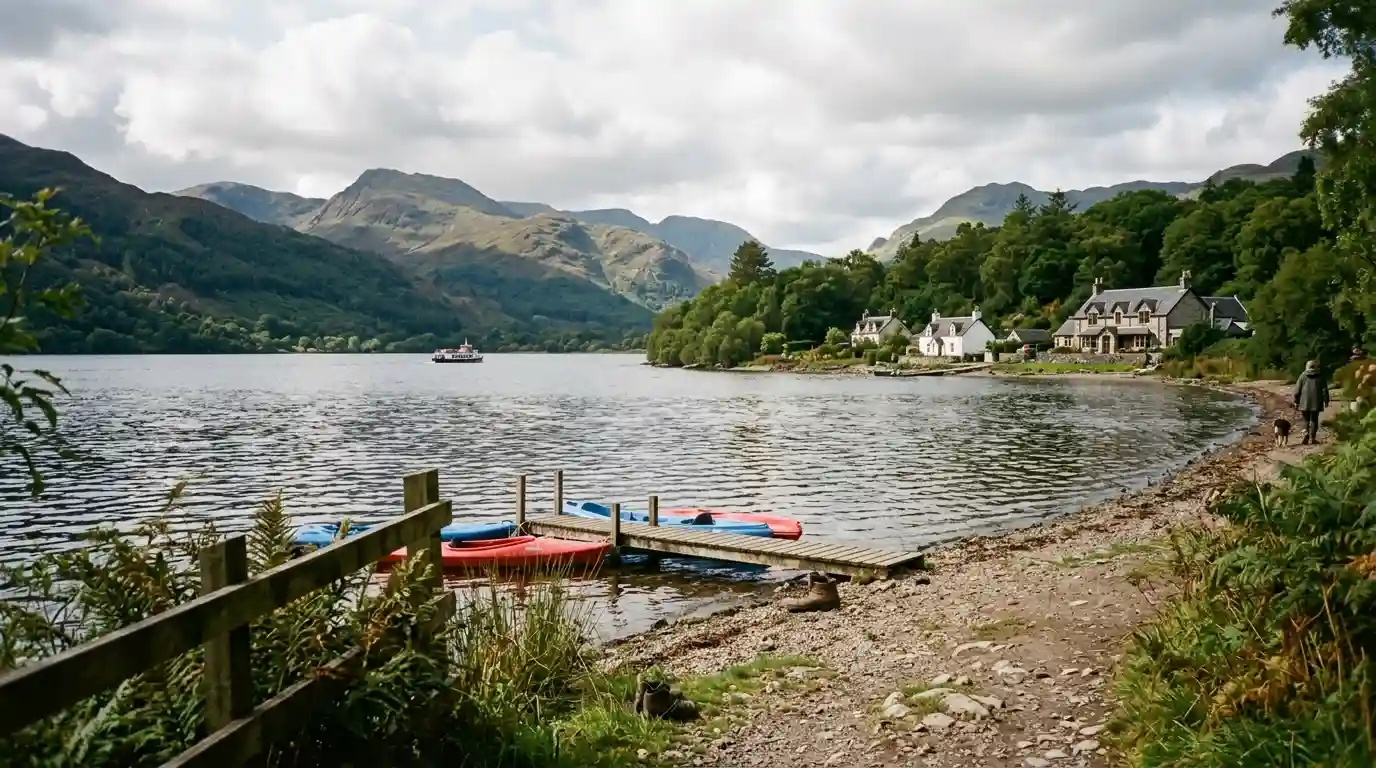
Scotland's largest loch, about an hour and a half by car from Edinburgh. You can get there by train via Glasgow and Balloch, but it takes close to two hours and you arrive at the wrong end. Driving or an organised tour is the realistic approach.
The west shore road (A82) has the dramatic views. Luss village is the standard stop. If you want to walk, Ben A'an in the Trossachs (about 45 minutes further north) is one of Scotland's best short hill walks — 3 to 4 hours return with a scramble at the top and views across Loch Katrine that justify the effort. Midges are worst June to August. Bring repellent or suffer.
Getting there
By car about 1h 30m. Organised tours from Edinburgh run 10–12 hours, typically £40–65 per person. Rabbie's, Highland Explorer, Haggis Adventures are the main operators.
13. St Abbs
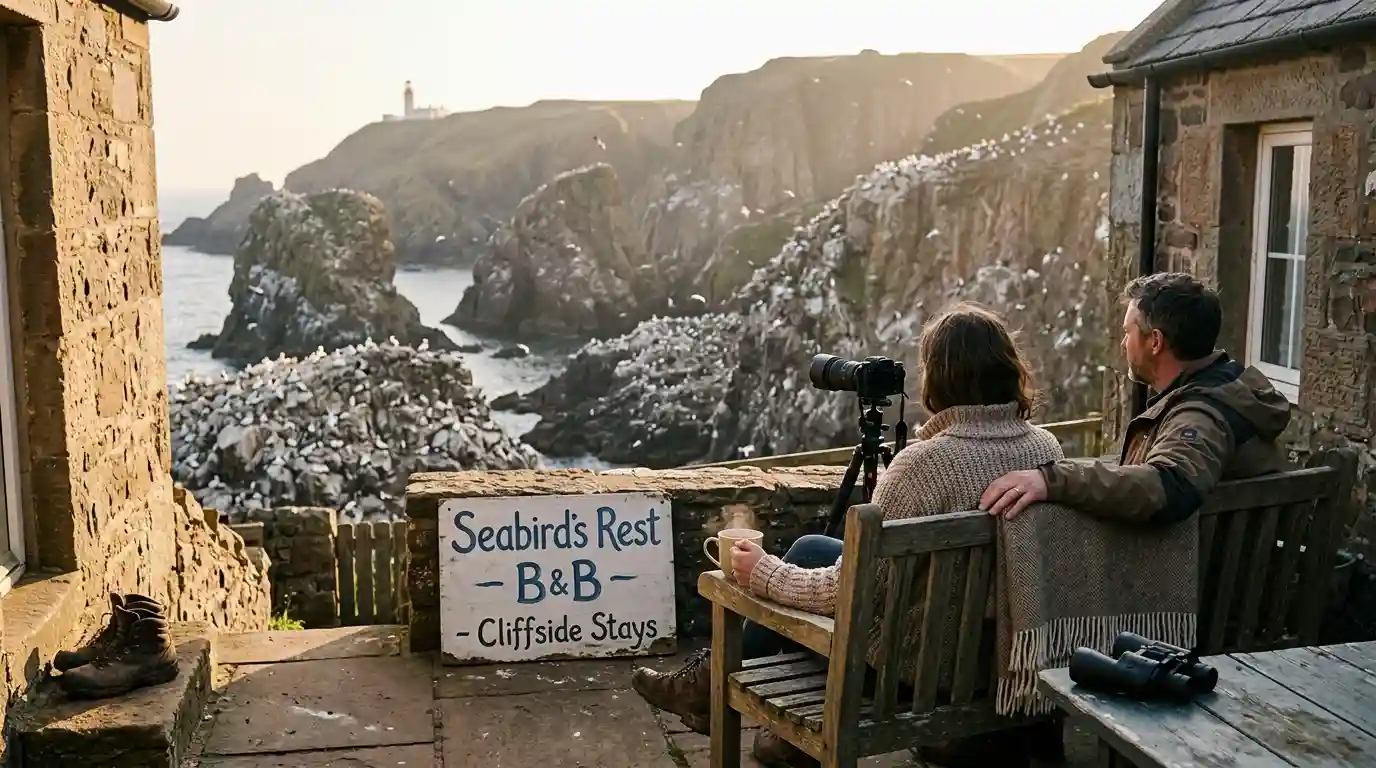
St Abbs is a fishing village on the Berwickshire coast with a clifftop walk that's one of the most dramatic in southern Scotland. The St Abbs Head Nature Reserve — NTS-managed — has vertical cliffs hosting thousands of breeding seabirds from April to July: guillemots, razorbills, and if you're lucky, puffins. The circular trail is about 4 miles and takes 2 to 3 hours. Bring binoculars.
The village itself is tiny — a harbour, a café (Ebba is good), a diving centre. It's a quiet day, a walking day, a bring-a-picnic day. You need a car.
Getting there
By car about 1 hour via the A1 and A1107. Bus is possible but infrequent. Best April to July for seabird colonies.
14. Glencoe
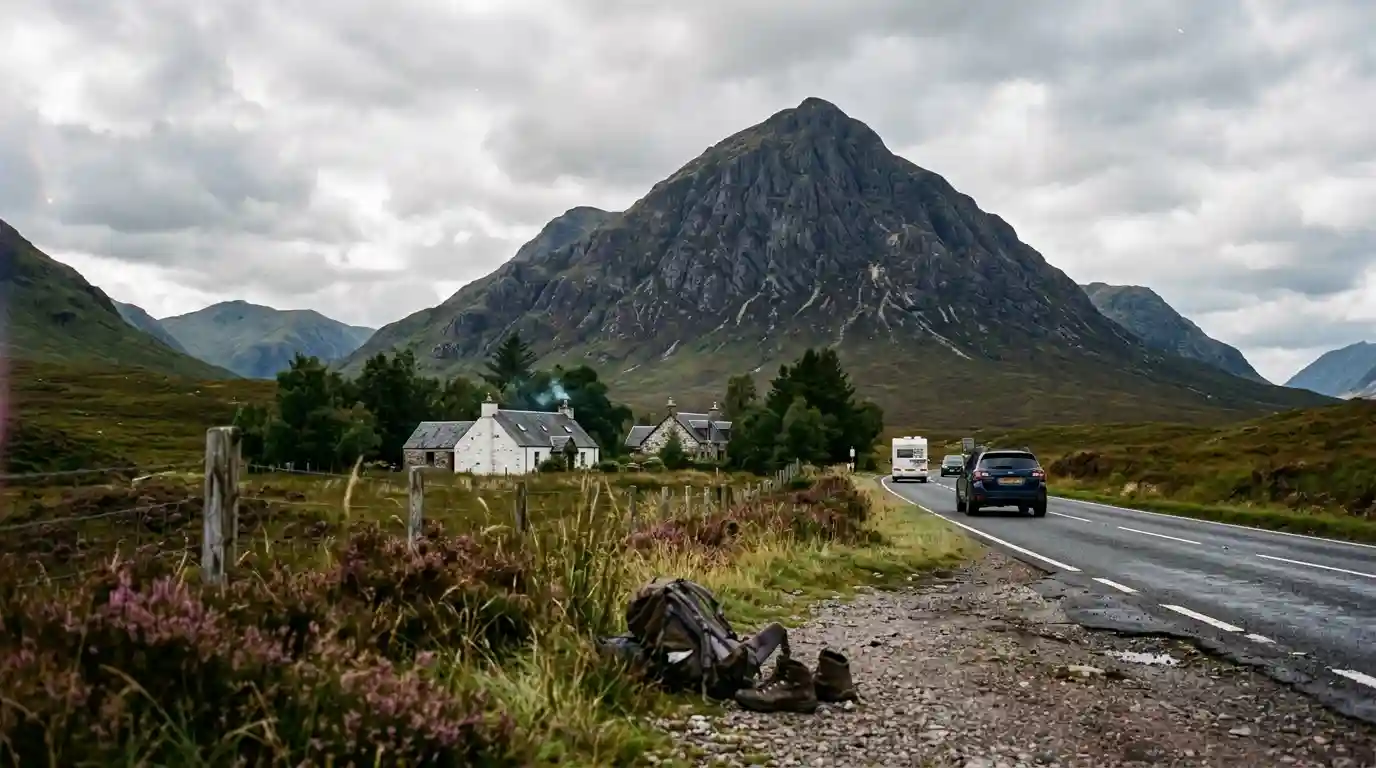
Glencoe is the most dramatic landscape you can reach from Edinburgh in a day, and at two and a half hours by car, it's also the longest drive. There's no train. You either drive or take an organised tour, and the tour is arguably the better option because the A82 through Rannoch Moor and down into the glen demands concentration that's hard to give when you're also trying to look at the scenery.
The glen itself is steep-sided, historically heavy (the Massacre of Glencoe, 1692) and visually overwhelming. If you walk, the Lost Valley — Coire Gabhail — is the one. A hidden valley surrounded by peaks, about 3 hours return from the car park, moderately challenging. The payoff is extraordinary. The Clachaig Inn is the traditional climbers' pub for lunch.
Getting there
By car about 2h 30m. Organised tours 10–12 hours, £40–65/person. Don't try to combine Glencoe and Loch Lomond in one day from Edinburgh. Each is a full day trip. Cramming both in is exhausting and you won't enjoy either.
Train, Car or Tour — How to Decide
Train trips (no car needed)
Stirling, North Berwick, Glasgow, Linlithgow, St Andrews (with the Leuchars bus), Melrose (Borders Railway), Pitlochry and Dunkeld, South Queensferry and Rosslyn Chapel (both by bus). You can easily fill a week of day trips from Edinburgh without touching a car.
Car trips
East Neuk of Fife, Loch Lomond, St Abbs, Culross (doable by bus but better by car), Glencoe. A car opens up the coast and the Highlands. Hire one for a day or two rather than the whole trip — central Edinburgh is not a place where you want to be driving and parking.
Organised tours
Loch Lomond and Glencoe are the two where a tour genuinely makes sense. The driving is long, the roads are demanding, and someone else doing it while you look out the window is worth the £40–65. Rabbie's and Highland Explorer are the ones people recommend most.
When to Go
Spring (April–May)
Bluebells in Roslin Glen. Seabird colonies arriving at Bass Rock and St Abbs. Fewer crowds than summer. The Borders at their greenest. Probably the best all-round season for Edinburgh day trips.
Summer (June–August)
Longest days — sunset after 10pm. Best for North Berwick's beach and the Fife coast. Edinburgh itself is at its busiest during the Festival in August, which makes day trips a welcome escape. Midges on Loch Lomond.
Autumn (September–October)
Our pick. Perthshire in autumn colour is Scotland at its most photogenic. The Borders turn gold. The Edinburgh-to-Pitlochry train in October is properly beautiful. Fewer crowds, better prices.
Winter (November–March)
Shorter days limit the longer trips. Stirling, Glasgow, Linlithgow and Rosslyn Chapel all work year-round. Glencoe in winter is atmospheric but the paths can be dangerous — proper gear required. ScotRail Sunday services are reduced November to March. Check timetables.
Practical Stuff
• Buy a ScotRail day return, not two singles. Almost always cheaper and valid on any return train the same day.
• Check Sunday timetables separately. North Berwick, Linlithgow and the Borders Railway all have reduced Sunday services. Getting caught out means a 2-hour wait.
• Bring waterproofs. Even in summer. Scottish weather turns quickly and the coastal trips — North Berwick, St Abbs, East Neuk — are exposed to the North Sea wind, which doesn't care what month it is.
• Historic Scotland Explorer Pass: £35 for 3 days. Covers Stirling Castle, Linlithgow Palace, Edinburgh Castle and more. Pays for itself in two visits.
• Loch Lomond and Glencoe tours are genuinely good value. £40–65 for 10–12 hours including all the driving. It's cheaper than hiring a car for the day once you factor in fuel and the energy cost of driving the A82.
Things That'll Catch You Out
• There is no train to Glencoe. None. Car or tour.
• North Berwick on a Sunday without checking the timetable. Sunday services are sometimes only every 2 hours. Miss one and you're stuck.
• St Andrews doesn't have a train station. The train goes to Leuchars. You need the bus from there. Factor in the connection.
• The Forth Bridge Experience sells out. Book in advance. Sunset slots go first.
• Combining Loch Lomond and Glencoe in one day from Edinburgh. Don't. Each is a full day. Trying to do both is a 12-hour slog where you don't properly see either.
The Short Summary
Edinburgh is brilliant. But the things within an hour's train ride of Edinburgh are also brilliant, and most visitors don't realise how much is out there. The key question is simple: which trips can you do by train (answer: more than you'd think) and which need a car or a tour (Glencoe, Loch Lomond, the East Neuk, St Abbs). If you've got a week in Edinburgh and only do one day trip from the list, make it Stirling. If you've got two, add North Berwick. If you've got three, St Andrews or Glasgow depending on whether you want a small town or a big city.
Compare Edinburgh hotel rates on VervTrip for your base, check ScotRail for your train times, and buy the day return rather than two singles. Start with Stirling.