Where to Stay in Knightsbridge: 12 Hotels Ranked for Every Budget
Hotels Knightsbridge UK: 12 handpicked stays near Harrods and Hyde Park, from boutique townhouses to five-star icons, ranked by budget and area for 2026.

Forhad Ahmed
Author & Travel Expert

The best days out in Birmingham fall into four groups: the big ticketed attractions in and around the city centre (Cadbury World, Thinktank and the National SEA LIFE Centre); the free civic collections around Chamberlain Square and Brindleyplace; the small heritage sites that only run guided tours, like the Birmingham Back to Backs; and the outdoor days at Sutton Park, Cannon Hill Park and along the canals. Most of the city-centre options sit within a twenty-minute walk of Birmingham New Street, which makes a car optional.
This guide covers what each one suits, how long to allow, whether it works in the rain, and which ones you have to book before you travel. That last point is where most guides leave you stranded. It
also separates the attractions genuinely inside Birmingham from the ones in the wider West Midlands, because several popular guides do not.
Best for | Recommendation | Indoor or outdoor | Time to allow |
Families with young children | Thinktank, Birmingham Science Museum | Mostly indoor | 3–4 hours |
Under-5s | LEGOLAND Discovery Centre Birmingham | Indoor | 2–3 hours |
A guaranteed crowd-pleaser | Cadbury World, Bournville | Mostly indoor | 3–4 hours |
Adults | Birmingham Museum & Art Gallery | Indoor | 2–3 hours |
Couples | Barber Institute of Fine Arts, then Edgbaston | Indoor | 2 hours |
Rainy days | National SEA LIFE Centre Birmingham | Indoor | 2 hours |
Free entry | Birmingham Museum & Art Gallery, Ikon Gallery, Library of Birmingham, Birmingham Cathedral | Indoor | 1–3 hours |
Culture | Museum of the Jewellery Quarter (guided tour only) | Indoor | 1–2 hours |
Something unusual | Birmingham Back to Backs (pre-booked tour only) | Indoor | 1.5 hours |
An outdoor day | Sutton Park National Nature Reserve | Outdoor | Half day+ |
A short outdoor add-on | Canal boat trip from the ICC quayside | Outdoor (covered seating) | 65 minutes |
Teenagers and older groups | Digbeth street art and the Custard Factory | Outdoor, with indoor stops | 2–3 hours |
An evening | Birmingham Hippodrome, The Alexandra or Symphony Hall | Indoor | 2–3 hours |
Two of these, the Birmingham Back to Backs and the Museum of the Jewellery Quarter, admit visitors on guided tours only, with limited slots. Sort those before you build the rest of the day around them.
Making a weekend of it rather than a day? Browse Birmingham hotels on VervTrip before you fix the dates.
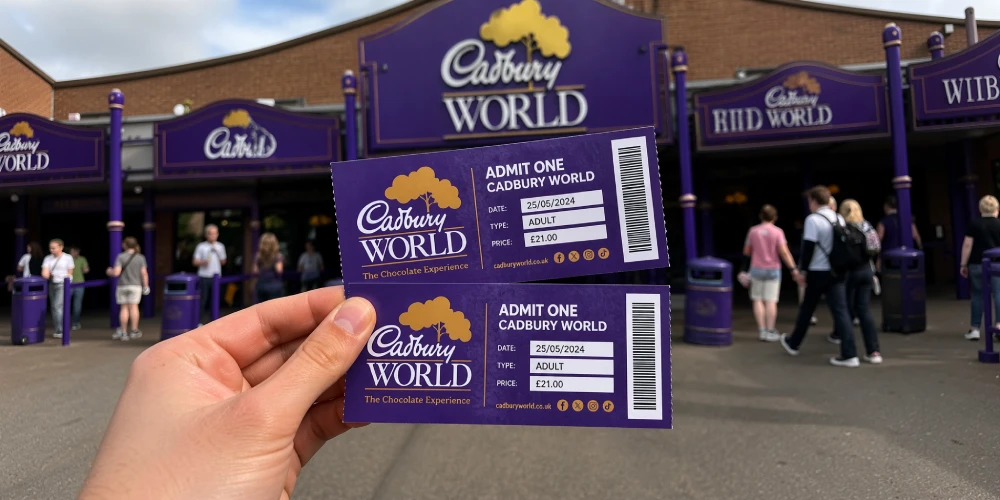
Best for: families, and anyone who wants a single anchor attraction for the day
Location: Linden Road, Bournville, south Birmingham (inside the city)
Indoor or outdoor: mostly indoor, with an outdoor play area
Time to allow: 3–4 hours
Booking: pre-book; entry is by timed slot
Cadbury World sits in Bournville, the model village Cadbury built for its workers, which is part of Birmingham rather than a separate town. The self-guided tour runs through the history of the company and the chocolate-making process, with tasting stops along the way, and it ends in a large shop.
Two practical points. General admission covers the main attraction only. The Chocolatier Experience, Character Dining and afternoon tea are separate bookings. And Bournville has its own railway station on the Cross-City line from Birmingham New Street, so the car is genuinely optional. Pair it with a walk around the Bournville village green if the weather holds.
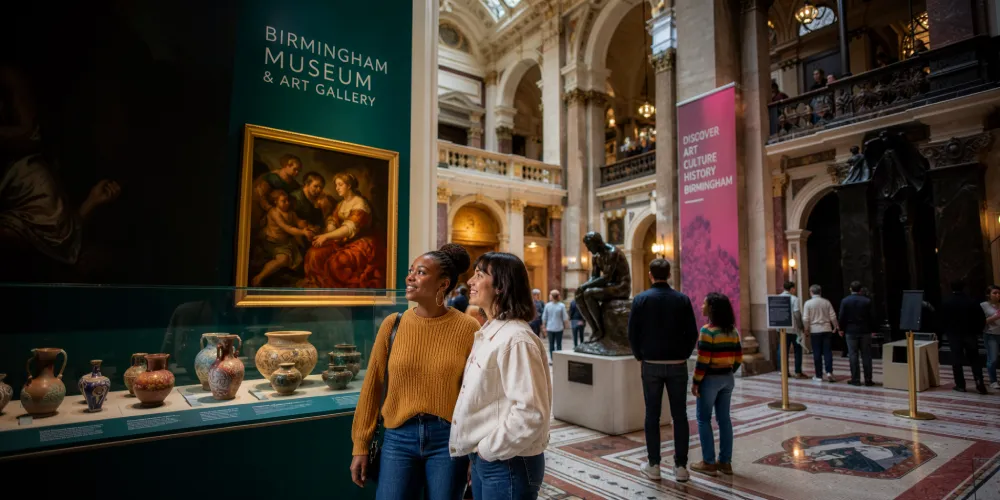
Best for: adults, older children, a free indoor half-day
Location: Chamberlain Square, city centre
Indoor or outdoor: indoor
Time to allow: 2–3 hours
Booking: not required for general entry
Birmingham Museum & Art Gallery has reopened after major building works, with the Pre-Raphaelite Galleries, the Staffordshire Hoard Gallery, the Birmingham History Galleries, the Round Room, the Industrial Gallery and the Bridge Gallery all accessible, along with a new family gallery called Wild City, a tearoom and a shop. Entry is free.
The Pre-Raphaelite collection is the reason to come. It is one of the most significant anywhere, and it is a short walk from New Street. Through 2026 the museum is also showing Ozzy Osbourne (1948–
2025): Working Class Hero, a free exhibition that has been extended twice on public demand and is currently listed to run until 27 September 2026. It is open Tuesday to Sunday, 10am to 5pm, and daily during school holidays. If that is the draw, check the dates before travelling, because it has moved more than once.
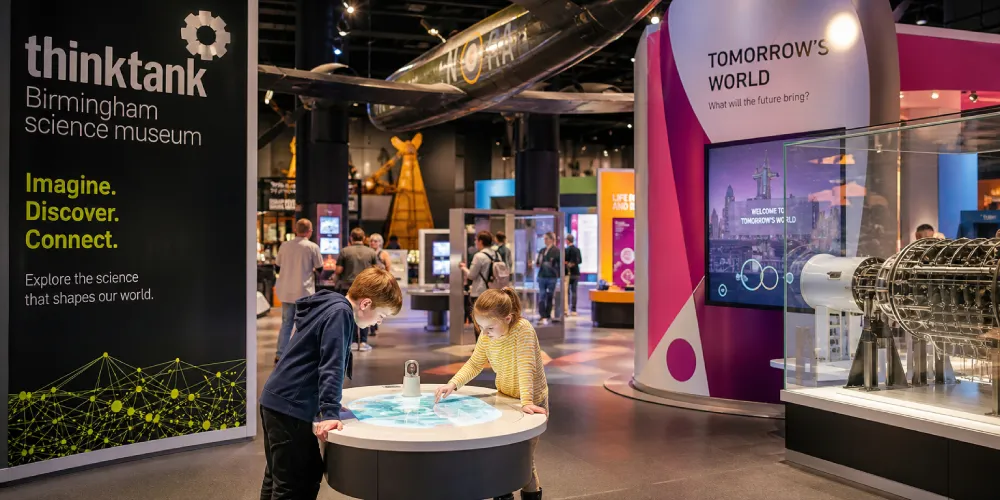
Best for: families with children aged roughly 3–12
Location: Millennium Point, Curzon Street, B4 7XG, a ten-minute walk east of the Bullring
Indoor or outdoor: four indoor floors plus an outdoor Science Garden
Time to allow: 3–4 hours
Booking: pre-book to guarantee entry; tickets are sold on arrival subject to availability
Thinktank holds over 200 hands-on exhibits across four floors, including MiniBrum (a child-sized model city built for play), a 4K planetarium, Gamesworld, and Birmingham’s industrial collection of steam engines, locomotives and aircraft. The outdoor Science Garden is included but only worth planning around in dry weather.
Opening days change with the school calendar: Tuesday to Sunday in term time, every day during Birmingham school holidays, 10am to 5pm. Last admission is late afternoon, so check the day you’re going. If you have a young child who will want to spend an hour in MiniBrum alone, budget accordingly and go on a weekday.
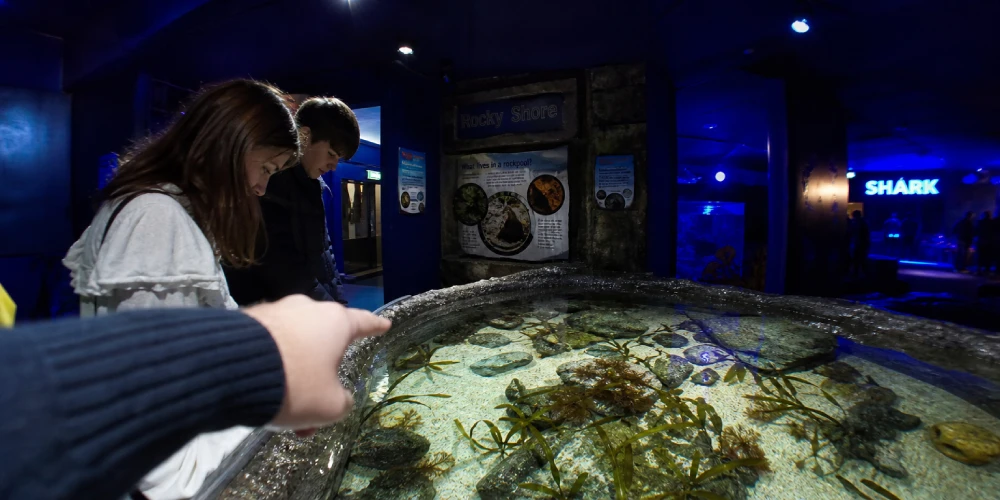
Best for: a reliable wet-weather day with children
Location: The Water’s Edge, Brindleyplace, B1 2HL, canal-side, ten minutes’ walk from New Street
Indoor or outdoor: indoor
Time to allow: around 2 hours
Booking: book online in advance for the best price and to guarantee a slot
The SEA LIFE Centre is built around a 360-degree ocean tunnel and sits directly on the canal at Brindleyplace, which makes it easy to combine with a boat trip, the Ikon Gallery or lunch on the waterfront. Two hours is realistic for most families; it is not a full day on its own.
Combined tickets with LEGOLAND Discovery Centre Birmingham are sold and are typically valid for 90 days, which suits anyone spreading two attractions across separate visits.
Best for: adults and older children interested in social history; small groups Location: corner of Hurst Street and Inge Street, city centre
Indoor or outdoor: indoor
Time to allow: 1.5 hours for the full tour
Booking: essential; pre-booked guided tours only
This is the last surviving court of back-to-back houses in Birmingham, restored by the National Trust to four different periods so you walk forward through roughly 150 years of working life in the city. It is the most distinctive thing to do in central Birmingham and it is also the easiest to get wrong.
Access is by guided tour only. The full tour runs about an hour and a half; a ground-floor accessible tour of about an hour visits the ground-floor rooms and the courtyard. Booking opens roughly four weeks ahead, with a new week of slots released every Thursday, and you can usually book for the following day up until 4pm. National Trust members still need to reserve a place. Arrive ten minutes early, because latecomers are not guaranteed entry. Book this first and build the day around the slot you get.
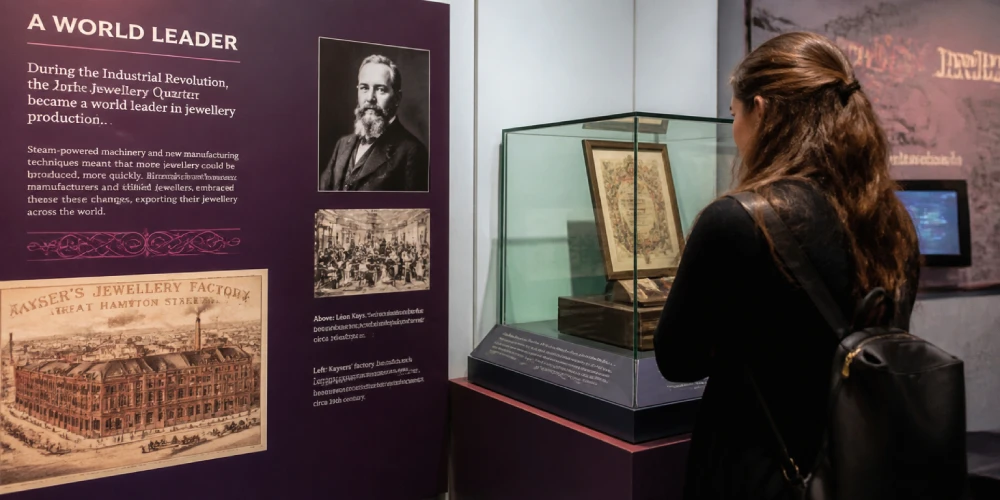
Best for: anyone who wants one properly memorable hour
Location: 70–80 Vyse Street, Hockley, B18 6HA; Jewellery Quarter station is a few minutes’ walk
Indoor or outdoor: indoor
Time to allow: 1–2 hours including the surrounding streets
Booking: advised; entry is by timed guided tour
The museum is a jewellery workshop, Smith & Pepper, that closed in 1981 and was left almost untouched, tools on the benches, dust where it fell. Entry is by guided tour only, roughly 45 minutes, with slots through the day. It is open Thursday to Sunday, 10:30am to 4pm, and closed on bank holiday Mondays, so it will not fit every itinerary.
Give yourself another hour afterwards to walk the Jewellery Quarter itself. It is still a working trade district with several hundred businesses, and the mix of Georgian frontages and active workshops is the most distinctive streetscape in the city.
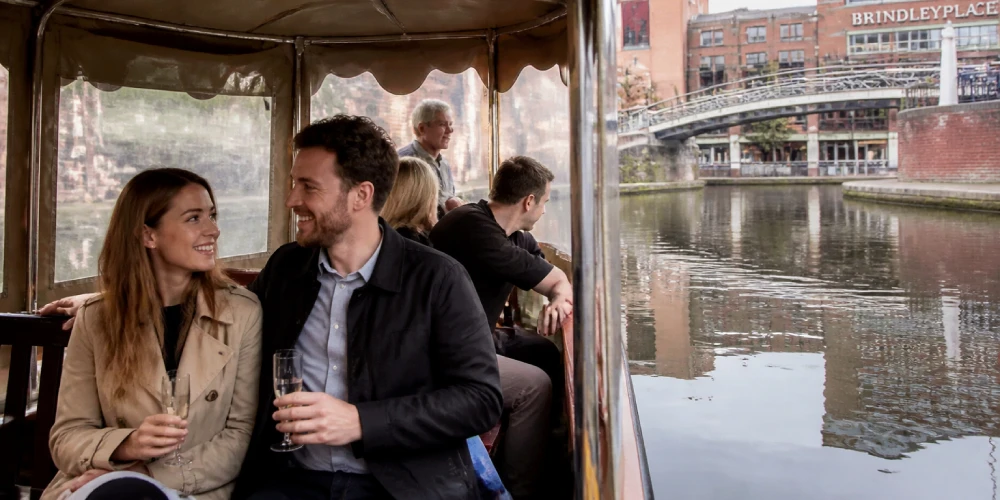
Best for: couples, groups, and a short outdoor break between indoor stops
Location: departs canalside next to the International Convention Centre, opposite Brindleyplace
Indoor or outdoor: outdoor, with covered seating
Time to allow: 65 minutes
Booking: worth booking in summer; walk-up is often possible off-season
Birmingham’s canal network is the practical reason the city grew, and the City Heritage Route run by Sherborne Wharf is the straightforward way to see it: out along the Oozells Street and Icknield Port loops, onto Thomas Telford’s Main Line, past the arena, and back through the Worcester Bar at Gas Street Basin. Trips run at 11am, 1pm, 2:30pm and 4pm. At the time of writing, adult tickets are £10 and children aged 0–15 are £6.
If you would rather not pay, the towpath from Gas Street Basin to Brindleyplace and on towards the Jewellery Quarter is free, level and open all year.
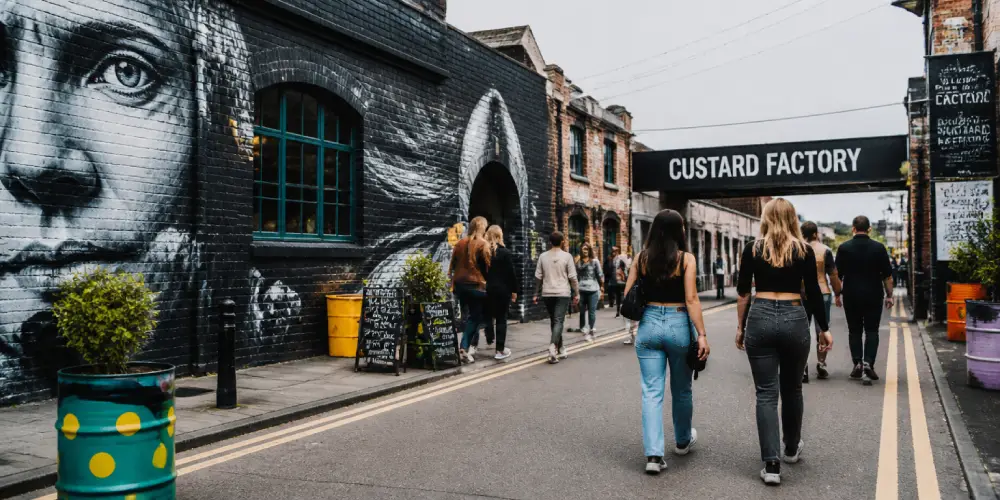
Best for: teenagers, groups of friends, photographers
Location: Digbeth, immediately south-east of the Bullring
Indoor or outdoor: outdoor, with indoor cafés, shops and cinema
Time to allow: 2–3 hours
Booking: none for the streets; check event listings separately
Digbeth is Birmingham’s converted industrial quarter and its street art district. The murals concentrate around Gibb Street, Floodgate Street, Heath Mill Lane, Lower Trinity Street and Bath Place, and they change often enough that a return visit is not a repeat. Walking and looking costs nothing.
The Custard Factory anchors it: fifteen acres of the former Bird’s Custard works, now independent shops, vintage stalls, cafés, arts spaces and a cinema. Digbeth Dining Club runs street food here regularly; check current days before you plan around it. Weekend afternoons are the busiest and the best for atmosphere.
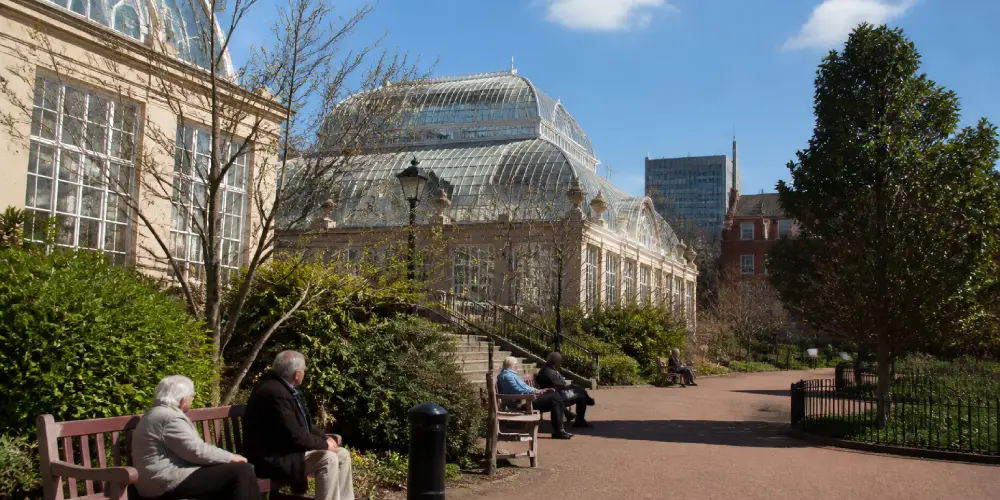
Best for: couples, older visitors, a calm half-day
Location: Westbourne Road, Edgbaston, about two miles from the city centre
Indoor or outdoor: both; four linked glasshouses plus fifteen acres of grounds
Time to allow: 2–3 hours
Booking: day tickets are timed for arrival; you can stay until closing
The glasshouses run from tropical through subtropical to arid, which makes this one of the few genuinely pleasant places to spend a wet afternoon that is not a museum. The gardens open every day except Christmas Day and Boxing Day. Arrival times are staggered to manage queues, but your slot only governs entry.
Nearby, Winterbourne House and Garden makes a natural pairing: an Arts and Crafts house with a seven-acre botanic garden on the University of Birmingham’s Edgbaston campus. Opening is 10:30am to 5pm from March to October and 10:30am to 4pm from November to February, with last entry an hour before closing. Entry to the house itself is by timed ticket issued on arrival, so go early if the interiors matter to you.
Best for: an outdoor day, dog walkers, families who want space
Location: Sutton Coldfield, north Birmingham (inside the city boundary) Indoor or outdoor: outdoor
Time to allow: half a day or more
Booking: none; parking is chargeable
Sutton Park is a National Nature Reserve of around 2,400 acres and one of the largest urban parks in Europe: heathland, ancient woodland, wetland and seven lakes, with public access on foot free since a royal charter of 1528. Car parks charge.
It is big enough to absorb a full day and quiet enough to feel a long way from the city. Sutton Coldfield station is on the Cross-City line from Birmingham New Street, so it works without a car. Take proper footwear: much of it is unsurfaced.
Families in Birmingham have three strong indoor options within a mile of each other (Thinktank, the National SEA LIFE Centre and LEGOLAND Discovery Centre), plus Cadbury World a short train ride south and large free parks at Cannon Hill and Sutton Park. The right choice depends mostly on the age of the child.
LEGOLAND Discovery Centre Birmingham is built for this age band. It is indoors at the Arena on King Edwards Road, close to Brindleyplace, and takes two to three hours. Two conditions catch people out: pre-booking is effectively essential, and every adult must be accompanied by at least one child aged 15 or under, so it is not open to adult-only groups.
Thinktank’s MiniBrum gallery also works well below five, and Cannon Hill Park has playgrounds and boating in fair weather.
Ages 5–11
Thinktank is the strongest single choice. The hands-on exhibits, planetarium and Science Garden fill most of a day. Cadbury World holds this age group easily. For animals, Birmingham Wildlife Conservation Park sits beside Cannon Hill Park on a compact 6.5-acre site with red pandas, lemurs, meerkats, otters and wallabies; the surrounding 250-acre park is free.
Sarehole Mill in Hall Green, a working watermill associated with J.R.R. Tolkien’s Birmingham childhood, opens Friday to Sunday, 11am to 4pm, and is closed on bank holiday Mondays. It is a short, cheap visit rather than a full day.
Digbeth does better with teenagers than any of the ticketed attractions: street art, independent shops, street food and record stores. The Bullring and Grand Central cover shopping. Birmingham Hippodrome and The Alexandra both programme touring musicals through the year, which turns an afternoon into an evening.
The most reliable indoor days out in Birmingham are Birmingham Museum & Art Gallery (free), Thinktank, the National SEA LIFE Centre, LEGOLAND Discovery Centre, the Museum of the Jewellery Quarter and the Birmingham Back to Backs. All are fully or almost fully undercover, and all except the Back to Backs are within walking distance of Birmingham New Street.
Two more are worth knowing about. The Birmingham Botanical Gardens glasshouses give you a warm, green hour without a museum’s acoustics. And the Library of Birmingham on Centenary Square is free, architecturally interesting and has plenty of places to sit, which makes it a fallback rather than a destination when a plan collapses.
Thinktank’s Science Garden and Digbeth’s street art are the two things on this page that a wet day genuinely spoils. Everything else holds up.
Adults and couples are better served by Birmingham’s free galleries, its canal-side food scene and its theatres than by its ticketed family attractions. A workable full day: the Barber Institute in the morning, lunch in Edgbaston or Brindleyplace, the Ikon Gallery or Birmingham Museum & Art Gallery in the afternoon, then a show. If you are turning it into a weekend, it slots neatly into a wider UK city break for couples.
The Barber Institute of Fine Arts on the University of Birmingham’s Edgbaston campus is free, collection and temporary exhibitions both, and holds an unusually good European collection for its size in a Grade I listed building. Guided tours are around £4 per person and there are regular free lunchtime and evening concerts; check the programme before you go.
The Ikon Gallery in Oozells Square, Brindleyplace, is a free contemporary art space in a converted Victorian school, open Tuesday to Sunday, 11am to 5pm, and closed Mondays except bank holidays. It takes an hour and sits directly beside the canal.
For an evening, Birmingham Hippodrome is the largest of the city’s theatres and the home of Birmingham Royal Ballet; The Alexandra and Symphony Hall cover touring musicals and concerts respectively. Listings at the time of writing include Mrs Doubtfire at the Hippodrome from 13 August to 19 September 2026 and Birmingham Royal Ballet’s Swan Lake from 23 September to 3 October 2026. Confirm current dates on the venue’s own site, as runs move.
For food, Digbeth and the Jewellery Quarter carry most of the independent scene, and Birmingham’s balti houses in the Balti Triangle south-east of the centre are a genuine local specialism rather than a marketing line.
Yes. Birmingham has more free attractions than most English cities outside London, and several are the best things it has.
Free entry, no ticket needed: - Birmingham Museum & Art Gallery — including the Ozzy Osbourne exhibition - Ikon Gallery — contemporary art, Brindleyplace - Barber Institute of Fine Arts — Edgbaston; guided tours are charged separately - Library of Birmingham — including the Shakespeare Memorial Room and the rooftop Secret Garden on Level 9 - Birmingham Cathedral (St Philip’s) — Colmore Row, for four stained-glass windows designed by Edward Burne-Jones between 1885 and 1891 and made by Morris & Co. - Digbeth street art and the Custard Factory’s public areas -
Cannon Hill Park — 250 acres - Sutton Park — free on foot; car parking is charged - The canal towpaths from Gas Street Basin outwards
Mostly free, with paid extras: the Custard Factory (shops, cinema and events are ticketed), Cannon Hill Park (the wildlife park and boating are charged), and most of the free galleries, which charge for some special exhibitions.
Paid: Cadbury World, Thinktank, SEA LIFE, LEGOLAND Discovery Centre, the Botanical Gardens, Winterbourne, the Back to Backs and the Museum of the Jewellery Quarter.
A full free day is straightforward: Birmingham Museum & Art Gallery, a walk down to the Library of Birmingham and Centenary Square, the towpath to Brindleyplace for the Ikon Gallery, then Digbeth.
Four things here are difficult to do anywhere else, and they are what to choose if you have been to the obvious attractions already.
The Birmingham Back to Backs is the only preserved court of its kind left in the city, and the pre-booked tour is the whole point, and it is the strongest hour and a half in central Birmingham.
The Museum of the Jewellery Quarter preserves a workshop that shut its doors in 1981 and stayed as it was. Combined with a walk through the surrounding trade district, it explains the city’s economy better than any general museum can.
The canal network is Birmingham’s defining piece of infrastructure. Either take the boat trip or walk the Main Line, Telford’s straightened route out of the city centre, which is free and mostly level.
Digbeth is the one that changes. The murals turn over, the food traders rotate, and the industrial buildings are being converted around them, so it repays a return visit in a way a fixed attraction does not.
These are commonly listed as Birmingham attractions. They are not. All require travel outside the city, and the difference matters if you are planning around train times.
Black Country Living Museum, Dudley — about 10 miles west of Birmingham. An open-air museum of relocated and reconstructed buildings with costumed interpreters. Without a car, the nearest West Midlands Metro stop is Bradley Lane, roughly a six-minute walk; alternatively the train from Birmingham New Street to Tipton takes around 17 minutes and the museum is a 20-minute walk from there. Allow a full day.
Warwick Castle, Warwickshire — around an hour’s drive south-east, with direct trains from Birmingham to Warwick. A full-day ticketed attraction in a different county.
If your day has to work without a car and you have limited hours, stay inside the city. The travel overhead on both of these is real.
Birmingham New Street is the hub, and most of the city-centre attractions in this guide are within a 20-minute walk of it: the Bullring and Digbeth to the south-east, Chamberlain Square and Centenary Square to the west, Brindleyplace and the canals just beyond, and Millennium Point to the east.
For everything else, the local rail network does most of the work. Bournville (for Cadbury World), Jewellery Quarter, Sutton Coldfield (for Sutton Park) and University (for the Barber Institute and Winterbourne) all have their own stations on lines out of New Street or Snow Hill.
For buses and trams, Transport for West Midlands day tickets start at around £5.50 for buses; a West Midlands Metro zone 1–4 peak day ticket was priced at £7.60 following the January 2026 fares review.
The nNetwork day ticket combines unlimited nBus travel with Metro zones 1–4 if you are mixing modes. Check current fares before you travel, because they were revised at the start of 2026.
Most of the attractions in this guide are booked directly with the venue, and that is the right way to do it. Cadbury World, Thinktank, the Back to Backs and the Jewellery Quarter museum all sell their own timed tickets, and the National Trust and Birmingham Museums release slots on their own schedules.
VervTrip Experiences is useful at a different point in the trip. The platform sells official venue tickets for attractions, tours, live shows and transport, sourced directly from venues and authorised partners with instant e-ticket delivery, secure payment through Stripe, and a refund guarantee if an event is cancelled. Its current experience inventory is concentrated in London (theatre, attractions, sightseeing tours and airport transfers), which makes it relevant if your Birmingham days out sit inside a wider UK trip that also takes in the capital. If that is your trip, the companion guide to free things to do in London covers the no-cost half of it. On the accommodation side, VervTrip lists up to 15% cashback on hotel bookings and a free transfer benefit; those apply to hotel bookings rather than to experience tickets.

If that fits your trip, browse what’s currently available on VervTrip, or check the current hotel deals if Birmingham is an overnight rather than a day out.
Anywhere between nothing and about £30 a head, depending on what you pick. Birmingham Museum & Art Gallery, the Ikon Gallery, the Barber Institute, the Library of Birmingham and Birmingham Cathedral are all free and need no booking. The ticketed attractions sit in a fairly narrow band: Thinktank from £18.95, Cadbury World from £21 and the National SEA LIFE Centre from £22.75, all booked online in advance. A family of four is roughly £45–£75 at a single paid attraction. Travel and food are the costs people underestimate, not admission.
Book — Cadbury World states that pre-booking is essential and entry is timed. Online, an adult ticket starts at £21, a family of four from £75.25, an adult-plus-toddler ticket from £16.63 and a student ticket £10.50. Under-2s go free. Those are summer-offer prices running to 1 September 2026; the standard adult price behind the offer is £24, so expect the higher figure from September. It is in Bournville, south of the city centre, and parking is free.
Yes, and it catches adults out. Adults aged 18 and over must be accompanied by a child aged 17 or under — it is not an attraction you can visit alone or as an adult group. Online play-session tickets start at £16.63 per person and a family of four at £56.88. An adult with a pre-schooler is £10.50 on term-time weekdays in a Little Play Squad session. (Summer pricing, correct at August 2026; the standard rate is up to £19.)
Two are effectively booking-only: Cadbury World, where prebooking is stated as essential and entry is timed, and the National Trust’s Birmingham Back to Backs, which can only be seen on a guided tour. The Museum of the Jewellery Quarter also runs timed guided tours and advises booking ahead. Thinktank, SEA LIFE and LEGOLAND Discovery Centre all sell cheaper online and recommend booking, but do sell on arrival subject to availability. Birmingham Museum & Art Gallery and the Library of Birmingham need no booking at all.
Not reliably. The Back to Backs on Hurst Street are open by guided tour only, and the National Trust releases a new week of slots every Thursday, roughly four weeks ahead, with next-day availability usually bookable until 4pm. Tour groups are small and the site is the last surviving court of back-to-back houses in the city, so tours fill. National Trust members still need to reserve a place.
Start with the places that let under-2s in free and sell a cheap adult-plus-child ticket: Cadbury World, from £16.63 for one adult and one child aged 0–5 on term-time weekdays, and SEA LIFE, from £16.62 on the same basis. LEGOLAND Discovery Centre runs Little Play Squad sessions at £10.50 for an adult and a preschooler on term-time weekdays. Wild City at BMAG is free. Outdoors, Cannon Hill Park has the space and the wildlife park without a timed ticket. (Prices correct at August 2026.)
It is free, architecturally the most striking building on Centenary Square, and worth an hour for the Shakespeare Memorial Room and the Level 9 Secret Garden. Watch the opening days rather than the hours: full service runs Monday and Tuesday 11am to 7pm and Wednesday to Saturday 11am to 5pm, and it is closed on Sundays, which trips up weekend visitors. An express service covers 9am to 11am on weekday mornings and the evenings either side of full service.
You might. Birmingham’s Clean Air Zone covers the city centre inside the A4540 Middleway and operates 24 hours a day, 365 days a year. No vehicle is banned, but a vehicle that does not meet the zone’s emission standards pays a daily fee — pay once and you can drive inside the zone for the rest of that day. Compliant vehicles pay nothing. Check your registration on the government’s vehicle checker before you travel rather than after; the penalty for missing it is a PCN, not a reminder.
Cadbury World is the one to know: free visitor parking, and far enough south to sit outside the Clean Air Zone, which makes it the easiest of the big attractions to drive to. City-centre attractions have no free parking, so for BMAG, Thinktank, SEA LIFE or LEGOLAND Discovery Centre expect a paid car park and possibly a Clean Air Zone charge on top. For anything inside the Middleway, the train is usually cheaper and always simpler
A 1 Day Metro ticket is £3.60 for an adult and £1.80 for a child in Zone 1, rising to £7.60 and £3.80 across Zones 1–4; off-peak versions are slightly cheaper, and an all-zones family day ticket covering one or two adults and up to four children is £11.80. If you are mixing tram and bus, the 1 Day nBus + Metro ticket is £9.00 for unlimited travel on both. Metro fares were revised in January 2026, so check before you travel. (Correct at August 2026.)
Please login to leave a comment.
Hotels Knightsbridge UK: 12 handpicked stays near Harrods and Hyde Park, from boutique townhouses to five-star icons, ranked by budget and area for 2026.
Hotels in Milton Keynes for 2026: 9 handpicked stays near the station, Xscape and Bletchley Park, ranked by budget, area and who they suit best.
Planning a London date? Compare romantic, fun and unusual attractions for couples by area, price and how long each takes, then book the one that suits you.
We value your privacy
We use cookies to enhance your browsing experience and analyze our traffic. By clicking "Accept All", you consent to our use of cookies. Learn more.
Join our travel community
on your first booking when you subscribe
Your Discount Code
Copy this code and use it at checkout